
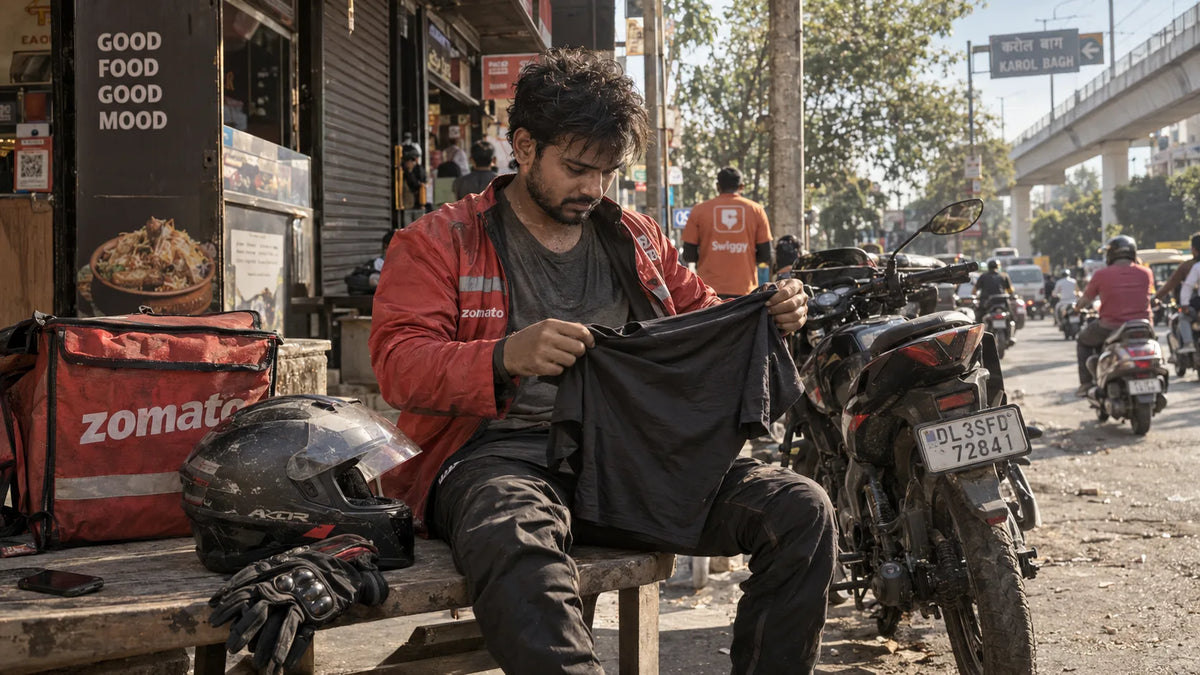
If you've finished six deliveries and still have four more to go, sweat isn't your only problem.
Your shirt stays damp. Your underarms stay warm. Your riding gear traps moisture. Then you put the same helmet back on.
That cycle can make gig rider body odor worse during back-to-back deliveries. The smell isn't simply "dirty sweat." Skin bacteria break down compounds in sweat and create odor-producing molecules.
The good news is that you don't need a long shower after every order. You need a routine that controls sweat and dries damp areas. It also needs to fit your riding gear.
Rider Takeaways
- Fresh sweat is largely odorless. Skin microbes convert sweat components into malodorous compounds, according to a 2023 review.
- A 2026 study of Indian food-delivery riders found daily work commonly ranged from 8 to 13 hours.
- Drying your skin, changing damp clothing, and managing gear buildup can reduce the conditions that let odor develop.
- Your helmet needs its own hygiene routine because it sits against your scalp for hours.
Why does gig rider body odor get worse during back-to-back deliveries?
Body odor gets stronger when sweat, warmth, moisture, and skin bacteria stay together for hours.
A 2023 review in *iScience* explains that freshly produced sweat is generally odorless. Skin microorganisms transform sweat components into volatile compounds that create malodor. The review identifies Staphylococcus and Corynebacterium among important skin bacteria linked with odor. Source: Chang and Wang, 2023.
Fresh sweat doesn't automatically equal body odor. The odor develops when skin microbes break down sweat-related compounds and create volatile odor molecules. A 2023 review describes this process across skin and sweat-soaked clothing. Source: Chang & Wang, "Sweat and odor in sportswear," iScience, 2023.
That matters for delivery riders because your shift keeps repeating the same conditions.
You ride in the heat. You stop at a restaurant. You collect an order. You ride again. Your shirt and gear don't get a real chance to dry.
Then the next delivery starts.
A 2026 Tamil Nadu study found daily shifts of 8 to 13 hours among 10 food-delivery riders. The researchers also described difficult climatic conditions and physical strain. Source: BMC Public Health, 2026.
Our finding: Your hygiene routine has to fit the delivery gap. A routine that needs 30 minutes won't survive a shift built around the next order.
The goal isn't to stop sweating. Sweating helps your body regulate temperature. The practical goal is to stop sweat from sitting against your skin and gear for the entire shift.
Body odor develops when skin microorganisms transform components of sweat into volatile odor compounds. A 2023 iScience review explains that sweat-soaked clothing can also become a source of malodor. This makes moisture control and clothing hygiene especially relevant during long outdoor shifts. Source: Chang & Wang, 2023.
What should you do between deliveries?
Use short hygiene resets instead of waiting for the end of your shift.
The most useful reset takes only a few minutes. Find a shaded or private spot when possible. Wipe or wash sweat-prone areas. Let your shirt and neck area breathe. Then put your gear back on once dampness has reduced.
You don't need to scrub your skin repeatedly. Aggressive washing can irritate the skin, especially when repeated several times a day.
Focus on the areas that stay warm and damp: underarms, chest, back, groin, and feet. Clean skin helps. Dry skin helps even more when you're heading straight back into traffic.
A clean spare T-shirt can also make a bigger difference than another fragrance spray. If your shirt is saturated, adding perfume only changes the smell for a while.
A 2023 review notes that sweat-soaked clothing can become a source of malodor. Microbes remain active in the fabric.
Sweat-soaked clothing can retain both moisture and microorganisms after exercise. The 2023 *iScience* review explains that clothing next to the skin can contribute to malodor when it remains wet with perspiration. Source: Chang & Wang, 2023.
Your practical kit can stay small:
- One spare T-shirt for long shifts.
- Small body wipes for quick clean-ups when washing isn't practical.
- A clean pair of socks if your feet stay damp.
- A small pouch for used clothing.
- Your helmet hygiene spray for the gear you wear repeatedly.
Don't put a wet shirt back into your bag beside clean clothes. Give it airflow when you can, or isolate it in a separate pouch.
Our finding: The best delivery hygiene kit isn't the biggest one. It's the one you can reach during a five-minute gap without unpacking your entire bike.
For long delivery shifts, the practical hygiene priority is moisture control. Change saturated clothing when possible, dry sweat-prone skin, separate damp clothing from clean items, and avoid relying on fragrance alone. Sweat-soaked textiles can continue contributing to odor because microbes remain active in the fabric. Source: Chang & Wang, 2023.

How can you stop your clothes from becoming the odor source?
Start with the shirt touching your skin. Damp fabric can hold sweat and odor compounds for hours.
A quick rinse isn't always possible during a shift. That's why your best option is prevention. Wear breathable work layers when your safety gear allows it. Choose a clean base layer each shift. If you sweat heavily, carry one spare.
Don't keep wearing the same damp T-shirt because "there are still deliveries left." Odor gets harder to manage then.
A 2015 study on axillary microbiota found that odor intensity and bacterial load varied through the day. Among participants who weren't using antiperspirant, bacterial loads were substantially higher than among antiperspirant users. The study also found that odor intensity increased from morning to afternoon. Source: Troccaz et al., 2015.
In a 2015 study, non-antiperspirant users had about 50 times more bacteria in sampled underarm sites than antiperspirant users. The researchers also observed stronger odor later in the day. The finding doesn't mean every rider needs antiperspirant, but it shows why odor can build during a long shift. Source: Troccaz et al., 2015.
The important part is the trend, not the number on the chart.
Your shift keeps adding heat and moisture. Your clothing keeps absorbing it. Your next stop starts before the previous sweat has fully dried.
So carry a clean layer.
That one habit can beat a pocket full of fragrance.
What about the helmet and riding gear?
Your body can be clean while your gear still smells.
Your helmet liner, neck area, gloves, and jacket can collect sweat throughout the day. When you put them back on, you're returning moisture and microbes to the same contact points.
This is especially relevant for gig riders because your helmet may stay on for many hours. A 2026 occupational-health review links delivery work with long hours and environmental exposure.
A 2026 occupational-health review describes long working hours and environmental exposure as recurring risks for app-based delivery and ride-share workers. For riders, that makes practical gear hygiene part of managing daily exposure, alongside road and heat safety. Source: Sachdeva et al., Medical Letter, 2026.
Your helmet deserves its own post-ride step.
Let it air out. Don't leave it sealed inside a delivery bag. If the liner is damp, give it airflow before storing it.
For daily hygiene between washes, Hygena uses bacteriostatic technology designed to help control odor-causing bacterial activity inside riding gear. Hygena states that its spray provides up to eight hours of bacterial protection. It is designed for daily use.
The product is a hygiene step, not a replacement for washing removable liners when they need a proper clean.
Spray your helmet interior as directed, allow it to dry appropriately, and keep the helmet ready for the next shift.
Our finding: Delivery riders don't need another complicated cleaning task. They need a post-shift gear habit that fits between parking the bike and heading home.
Daily delivery work can keep helmets and riding gear in repeated contact with sweat and skin. Gear can therefore become part of the odor cycle even when the rider has showered. Hygena's product page describes its bacteriostatic spray as a daily-use hygiene product for controlling odor-causing bacterial activity in riding gear. Source: Hygena, 2026.
What's the simplest gig rider body odor routine?
Use a three-part routine: reset your skin, change damp fabric, then reset your gear.
During the shift:
If you get a break, wipe or wash sweat-prone areas. Drink water and take heat breaks where your working conditions allow. Don't ignore dizziness, weakness, confusion, or other signs of heat illness.
Before the next delivery block:
Change a soaked base layer if you can. Put the used layer in a separate pouch. Dry your skin before putting on fresh clothing.
After the shift:
Hang your riding jacket and gloves somewhere with airflow. Open your helmet and let the interior breathe. Clean washable liners according to the helmet manufacturer's instructions.
Then use your helmet hygiene step.
This routine works because it attacks the odor cycle at several points. You're reducing moisture on skin, reducing damp fabric contact, and keeping repeatedly worn gear from becoming a stale odor reservoir.
The 2026 Indian rider research also shows why a realistic routine matters. Delivery workers can spend 8 to 13 hours working each day. You can't build a hygiene plan that assumes you can stop for a full shower between every two orders. Your hygiene routine should fit the shift. Clean sweat-prone skin, change wet clothing, and air out your gear. Long shifts make small repeatable habits more realistic than full cleaning routines between deliveries. Source: Arya, 2025; BMC Public Health, 2026.

Frequently Asked Questions
How do gig riders prevent body odor?
Control moisture first. Change saturated clothing when possible, clean sweat-prone skin during breaks, and keep damp fabric separate. Body odor develops when skin microbes transform sweat-related compounds into volatile odor molecules. Source: Chang & Wang, 2023.
Does helmet hygiene affect rider body odor?
It can affect the overall odor experience around your head and neck. Helmets collect sweat and skin contact over repeated rides. Keeping the liner dry and hygienic helps prevent the helmet from becoming another source of stale odor. Hygena is designed for daily riding-gear hygiene.
What should delivery riders carry for hygiene?
Carry one spare T-shirt, body wipes, spare socks, a separate damp-clothing pouch, and a helmet hygiene spray. Keep the kit small enough to access during a short delivery break. A kit you can reach quickly is more useful than one you never open.
Can deodorant alone stop body odor?
Deodorant can help manage body odor, but it doesn't replace washing, drying, or changing damp clothing. Body odor involves skin microbes and sweat chemistry. Your best routine combines clean skin, dry clothing, and clean gear rather than relying on fragrance alone. Source: Troccaz et al., 2015.
How often should gig riders clean helmet padding?
Follow your helmet manufacturer's care instructions for washing removable padding. Between washes, keep the interior aired out and manage sweat buildup after demanding shifts. Daily-use hygiene products can complement washing, but they don't replace proper liner cleaning.
The bottom line for gig rider body odor
Back-to-back deliveries make sweat management harder. Your next order can start before your gear dries.
You don't need a complicated routine. Carry one clean layer. Keep sweat-prone skin as dry as practical. Separate damp clothes. Air out your gear after the shift.
Then give your helmet its own hygiene habit.
Hygena's bacteriostatic helmet spray is designed to help control odor-causing bacterial activity inside riding gear. It's built for riders who don't have time for a full cleaning routine between every delivery.
Bhai, next order ke liye fresh rehna doesn't need a 30-minute reset. It needs the right few habits, repeated every shift.
Sources
1. Chang, Y. & Wang, X. "Sweat and odor in sportswear: A review." *iScience*, 2023.
2. Troccaz, M. et al. "Mapping axillary microbiota responsible for body odours using a culture-independent approach." *Microbiome*, 2015.
3. Sachdeva, A. et al. "Occupational Health and Safety in the Gig Economy: Risks Among App-Based Delivery and Ride-Share Workers." *Medical Letter*, 2026.
4. Arya, N. "Platform workers' experiences in the Online Food Delivery sector in India." 2025/2026.
5. "Invisible burdens of platform work: a qualitative study of food-delivery riders' lived experiences in urban India." *BMC Public Health*, 2026.
6. Hygena. "Helmet Deodorant | 100 ml." Accessed September 15, 2026.
7. Hygena. "What's In a Smart Rider's Hygiene Kit? A Practical List." Accessed September 15, 2026.
8. Hygena. "How to Avoid Rider Fatigue on Long Motorcycle Trips." Accessed September 15, 2026.
9. Hygena. "What Is a Helmet Deodorant Spray (And Do You Need One)?" Accessed September 15, 2026.
Share:
Best riding gear under 10000 India: A smarter starter kit
Acne Mechanica Motorcycle: What Riders Should Know