
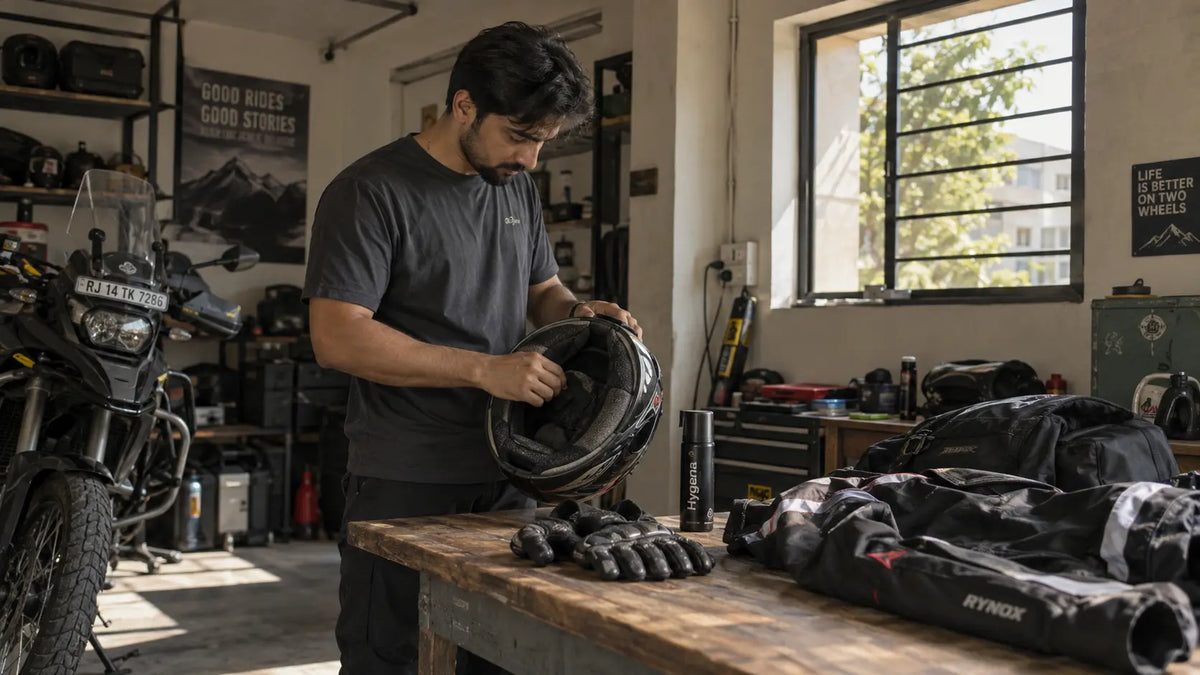
You've got ₹10,000 for riding gear, and every brand has something tempting.
A jacket here, gloves there, maybe a fresh helmet because the old one smells. Suddenly, your budget is gone. The smarter move is to buy for protection first, then build hygiene into the same budget.
That matters because your gear sits against sweat, skin, and road grime for hours. Your helmet is especially easy to ignore. One study of motorcycle helmets found 39% of bacterial isolates were multidrug-resistant, showing why regular helmet hygiene deserves attention. The 2020 PMC study also recommended regular cleaning with suitable agents.
Rider Takeaways
- Spend your first rupees on properly certified, correctly fitted protective gear.
- A ₹10,000 budget works best when you build a starter kit instead of chasing every category.
- In 2020, one motorcycle-helmet study reported 39% multidrug-resistant bacterial isolates.
- Keep a small hygiene budget for your helmet, gloves, and skin-contact layers.
What should you buy first with ₹10,000?
With a strict ₹10,000 ceiling, don't try to buy a full premium kit. Prioritise head protection, hand protection, and one protective upper-body layer.
A 2019 PubMed study analysed 951 motorized two-wheeler riders. It found lower upper-limb soft-tissue injury risk when riders wore a jacket or gloves. Risk was lowest when both were worn. Source: Wu et al., Traffic Injury Prevention, 2019.
That evidence doesn't mean cheap gear becomes automatically safe. Fit, certification, construction, and correct use still matter.
For a ₹10,000 budget, I'd build around a full-face helmet, protective gloves, and an entry-level riding jacket. Then I'd reserve a small amount for helmet hygiene instead of treating hygiene as an afterthought.
| Gear | Budget target | Priority |
|---|---|---|
| Full-face helmet | ₹3,000–₹4,000 | Very high |
| Protective gloves | ₹2,000–₹2,500 | Very high |
| Riding jacket | ₹3,000–₹4,000 | High |
| Helmet hygiene | ₹599 | Daily habit |
The exact mix will change with discounts and sizes. Don't force the total if a cheaper item lacks the protection or fit you need.
Our finding: Under ₹10,000, the best kit isn't the one with the most products. It's the one that protects your highest-risk areas and stays clean enough to use consistently.
A 2019 study of 951 motorized two-wheeler riders found lower soft-tissue injury risk when riders wore motorcycle jackets and gloves. The study supports prioritising protective clothing, while recognising that it doesn't guarantee protection from fractures or every crash injury.
[INTERNAL-LINK: motorcycle rider hygiene → Rider Science pillar]
Which helmet gives you the best value?
Your helmet gets the biggest share of attention because it protects your head. It also sits directly against sweat, scalp oils, and skin for every ride.
A 2020 study of motorcycle helmets reported bacterial contamination across the tested helmet samples. The researchers identified multidrug-resistant isolates and recommended regular helmet hygiene. Source: Microbial Diversity and Antibiotic Susceptibility Pattern of Bacteria Associated with Motorcycle Helmets.
For this budget, look for a full-face model from a reputable manufacturer with the certification required for your market. Don't choose a helmet because it is the cheapest one on the shelf.
Axor currently lists the Kylo range at about ₹3,599, while some higher models cost more. Prices and availability change, so treat those numbers as a current reference rather than a permanent deal.
The fit matters just as much as the price. Your helmet should sit securely without painful pressure points. A loose helmet can move during a crash.
Then comes hygiene. A helmet that smells bad can become something you avoid wearing or clean poorly. That's a bad trade for a piece of gear you use every ride.
[INTERNAL-LINK: motorcycle helmet smell removal → helmet hygiene guide]
What gloves should you buy on a tight budget?
Gloves deserve their own budget because your hands are exposed during a slide. Look for full-finger coverage, secure wrist closure, palm protection, and impact protection.
A 2011 PubMed study found riders wearing motorcycle gloves had a lower risk of hospital admission after crashes. The reported relative risk was 0.41, although the study was observational and cannot prove that gloves caused the lower risk. Source: Motorcycle protective clothing: protection from injury or just the weather?.
Current Rynox listings include the Helium GT 2 at ₹2,150 and the Helium GT at ₹2,199. ViaTerra also lists the Holeshot at ₹3,499 and the Holeshot Pro at ₹4,399.
For a strict budget, the ₹2,000–₹2,500 range leaves more money for your helmet and jacket. If you ride long distances, a higher cuff and better palm construction can be worth the extra spend.
Gloves also collect sweat quickly. Let them dry fully after rides. Don't leave damp gloves stuffed inside a closed bag.
If the inside starts smelling, cleaning and drying should come before perfume. You want to manage the cause of the smell, not cover it.
A 2011 study indexed by PubMed found a lower hospital-admission risk among crashed motorcyclists who wore motorcycle gloves. Because the study was observational, the result shows an association rather than proof of causation. Gloves should still be selected for fit, protection, and motorcycle-specific construction.
[INTERNAL-LINK: how to wash motorcycle gloves → glove hygiene guide]

Can you fit a useful riding jacket into ₹10,000?
Yes, but you need to treat the jacket as one part of the budget rather than buying the most expensive option available.
A 2019 PubMed study found protective clothing was associated with lower upper-limb soft-tissue injury risk. The lowest reported risk occurred when both a motorcycle jacket and gloves were worn. Source: Wu et al., 2019.
For Indian riding, ventilation matters because a jacket that feels unbearable can end up staying in your cupboard.
Rynox currently lists the Cypher GT at ₹5,200 and the Air GT 4 at ₹8,950. ViaTerra lists the Fender at ₹5,999 and the Miller at ₹8,999.
Those prices show the real budget problem. A good jacket can consume most of your ₹10,000 allowance by itself.
That's why a starter kit can work better with a lower-priced jacket and strong spending discipline elsewhere. You can upgrade later when your riding becomes longer or more demanding.
For hygiene, choose gear you can ventilate and dry properly. Sweat trapped inside riding layers creates a very different problem from road dust outside them.
Our finding: Indian riders often optimise for protection first and comfort second. For daily use, ventilation can determine whether you actually wear the jacket every day.
[INTERNAL-LINK: how to deodorize motorcycle riding gear → riding gear hygiene guide]
Where does hygiene fit into a ₹10,000 riding budget?
Helmet hygiene shouldn't require a second shopping trip. Keep a small, fixed amount inside the original gear budget.
The 2020 motorcycle-helmet microbiology study reported 153 multidrug-resistant bacterial isolates among the total bacterial isolates it examined. The finding doesn't mean every helmet is dangerous. It does support regular hygiene and sensible cleaning practices. Source: PMC, 2020.
This is where Hygena fits. It's a rider-focused bacteriostatic helmet deodorant designed to address odor-causing bacteria rather than only adding fragrance.
Hygena's 100ml spray is listed at ₹599 in the supplied brand information. That leaves room for it even in a tightly planned starter kit.
Use it as part of a routine. Let your helmet dry after rides, follow the helmet maker's liner-care instructions, and don't treat a spray as a replacement for proper washing when the liner needs it.
Your gloves and jacket need their own care routines too. Sweat management works best when you dry, clean, and store each item properly.
[INTERNAL-LINK: helmet hygiene guide → complete helmet hygiene pillar]
What is the best under-₹10,000 setup?
The best setup depends on whether you're commuting, touring, or slowly building a complete kit. For most daily riders, I'd choose a balanced starter build.
| Item | Example | Reference price |
|---|---|---|
| Helmet | Axor Kylo range | ₹3,599 |
| Gloves | Rynox Helium GT 2 | ₹2,150 |
| Jacket | Rynox Cypher GT | ₹5,200 |
| Hygiene | Hygena 100ml | ₹599 |
That exact combination exceeds ₹10,000, so don't buy every item at those reference prices together.
A strict budget build needs one compromise. Buy the helmet first, then gloves, then add the jacket when you find a suitable discounted or entry-level model.
If you already own a safe helmet, the budget becomes much easier. Put the money into gloves, a jacket, and hygiene instead.
The biggest mistake is buying four cheap products just to say you have a complete kit. Build the kit in stages. Your future self can upgrade each piece without replacing everything.
Frequently asked questions
Can I get complete riding gear under ₹10,000?
Yes, but a genuinely protective full kit can be difficult at this budget. Start with a certified helmet and protective gloves. Add a suitable jacket next. Build pants and boots later. A 2019 study found protective clothing was associated with lower soft-tissue injury risk.
What should I never compromise on?
Don't compromise on helmet fit, certification, or basic protective construction. The helmet is your first priority. Prices can change, but those requirements shouldn't disappear because a listing is cheap.
Should hygiene be part of my gear budget?
Yes. Your helmet and gloves sit against sweat and skin repeatedly. A 2020 motorcycle-helmet study found substantial bacterial contamination and multidrug-resistant isolates. Hygiene should be a routine, not an emergency fix when your gear starts smelling.
Is a riding jacket necessary for city rides?
A jacket adds abrasion and impact protection beyond ordinary clothing. A 2019 study linked motorcycle jackets and gloves with lower upper-limb soft-tissue injury risk. Your riding speed, traffic, distance, and road exposure should guide how much protection you choose.
Can I upgrade my riding kit later?
Yes. In fact, staged buying often makes more sense at ₹10,000. Start with the helmet and gloves. Add a jacket next. Then add riding pants, boots, rain gear, and other pieces as your riding needs grow.
Conclusion: build the kit you will actually wear
The best riding gear under ₹10,000 in India isn't a pile of budget products. It's a deliberate first kit.
Protect your head and hands first. Add an appropriate jacket when the budget allows. Keep your gear dry, clean, and ready for the next ride.
And don't forget the inside of your helmet. A hygiene habit costs far less than replacing gear because you stopped wanting to wear it.
Hygena fits into that routine as a bacteriostatic helmet deodorant. It gives your helmet hygiene habit a dedicated step.
Ride with the gear you can afford today. Upgrade it as your riding grows.
[INTERNAL-LINK: motorcycle hygiene kit → hygiene essentials guide]
Sources
- Wu D, Hours M, Ndiaye A, Coquillat A, Martin J-L. "Effectiveness of protective clothing for motorized 2-wheeler riders." Traffic Injury Prevention, 2019. PubMed.
- Hassan et al. "Microbial Diversity and Antibiotic Susceptibility Pattern of Bacteria Associated with Motorcycle Helmets." 2020. PMC.
- de Rome L et al. "Motorcycle protective clothing: protection from injury or just the weather?" 2011. PubMed.
- Current product reference prices checked September 2026: Axor Helmets, Rynox Gear, and ViaTerra Gear.
Share:
Helmet Cleaner Dehradun: Fix Helmet Smell at the Source
Gig Rider Body Odor: How to Stay Fresh on Long Shifts