
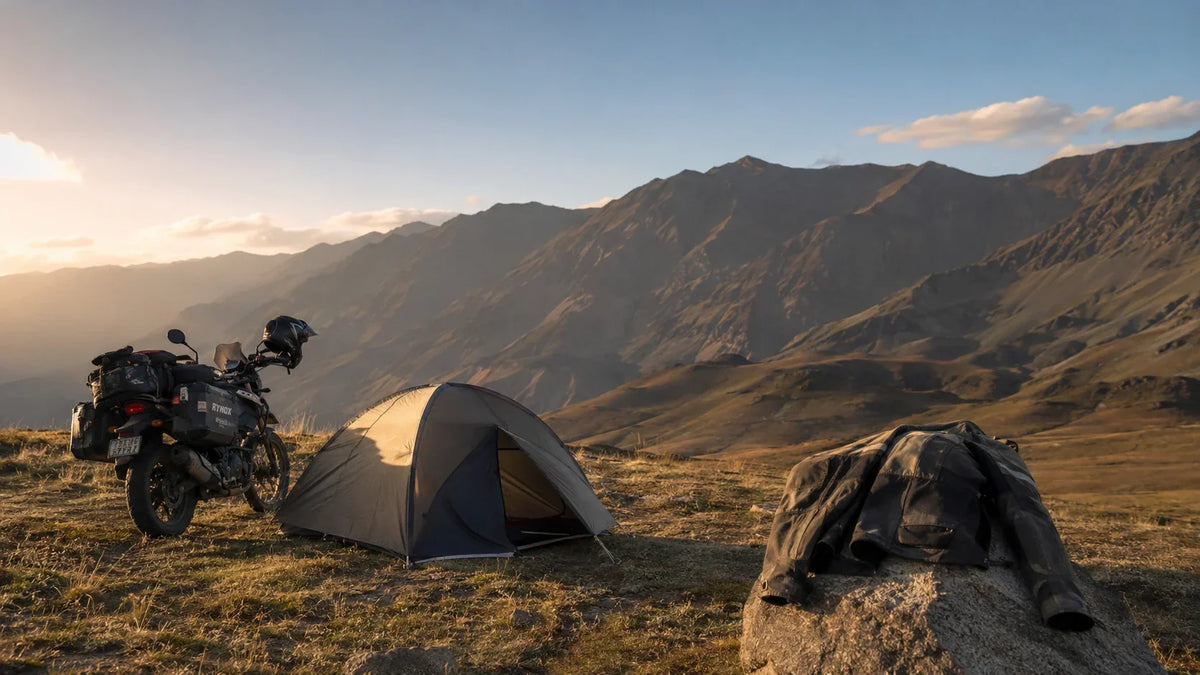
You find the perfect spot. No people, no noise, just your bike and the open sky.
Then the doubts start. Is anything out there? Is this even allowed? And by morning, your gear smells worse than the questions feel. Wild camping on bike trips in India can be one of the best ways to ride. It can also go wrong fast if you skip the basics.
This guide covers the real risks, the legal grey areas, and the campsite hygiene routine that keeps you safe and fresh.
Rider Takeaways
- Wild camping in India is broadly legal, but banned inside sanctuaries, tiger reserves and national parks without a permit.
- Human-wildlife conflict caused 628 deaths in 2023, a five-year high, per government data in the Rajya Sabha.
- A 2020 study found S. aureus in 22.7% of motorcycle helmets, so day-2 gear odor is bacteria, not just sweat.
- Pick high, dry ground away from rivers, and run a 5-minute hygiene routine before sleep.
Is Wild Camping on Bike Trips in India Actually Safe?
Mostly, yes, if you choose your spot and prep your kit well. The bigger risks in India aren't strangers. They're wildlife, weather, and the slow hygiene problem that builds inside your gear. In 2023, government data showed 628 human deaths from wildlife conflict, the highest in five years.
Most riders who get into trouble made an avoidable call. They camped in a dry riverbed. They pitched near a forest edge at dusk. They ignored a local warning to ride on. Wild camping rewards judgement, not luck.
So the honest answer isn't a flat yes or no. It's "safe if you respect three things." Where you camp. When you camp. And how you look after yourself once the tent is up. Get those right and the odds shift hard in your favour.
Quick Fact:
Human-wildlife conflict in India caused 628 human deaths in 2023, a five-year high, with elephant-related fatalities the largest share, according to Union government data tabled in the Rajya Sabha in 2024. Most occurred near forest fringes and farmland edges. Source: Business Standard (2024)
Human-wildlife conflict in India caused 628 human deaths in 2023, a five-year high, with elephant-related fatalities the largest share, according to Union government data tabled in the Rajya Sabha in 2024. Most occurred near forest fringes and farmland edges. Source: Business Standard (2024)
What Are the Real Risks of Wild Camping in India?
Three risks matter most: wildlife, weather, and people, roughly in that order. In 2023, wildlife conflict killed 628 people across India, per government figures. Flash floods add to that during monsoon. Theft and trouble from strangers exist, but they're far rarer than rider forums suggest.
Wildlife is the headline risk. Elephants cause the most deaths, and they move through forest corridors at dawn and dusk. Leopards roam areas like Jawai in Rajasthan. Camping at a forest edge puts you on their path, not yours.
Weather is the quiet killer. In Himachal Pradesh alone, the 2024 monsoon left dozens dead or missing between June and August. Dry riverbeds fill in minutes after a cloudburst kilometres upstream. You won't hear it coming.
Unique Insight
Our take: The 2020 dip to 471 deaths lines up with the COVID lockdown, when people stayed home. The risk didn't fall. Exposure did. Wild camping is exactly the exposure that pushes a rider into that statistic, so where you sleep matters more than how brave you feel.
Where Can You Legally Wild Camp in India?
You can wild camp across most of India, but not inside protected zones. National parks, wildlife sanctuaries, tiger reserves and many reserved forests are off-limits without a permit. On private farmland, you need the owner's permission first. There's no single national camping law, which is exactly why local rules win.
Here's the practical version. Forest staff, police, or a landowner can ask you to move at any time, and they're within their rights. A polite heads-up to the nearest village or chowki saves a lot of trouble. Bata ke ruko, it's that simple.
The safest legal ground is open public land away from forests, designated forest-department camp spots, or a farmer's field you've asked to use. Skip the dramatic spots inside reserves. The fine, or the eviction at midnight, isn't worth the photo.
Quick Fact:
India has no single wild-camping law, but camping is prohibited inside national parks, wildlife sanctuaries, tiger reserves and notified forests without prior permission. On private land, the owner's consent is required, and local police or forest staff can ask campers to leave at any time. Source: Tripoto camping guide
India has no single wild-camping law, but camping is prohibited inside national parks, wildlife sanctuaries, tiger reserves and notified forests without prior permission. On private land, the owner's consent is required, and local police or forest staff can ask campers to leave at any time. Source: Tripoto camping guide
How Do You Pick a Safe Campsite?
Pick high, dry, open ground with a clear exit for the bike. Avoid riverbeds, forest edges, and lone trees. In Himachal Pradesh, the 2024 monsoon killed dozens between June and August, many in flood-prone valleys. The right spot removes most of your risk before you unroll the tent.
Run a quick mental checklist as light fades. Is this a dry stream channel? Move. Is there fresh dung, tracks, or a worn animal trail? Move. Can you reach and start your bike fast if you need to leave? If not, move while you still can.
Keep food sealed and away from the tent, never inside it. Park the bike between you and the open side. And tell someone your location, even a WhatsApp pin to a friend. Phir bhi, a little caution beats a lot of regret.

Why Campsite Hygiene Is a Safety Issue Too
Hygiene isn't just comfort on a wild camp, it's part of staying functional. A 2020 study found Staphylococcus aureus in 22.7% of motorcycle helmets, and a third of those strains were drug-resistant. Sweat-soaked gear on day two breeds bacteria that cause rashes, scalp issues, and worse focus on the road.
On a wild camp, there's no shower, no clean towel, no second helmet. Your liner stays damp overnight. Riders can lose large volumes of sweat in heat, and most of it soaks into padding and pads that never dry fully. By morning that helmet smells like a problem.
So build a five-minute routine before sleep. Wipe down, air your gear, and treat the inside of your helmet so bacteria don't multiply overnight. This is where Hygena earns its place in the pannier. A few sprays kill odor-causing bacteria at the source, so tomorrow's first ride doesn't start with a wince.
The fix is simpler than you think. Hygena's bacteriostatic spray keeps your helmet bacteria-free between washes, even when a wash isn't an option for days.
Unique Insight
Our finding: Most safety guides stop at tents and tigers. They miss the slow risk. A rider with a rash, itchy scalp, and broken sleep makes worse decisions on a mountain road the next day. On a multi-day wild camp, hygiene is fatigue management, and fatigue is a safety factor.
Frequently Asked Questions
Is wild camping legal in India?
Mostly yes, with limits. Camping is legal on open public land and private land with the owner's consent, but banned inside national parks, wildlife sanctuaries and tiger reserves without a permit. Local police or forest staff can ask you to move at any time, so always check first.
What's the biggest danger when wild camping in India?
Wildlife and weather, not strangers. Government data recorded 628 wildlife-conflict deaths in 2023, mostly near forest edges. Flash floods add risk in monsoon, killing dozens in Himachal Pradesh in 2024. Camping on high, dry ground away from forests removes most of this danger.
How do I stay clean wild camping on a bike trip?
Run a five-minute routine before sleep: wipe down, air your gear, and treat your helmet interior. A 2020 study found S. aureus in 22.7% of helmets, so untreated padding breeds bacteria overnight. A bacteriostatic spray like Hygena stops that growth when a wash isn't possible.
Is solo wild camping on a motorcycle safe in India?
It can be, with preparation. Share your live location, tell the nearest village or chowki, camp away from forests and riverbeds, and keep your bike ready to move. Solo riders who pick safe ground and warn locals rarely face trouble from people on Indian roads.
Conclusion
Wild camping on bike trips in India is safe when you respect where, when, and how you camp. The real risks are wildlife, weather, and the gear hygiene most riders ignore until day two.
You can't control the mountains, but you can control your helmet. Hygena keeps it bacteria-free between washes, so a five-day wild camp doesn't leave you riding home in a stinking, rash-inducing lid. Pack it next to your tools, spray before sleep, ride fresh.
Sources
1. "Over 2,500 people died in 5 years in human-elephant conflicts: Govt data," Business Standard, 2024. Retrieved 2026-06-27.
2. "Microbial Diversity and Antibiotic Susceptibility Pattern of Bacteria Associated with Motorcycle Helmets," Sapkota et al., International Journal of Microbiology (PMC), 2020. Retrieved 2026-06-27.
3. "India: Floods and Landslides – Jul 2024," ReliefWeb, 2024. Retrieved 2026-06-27.
4. "Travel Tips: Everything you need to know about camping in India," Tripoto, 2024. Retrieved 2026-06-27.
Share:
Riverside Camping Bike Trips India: Stay Fresh Day 2
Helmet Cleaner Durgapur: It's Not the Dust, It's the Roads