
Two jackets are hanging in your hallway right now: one leather, one textile. Both smell like your last ride.
Riders assume gear cleaning is one routine that works for everything. It isn't. Leather and textile are built from completely different materials, and treating them the same way usually ends with a stiff, cracked jacket or a musty one that never really dries out.
This article breaks down what actually keeps each material clean, which one wins on convenience, and which one wins where it matters most: Indian heat, monsoon humidity, and daily commuting.
Rider Takeaways
- Textile gear is often machine washable at 30°C on a gentle cycle, while leather can never go near a washing machine.
- Leather resists an asphalt slide for 4 to 6 seconds before wearing through, compared to roughly 1 to 3 seconds for basic textile weaves, per a 2011 study in Accident Analysis and Prevention.
- Both materials trap sweat differently. Leather absorbs it into the hide, textile holds it inside the weave, and both still need a real routine, not just air-drying.
- Textile wins on cleaning convenience. Leather wins on durability and surface grime resistance.
Why Leather and Textile Motorcycle Gear Need Totally Different Cleaning Routines
Leather and textile aren't just two fabric choices. They're built on opposite structures. Leather is a dense hide that resists surface abrasion but absorbs moisture deep into its fibers. Textile is a woven fabric that breathes well but lets grime and sweat settle into every thread.
That structural difference is why a leather jacket can survive years of hard rides with just occasional wiping, while a textile jacket needs a proper wash every few weeks to stay fresh. Clean one the way you'd clean the other, and you'll either damage the leather or leave the textile smelling worse than before.
So which routine actually fits your riding life, and your Sunday cleaning schedule?
Quick Fact:
Leather and textile motorcycle gear demand opposite care approaches because of how each material handles moisture. Leather's hide structure resists surface abrasion but absorbs sweat deep into its fibers, while textile's open weave breathes better but traps grime in every thread. Source: MotoSport.
Leather and textile motorcycle gear demand opposite care approaches because of how each material handles moisture. Leather's hide structure resists surface abrasion but absorbs sweat deep into its fibers, while textile's open weave breathes better but traps grime in every thread. Source: MotoSport.
How Do You Clean a Leather Motorcycle Jacket the Right Way?
In 2011, a study published in Accident Analysis and Prevention confirmed that abrasion-resistant materials measurably reduce soft tissue injuries in motorcycle crashes. Full-grain leather can survive an asphalt slide for 4 to 6 seconds before wearing through, compared to roughly 1 to 3 seconds for basic textile. That toughness is exactly why leather can't be scrubbed or machine washed.
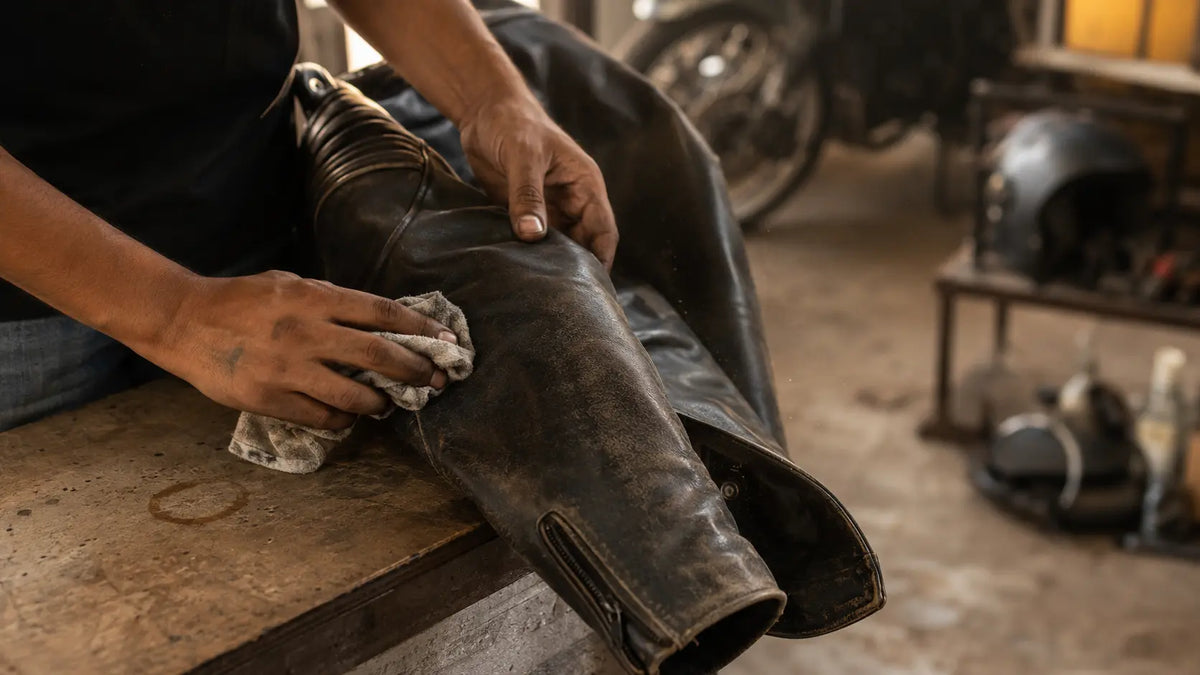
Cleaning leather starts with a dry wipe to remove surface dust, followed by a damp sponge and a mild leather cleaner worked in small circular sections. Never soak it. Leather absorbs water fast, and that leads to stiffness, discoloration, and even mold. Skip the washing machine entirely.
Condition the leather once or twice a year, not more. Over-conditioning clogs the hide's pores and wears it out faster than regular riding does. Dry it away from direct heat or sunlight, and store it on a padded hanger, never a wire one.
Quick Fact:
A 2011 study in Accident Analysis and Prevention confirmed abrasion-resistant materials reduce soft tissue injuries in crashes. Full-grain cowhide leather (1.2-1.4mm thick) withstands roughly 4 to 6 seconds of asphalt sliding before wearing through, versus 1 to 3 seconds for standard textile weaves. Source: RideApart, Eagle Leather.
A 2011 study in Accident Analysis and Prevention confirmed abrasion-resistant materials reduce soft tissue injuries in crashes. Full-grain cowhide leather (1.2-1.4mm thick) withstands roughly 4 to 6 seconds of asphalt sliding before wearing through, versus 1 to 3 seconds for standard textile weaves. Source: RideApart, Eagle Leather.
Can You Machine Wash Textile Motorcycle Gear?
Yes. Per wash guides from Motorcycle News and webBikeWorld, most textile gear built with Cordura or Gore-Tex can go into a washing machine on a gentle cycle at a maximum of 30°C. Remove the liner and armor first, close every zipper, and skip the spin cycle so the fibers don't get stressed.
The mistake most riders make is grabbing regular detergent. Fabric softener and powder detergent damage waterproof membranes and coatings, so stick to a mild liquid detergent made for technical fabrics. Hang the jacket to dry completely before storing it.
Kya aapne kabhi apni textile jacket ko seedha washing machine mein daala hai bina liner nikale? Most riders have, and that's usually when the waterproofing starts failing early.
Quick Fact:
Most textile motorcycle gear made with Cordura or Gore-Tex can be machine washed on a gentle cycle at a maximum of 30°C, with liners and armor removed beforehand. Fabric softener and powder detergent should never touch riding gear. They break down waterproof membranes. Source: Motorcycle News, webBikeWorld.
Most textile motorcycle gear made with Cordura or Gore-Tex can be machine washed on a gentle cycle at a maximum of 30°C, with liners and armor removed beforehand. Fabric softener and powder detergent should never touch riding gear. They break down waterproof membranes. Source: Motorcycle News, webBikeWorld.

Which Material Traps More Sweat and Bacteria?
In 2023, research published in the journal Polymers found that leather's moisture-absorbing surface pulls in sweat proteins that feed bacteria and fungi, even though leather's top layer resists some surface bacterial adhesion. Textile's open weave traps the same moisture deeper inside the fibers, where it's harder to dry out fully.
Neither material wins outright here. Leather smells slower to develop but harder to fully remove once it sets in. Textile smells faster but responds better to a proper wash. Both routines matter more than most riders think.
Unique Insight
Our finding: "More breathable" and "easier to clean" aren't the same thing. Textile jackets survive the washing machine, but that same open weave holds onto helmet-adjacent sweat and odor longer between washes than most riders assume.
Whichever jacket you're cleaning this weekend, don't skip the piece of gear that actually touches your skin the most. A few sprays of Hygena keep the bacteria in your helmet liner in check between washes, no washing machine, no conditioning schedule, just five seconds before you ride.

Quick Fact:
Research published in Polymers in 2023 found leather's moisture-absorbing surface pulls in sweat proteins that feed bacteria and fungi, despite its hydrophobic top layer resisting some surface adhesion. Textile's permeable weave traps the same moisture deeper inside the fabric. Source: MDPI Polymers.
Research published in Polymers in 2023 found leather's moisture-absorbing surface pulls in sweat proteins that feed bacteria and fungi, despite its hydrophobic top layer resisting some surface adhesion. Textile's permeable weave traps the same moisture deeper inside the fabric. Source: MDPI Polymers.
Which Gear Survives India's Heat and Monsoons Better?
According to Reisemoto's monsoon gear care guide, wet or unclean motorcycle gear left in humid storage becomes a breeding ground for bacteria and mould within hours, regardless of material. Textile gear with mesh panels manages heat and sweat better on hot Indian commutes, letting more air move across your body during traffic-heavy rides.
Leather riders in India face a different monsoon problem: soaked leather takes far longer to dry and risks permanent stiffness if it isn't dried slowly, away from direct heat. Textile dries faster but needs a full wash more often to stay hygienic through the season.
Quick Fact:
Wet or unclean motorcycle gear left in humid monsoon storage becomes an ideal habitat for odor-causing bacteria and mould within hours, regardless of whether it's leather or textile. Dry, ventilated storage is the single biggest factor in preventing this. Source: Reisemoto.
Wet or unclean motorcycle gear left in humid monsoon storage becomes an ideal habitat for odor-causing bacteria and mould within hours, regardless of whether it's leather or textile. Dry, ventilated storage is the single biggest factor in preventing this. Source: Reisemoto.
So Which Is Actually Easier to Keep Clean: Textile or Leather?
Textile wins on convenience. It goes in the washing machine, dries faster, and forgives more mistakes. Leather wins on durability and day-to-day grime resistance, but every clean requires more care, more time, and zero shortcuts.
If your riding life is daily commuting and monsoon exposure, textile's washability makes life easier. If you tour hard and want gear that lasts a decade, leather's toughness pays off. You'll just clean it less often, and more carefully.
Unique Insight
Our finding: Neither material solves the hygiene problem where it actually starts. The bacteria causing most of that end-of-ride smell live in your helmet liner, not your jacket sleeve. That's true whether you're wearing leather or textile.
Frequently Asked Questions
Is leather or textile easier to clean?
Textile wins on convenience. Many textile jackets go straight into a gentle 30°C wash cycle, while leather can only be wiped and conditioned by hand. Leather still resists everyday surface grime better. Source: Motorcycle News, webBikeWorld.
Can you machine wash a leather motorcycle jacket?
No. Leather absorbs water quickly, which causes stiffness, discoloration, and mold growth over time. Clean it with a damp cloth and mild leather cleaner, then condition once or twice a year. Source: RevZilla, Harley-Davidson.
Why does my textile jacket smell worse than leather?
Textile's woven fibers are more permeable, letting sweat and bacteria settle deeper inside the fabric. Leather's hydrophobic surface layer resists some bacterial adhesion, even though it absorbs moisture too. Source: MDPI Polymers, 2023.
How often should I clean my motorcycle jacket?
Wipe leather down after every few rides and condition it once or twice a year. Wash textile gear every 4 to 6 weeks of regular use, sooner after monsoon rides. Source: RevZilla, Reisemoto.
Does helmet hygiene matter more than jacket hygiene?
Your helmet touches your scalp and face directly for hours every ride, making it a more urgent bacterial concern than a jacket sleeve. Both deserve a routine, but the helmet shouldn't be the one you skip.
Conclusion
Textile and leather aren't competing for the same job. One trades off convenience, the other trades off durability, and both need a real cleaning routine instead of just airing out on the balcony.
Whichever jacket ends up on your hanger, your helmet is still the piece doing the most work against sweat and bacteria every single ride. Hygena handles that part in five seconds, so the rest of your gear routine stays simple.
Sources
1. "Motorcycle Gear: Is Leather Better Than Textile?," RideApart, 2024. Retrieved 2026-07-03.
2. "The Science Behind Abrasion Resistance in Motorcycle Jackets," Eagle Leather. Retrieved 2026-07-03.
3. "How to clean leather motorcycle gear," RevZilla Common Tread. Retrieved 2026-07-03.
4. "How to Clean Your Leather Jacket: Maintenance & Care," Harley-Davidson. Retrieved 2026-07-03.
5. "Getting fresh: How to wash textile motorbike kit," Motorcycle News. Retrieved 2026-07-03.
6. "How to wash your textile riding gear," webBikeWorld. Retrieved 2026-07-03.
7. "Antibacterial and Antifungal Fabrication of Natural Lining Leather Using Bio-Synthesized Silver Nanoparticles from Piper Betle L. Leaf Extract," MDPI Polymers, 2023. Retrieved 2026-07-03.
8. "Monsoon Motorcycle Glove Care: Clean, Dry & Maintain Riding Gloves the Right Way," Reisemoto. Retrieved 2026-07-03.
9. "Pros and Cons: Leather vs. Textile Riding Gear for Motorcycles," MotoSport. Retrieved 2026-07-03.
Share:
Silk vs. Regular Balaclava: Hair Protection Under a Helmet
Windburn Face: Why Wind and Sun Team Up on Motorcycle Rides