
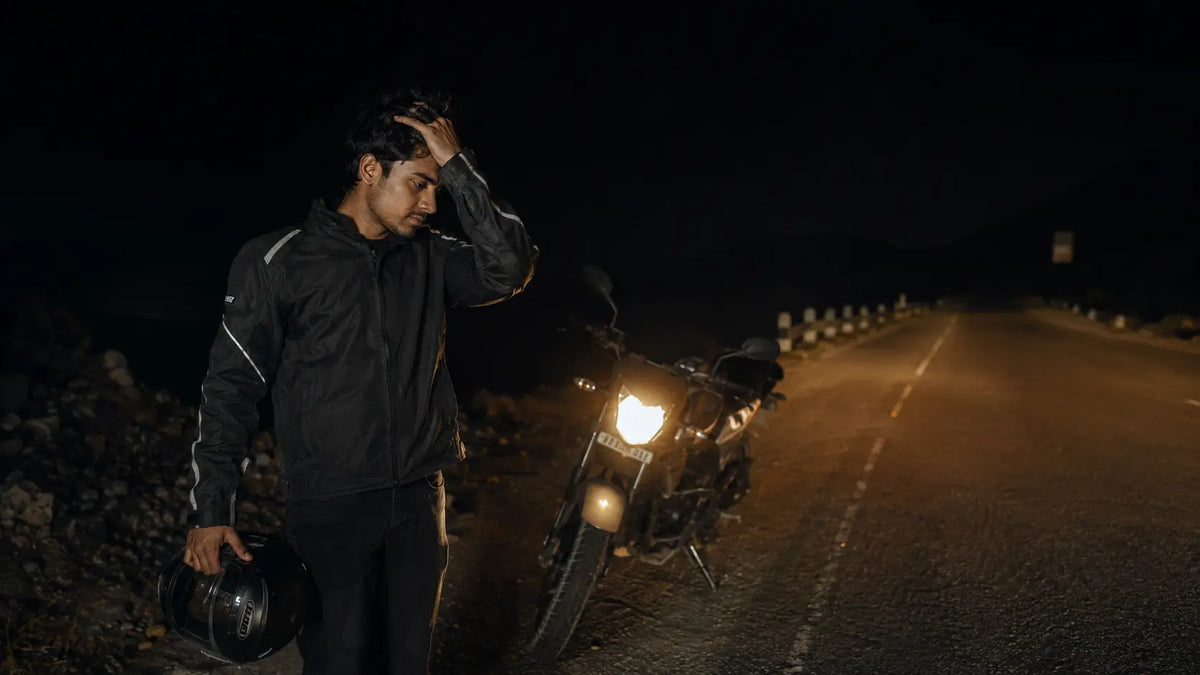
You pull over four hours into a long ride and flip your visor up. Your reflection in a shop window tells the story. Flat on top, damp at the roots, a dent running straight across where the strap sat.
That's helmet hair, and on a long ride it doesn't fix itself by the time you reach your hotel. Preventing helmet hair on long rides isn't just a bad-hair-day fix either.
Trapped sweat, hours of pressure, and India's humidity work together on your scalp. They do the same thing to the rest of your riding gear. The fix starts before you zip up your jacket, not after you've already parked for the night.
Rider Takeaways
- Helmet hair is pressure plus trapped sweat, not just flat hair. Humid cities like Chennai swing between 63% and 76% humidity, which slows drying.
- The biggest wins happen before you ride: hairstyle choice and a dry root pass beat any after-ride fix.
- On multi-day tours, airing your helmet at every fuel stop does more than any product you carry.
- Persistent itching or thinning along the strap line is worth a dermatologist visit. It's different from ordinary helmet hair.
Why Does Riding Give You Helmet Hair in the First Place?
A helmet compresses your hair against your scalp for hours. It also traps the sweat your head produces. That combination is what flattens and dampens hair, not the helmet shell alone.
Sweat has nowhere to go inside a sealed liner. It sits against your roots and softens the hair shaft. Once you pull the helmet off, the dampness re-sets into the shape the padding pressed it into.
Humidity makes that damp stage last longer. In Chennai, relative humidity runs between 63% in June and 76% in October (weather-and-climate.com, climate data). It averages near 69% for the year. Ride through that kind of air for two hours, and your hair barely dries before you're back in the helmet.
The strap adds a second, smaller pressure point. It sits at your jaw and hairline. On a long ride, that light tension can leave a temporary crease along your hairline. It's separate from the flattening on top.
Quick Fact:
Chennai's average relative humidity ranges from 63% in June to 76% in October, averaging near 69% for the year. Coastal and monsoon-belt riders face slower hair-drying conditions than drier regions for most of the year. Source: weather-and-climate.com
Chennai's average relative humidity ranges from 63% in June to 76% in October, averaging near 69% for the year. Coastal and monsoon-belt riders face slower hair-drying conditions than drier regions for most of the year. Source: weather-and-climate.com
What Should You Do to Your Hair Before You Even Put the Helmet On?
Your pre-ride hairstyle decides how bad the damage will be, more than anything you do afterward. A low braid or a loose bun spreads the strap pressure instead of concentrating it on one flat patch.
Skip heavy oils, gels, or creams right before a ride. They don't protect your hair from a helmet. They just give sweat and dust something sticky to cling to for hours.
A dry shampoo or root powder pass at the crown absorbs oil before it starts. Your roots go into the helmet dry instead of already damp. Two minutes at your roots does more than any post-ride fix. Phir bhi, riders skip it every time.
Unique Insight
Our finding: Riders who braid or tie their hair before a ride report noticeably less flattening at the crown. This holds even on the same route and helmet as riders who ride with loose hair. The difference isn't the product used: it's whether hair is distributed or bunched under the pressure points.

How Do You Manage Helmet Hair Mid-Tour, Not Just After?
On a multi-day tour, waiting until the destination means eight or ten hours of trapped sweat compounding. It doesn't reset in between. Fuel stops are your real opportunity, not an afterthought.
Every time you stop for petrol or chai, take the helmet off for a few minutes. Don't leave it on through the whole break. That short window lets both your hair and the liner start drying.
Carry a small microfiber cloth or bandana to wipe sweat from your hairline at stops. It takes fifteen seconds and stops that moisture from sitting against your scalp for the next leg.
A thin buff or balaclava also helps more than most riders expect. It sits between your hair and the liner, soaking up sweat before it reaches your roots. That's one less thing your helmet has to dry out overnight on a multi-day tour.
How Do You Fix Helmet Hair Fast the Moment You Take the Helmet Off?
Don't reach for a brush first. Brushing damp, flattened hair just drags the dent through the rest of it instead of lifting it. Fingers first, always.
Flip your head forward and run your fingers through from the roots. Let some air get underneath before you do anything else. This alone lifts most of the flatness within a minute or two.
If your hair still looks damp and pressed, try a light water spritz and a scrunch, not a brush stroke. That resets the shape without any heat tool you don't have on the road anyway.

Is Helmet Hair Ever More Than Just a Bad Look?
Usually not. It's cosmetic and temporary. But a dirty, damp liner sitting against your scalp for hours every day is a different story. That's where helmet hair and scalp health start to overlap.
Head & Shoulders India notes that helmets don't directly cause dandruff. But the environment they create can trigger flaking: trapped sweat, excess oil, friction, and reduced ventilation. Riders with an oily, sensitive scalp feel it most in hot, humid climates (Head & Shoulders India).
Separately, dermatologists describe traction alopecia as hair loss from sustained pulling tension on the hair shaft. It's most often linked to tight hairstyles, but prolonged pressure at contact points counts too.
In 2023, JAMA Dermatology researchers Larrondo and McMichael noted that early traction alopecia is reversible once the tension is addressed. Long-term cases can scar (Larrondo & McMichael, JAMA Dermatology, 2023). That's a reason to loosen your strap tension and rotate hairstyles, not a reason to panic over normal helmet hair.
Unique Insight
Our finding: A liner that's still damp and bacteria-heavy from yesterday's ride makes every problem here worse. It stays wetter longer, holds more odor, and sits against your scalp right where irritation starts. Riders on multi-day tours feel this compounding effect the most.
This is where a bacteriostatic spray like Hygena earns its place in your kit. It's not a hair product. It just stops your liner from starting each riding day already loaded with yesterday's sweat and bacteria.
Frequently Asked Questions
Does a helmet actually cause permanent hair damage?
Not from occasional riding: temporary flattening and dryness are normal. Persistent thinning along the strap line over months is worth checking with a dermatologist. Sustained tension is a known trigger for traction alopecia.
What's the fastest fix if I have five minutes before a meeting?
Finger-comb from the roots forward, add a light dry shampoo pass at the crown, and scrunch the ends. Skip the brush. It drags the dent through instead of lifting it.
Should I keep my hair open or tied under a helmet?
Tied. A low braid or loose bun spreads pressure across your scalp instead of concentrating it in one flat patch. That's the single biggest factor in how bad your helmet hair looks afterward.
Does humidity really make helmet hair worse?
Yes. In cities like Chennai, humidity runs from 63% to 76% across the year. That range slows how fast sweat and dampness clear from your hair under a sealed liner (weather-and-climate.com).
Can dry shampoo be used every single day?
Yes, in moderation. Use it at the roots before a ride to absorb oil, not as a substitute for washing every few days. Overuse can build up on the scalp over time.
Does a buff or balaclava actually help with helmet hair?
Yes. A thin buff sits between your hair and the liner, absorbing sweat before it reaches your roots. It's especially useful on multi-day tours, where a helmet that never fully dries makes everything worse.
Conclusion
Helmet hair isn't random bad luck. Pressure and trapped sweat do to your hair what they do to the rest of your gear. Humidity just slows the recovery. Most of the damage happens before you even notice it. That's why the fix has to start before you ride, not after.
Tie your hair, keep the roots dry, air out at every stop on a tour, and finger-comb before you brush. And keep the liner itself from working against you. A bacteriostatic spray like Hygena means your hair isn't fighting yesterday's sweat on top of today's ride.
Sources
1. "Chennai Humidity by Month," weather-and-climate.com. Retrieved 2026-08-24.
2. "Can Helmets Cause Dandruff? Scalp Care Tips for Riders," Head & Shoulders India. Retrieved 2026-08-24.
3. Larrondo, J., McMichael, A.J. "Traction Alopecia," JAMA Dermatology, Vol. 159, Issue 6, 2023. Retrieved 2026-08-24.
Share:
A Biker's Guide to Smelling Good After Every Ride
Helmet Cleaner Asansol: Coal Dust Isn't Your Real Problem