
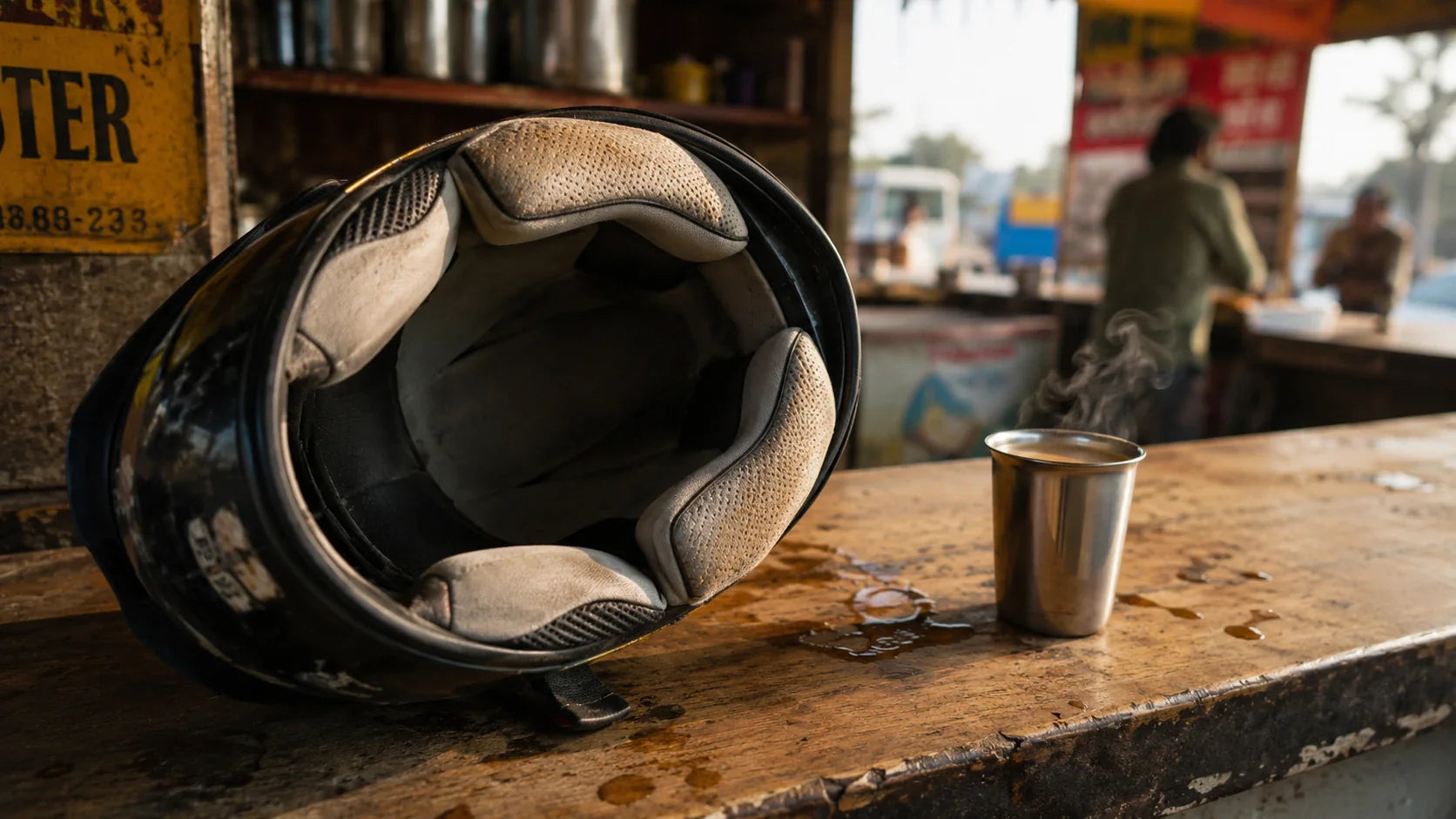
Quick question: when did you last clean the inside of your helmet?
If you had to think about it, you're not alone. Most riders clean the shell and forget the liner. But that stale smell after a summer ride isn't just sweat. It's bacteria feeding on the sweat your padding soaked up. So how often should you actually clean it? This guide gives you the honest schedule, based on how much you really ride and where.
Rider Takeaways
- Air your helmet out after every ride, wipe the liner weekly, and deep-clean it monthly.
- A 2020 study found Staphylococcus aureus on 22.7% of motorcycle helmets tested (International Journal of Microbiology).
- Daily commuters and delivery riders need to clean far more often than weekend tourers.
- A bacteriostatic spray between washes keeps odor from coming back so fast.
So How Often Should You Clean Your Motorcycle Helmet?
For most riders, the answer is three layers: air it out after every ride, wipe the liner once a week, and deep-clean the padding once a month. Ride daily in heat? Move that deep clean to every two weeks. The dirtier your helmet smells, the more bacteria has already settled in.
Think of it like brushing versus a dental cleaning. The daily habit keeps things manageable. The deep clean resets everything. Skip the daily part, and even a monthly wash can't keep up with the buildup.
Most helmet makers agree on the monthly deep clean for removable liners. Non-removable liners need a gentle shampoo wipe more often, roughly weekly, since you can't toss them in a wash.
Quick Fact:
A practical helmet cleaning schedule has three tiers: air-dry after every ride, a weekly liner wipe with mild shampoo, and a full monthly deep clean of removable padding. Daily riders in hot, humid climates should deep-clean every two weeks instead of monthly to control bacterial buildup. Source: [Revv Rider]
A practical helmet cleaning schedule has three tiers: air-dry after every ride, a weekly liner wipe with mild shampoo, and a full monthly deep clean of removable padding. Daily riders in hot, humid climates should deep-clean every two weeks instead of monthly to control bacterial buildup. Source: [Revv Rider]
Why Does Cleaning Frequency Matter So Much?
Because your helmet is a bacteria farm, and it grows every ride. In 2020, researchers swabbed 130 motorcycle helmets and found a mix of skin and gut bacteria living inside (International Journal of Microbiology). The longer you go between cleans, the more of it builds up against your scalp.
The same study found Staphylococcus aureus on 22.7% of helmets, Staphylococcus epidermidis on 19.6%, and E. coli on 13.8%. These aren't exotic germs. They come from your skin, your sweat, and your hands every time you put the helmet on.

Here's the part that should make you wipe your liner tonight. Of the S. aureus samples, 33.7% were the methicillin-resistant kind, better known as MRSA. That's a bug that shrugs off common antibiotics. Regular cleaning is the simplest way to keep its numbers down.
What Happens If You Don't Clean It Often Enough?
You get smell first, then skin trouble. Bacteria break down the sweat in your padding, and the byproducts are what you smell (ASM, 2021). In India's heat, the problem speeds up. A sealed helmet traps warmth and moisture like a mini greenhouse.
That warm, damp padding is ideal for bacteria and fungi. Skin doctors link it to folliculitis, itchy flakes, and worsening dandruff in regular riders. If your scalp itches after a long commute, your dirty liner is a prime suspect.
Unique Insight
Our finding: Riders treat helmet smell as the problem, but smell is just the symptom. By the time you notice odor, bacteria have already been multiplying in your liner for days. Cleaning on a fixed schedule, instead of waiting for the smell, keeps you ahead of the buildup rather than always chasing it.
So waiting until it stinks is already too late. The smell is your helmet telling you the bacteria won weeks ago. Bhai, your nose is a lagging indicator, not an early warning.
How Often Should You Clean It Based on How You Ride?
Your riding pattern sets your schedule. A weekend tourer and a delivery rider don't have the same helmet, hygiene-wise. The 2020 helmet study noted that frequency and conditions of use directly affect how much bacteria builds up (International Journal of Microbiology). More hours and more sweat mean more cleaning.
Use this as a baseline and adjust up if you ride in heat or rain. The table shows where most riders land.
Deep cleaning every two weeks sounds like a lot when you ride to work daily. That's where a quick fix earns its place. Between washes, a few sprays of Hygena helmet deodorant go straight at the bacteria, not the smell. Its bacteriostatic formula stops bacteria from multiplying in the padding, so your helmet stays fresh for tomorrow's ride. Five seconds after you park, and you've bought yourself days.
It doesn't replace the monthly deep clean. It keeps the gap between deep cleans from turning your liner into a science experiment.

Frequently Asked Questions
How often should I clean my helmet interior?
Wipe the liner weekly and deep-clean it monthly for average use. Daily riders in heat should deep-clean every two weeks. A 2020 study found bacteria like S. aureus on 22.7% of helmets, so regular cleaning matters (International Journal of Microbiology).
Can I just wash the padding instead of cleaning regularly?
Washing padding helps, but it's not enough on its own. Bacteria rebuild within days as you sweat. The 2020 helmet study found 33.7% of S. aureus samples were MRSA, so keeping daily numbers low between washes matters more than one big clean.
Does airing out my helmet kill the bacteria?
No. Airing it out lowers moisture and slows growth, but it doesn't kill bacteria already in the foam. Bacteria break down trapped sweat to create odor (ASM, 2021). You still need to wipe, wash, or use a bacteriostatic spray.
How often should delivery riders clean their helmet?
Far more than weekend riders. Delivery riders log 6 to 10 hours daily, so wipe the liner daily and deep-clean weekly. Trapped heat and sweat make a helmet a mini greenhouse for bacteria and fungi, which dermatologists link to scalp issues.
Conclusion
The honest answer isn't one number. It's a rhythm: air out every ride, wipe weekly, deep-clean monthly, and ride more often than that means cleaning more often too. The smell is a lagging signal, so don't wait for it.
The easy part is staying ahead between washes. A few sprays of Hygena after you park keeps bacteria from multiplying, so your helmet is fresh tomorrow without the daily scrub. Try it once, and you'll wonder how you rode without it.
Sources
1. "Microbial Diversity and Antibiotic Susceptibility Pattern of Bacteria Associated with Motorcycle Helmets," International Journal of Microbiology, 2020. Retrieved 2026-06-27.
2. "Microbial Origins of Body Odor," American Society for Microbiology, 2021. Retrieved 2026-06-27.
3. "How to Wash Your Motorcycle Helmet Liner," Revv Rider, 2024. Retrieved 2026-06-27.
Share:
Helmet Interior Cleaner vs Deodorant: The Real Difference
Riverside Camping Bike Trips India: Stay Fresh Day 2