
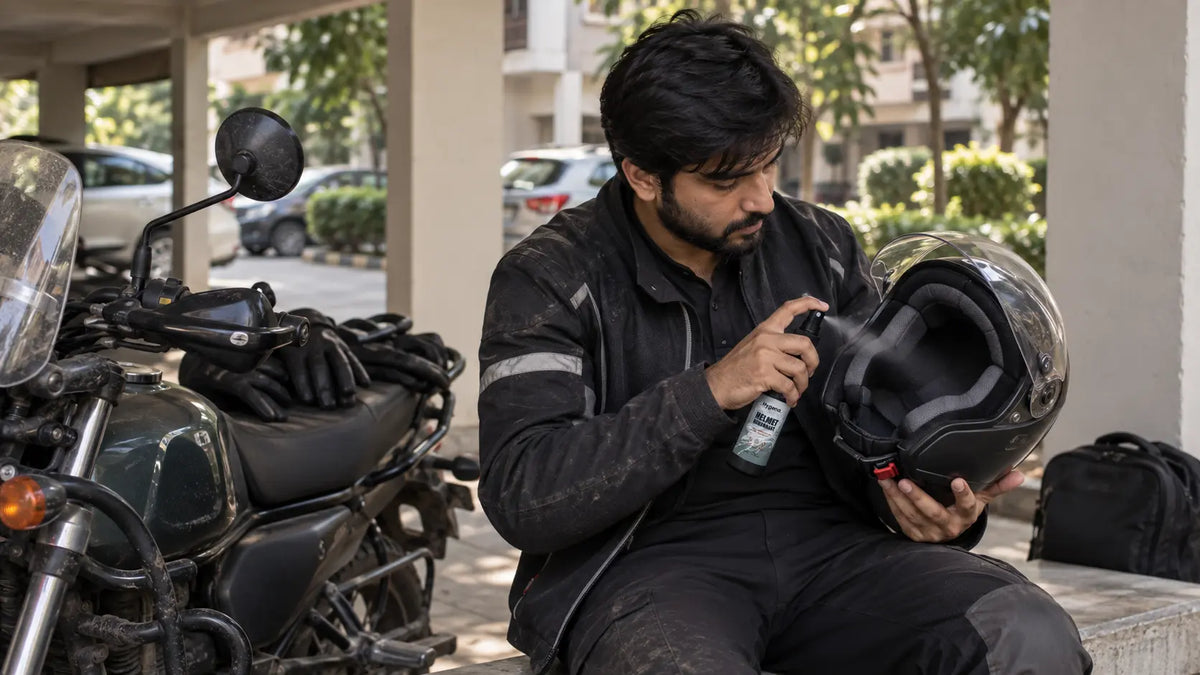
That first helmet-on ride through Chandigarh can feel fine. The second hour is different.
Heat, sweat, scalp oils and repeated helmet use leave moisture inside your liner. Bacteria can then contribute to the smell that perfume only covers. A 2021 study of 130 motorcycle helmets recovered 392 bacterial isolates and 346 fungal isolates from the helmets tested. The same study found more microbial growth among helmets that weren't washed or disinfected regularly. Source: Microbial Diversity and Antibiotic Susceptibility Pattern of Bacteria Associated with Motorcycle Helmets, 2021.
If you're searching for a helmet sanitizer Chandigarh riders can use between washes, start with the real problem. Your helmet needs an interior hygiene routine that fits your riding schedule.
- Chandigarh's hottest months average maximum temperatures above 38°C.
- A 2021 helmet study found bacteria and fungi across 130 tested helmets.
- Traffic, sweat and repeated wear make regular interior hygiene practical, not optional.
- Choose a helmet-specific hygiene product instead of masking smell with perfume.
Why does Chandigarh's climate make helmet hygiene harder?
Chandigarh's summer heat can turn your helmet liner into a sweat-collecting layer. IMD's Chandigarh climate profile puts the mean maximum temperature for May and June at 38.3°C. It also records 106.8 cm of average annual rainfall and 46 rainy days. That combination gives riders both hot, sweaty rides and wet-weather drying problems. Source: India Meteorological Department, Meteorological Centre Chandigarh.
IMD reports that Chandigarh's mean maximum temperature reaches 38.3°C in May and June. Its climate profile also records 106.8 cm of average annual rainfall and 46 rainy days. For riders, hot weather increases sweat load, while wet rides can make the liner harder to dry fully. Source: India Meteorological Department, Meteorological Centre Chandigarh.
Your liner sits against your forehead, cheeks and scalp. During a hot ride, those areas can stay warm and damp inside an enclosed space. Skin microbes can use sweat and sebum as nutrients, according to microbiology research. A 2023 study found that many skin-associated bacterial strains preferred higher sweat concentrations in laboratory conditions. Source: Microbiology Spectrum, 2023.
That doesn't mean every helmet is dangerous. It means your liner is a biological environment. Treating it like one makes more sense than treating odor as a perfume problem.
How does Chandigarh traffic affect your helmet routine?
Helmet-on time matters because your liner stays against your skin while you wait, stop and move again. Chandigarh's official master-plan material describes heavy through traffic and reports about 1,52,650 vehicles entering or leaving the Chandigarh Urban Complex on a typical working day. The figure comes from traffic studies cited in the master plan. Source: Chandigarh Master Plan 2031, traffic chapter.
Chandigarh's Master Plan 2031 cites traffic studies that recorded about 1,52,650 vehicles entering or leaving the Chandigarh Urban Complex on a typical working day. The plan also identifies through traffic as a pressure on the city's roads. Longer stop-and-go journeys can mean longer periods wearing a warm, enclosed helmet. Source: Chandigarh Administration, Master Plan 2031.
Chandigarh was designed around a clear road hierarchy. The administration describes its 7V system as a structured network of arterial roads, major boulevards, sector roads and neighbourhood streets. That structure doesn't remove traffic pressure, especially where city and inter-city movement overlap. Source: Chandigarh Administration.
There's another useful rider detail. Chandigarh recorded strong two-wheeler demand even while its EV policy changed registration limits. In 2023, the administration revised the annual allowance for non-electric two-wheelers, and 13,685 slots were later filled. Source: Hindustan Times, 2023.
Our finding: Chandigarh's rider problem isn't one long tour. It's repeated short exposure. A daily commute can put sweat into the same liner contact points again and again.
That makes a quick post-ride routine useful. Let the helmet dry in a ventilated place, avoid storing it while damp, and use a helmet-specific hygiene product when odor starts returning.
What bacteria are actually doing inside your helmet?
Helmet odor isn't just trapped sweat. Bacteria can transform compounds associated with sweat into odor-producing molecules. A 2018 microbiome study found positive associations between odor intensity and bacteria including Staphylococcus hominis and Staphylococcus epidermidis. Source: BMC Microbiology, 2018.
A 2018 microbiome study analysed 180 samples from skin sites including the head and neck. It found positive correlations between odor intensity and the relative abundance of Staphylococcus hominis, Staphylococcus epidermidis and Cutibacterium avidum. The study also linked specific bacterial pathways with malodor-associated compounds. Source: BMC Microbiology, 2018.
Motorcycle helmets can also carry a wider mix of microbes. In the 2021 study of 130 helmets, researchers recovered 392 bacterial isolates and 346 fungal isolates. Helmets without washing or disinfection showed bacterial growth in 86.7% of samples and fungal growth in 83.3%.
Those numbers come from one Nepalese study. They shouldn't be treated as a measurement of every Chandigarh helmet. They do show why helmet hygiene deserves its own routine.
Important: microbial presence doesn't automatically mean illness. The practical takeaway is simpler. Sweat and repeated wear create conditions where microbes can persist, so your helmet needs regular care.

How do Chandigarh riders fit helmet hygiene into real life?
Chandigarh is also a launch point for longer Himalayan rides. Team-BHP ride reports document motorcycle trips starting from Chandigarh toward destinations including Narkanda, Chitkul, Spiti and Manali. One 2026 ride report describes a group leaving Chandigarh at 4:00 AM to get ahead of expected traffic and weather. Source: Team-BHP, 2026.
Team-BHP ride reports show Chandigarh being used as a starting point for Himalayan motorcycle trips. A 2026 report described a group leaving Chandigarh at 4:00 AM before a ride toward Narkanda. These reports show the city's role as both a daily riding base and a gateway for longer rides. Source: Team-BHP, 2026.
That culture changes what "helmet care" means. A daily commuter may need a short evening routine. A tourer may need to manage sweat after several riding hours, especially when the same helmet stays in use across multiple days.
So, Chandigarh mein helmet fresh rakhna complicated nahi hona chahiye. The routine should be short enough that you'll actually repeat it.
What should you look for in a helmet sanitizer Chandigarh riders can use?
Start by checking what the product is designed to do. A true helmet hygiene product should address the interior, fit the intended materials, and help control the microbial conditions behind recurring odor. Don't confuse a perfume spray with an antimicrobial hygiene routine.
Hygena is built as a bacteriostatic helmet deodorant for the helmet interior. Its role is to help control odor-causing bacteria rather than cover the smell with fragrance. That's a better match for riders who want a repeatable hygiene habit between deeper cleaning sessions.
Use it as part of a routine. First, let the helmet dry. Then apply the product according to its label directions. Give the interior time to settle before wearing the helmet again.
Our finding: The useful Chandigarh routine is prevention between washes. Cleaning removes accumulated grime. A bacteriostatic hygiene product targets the conditions behind recurring odor.
Make helmet hygiene part of your ride routine with Hygena. It's designed specifically for the inside of helmets, so you don't have to improvise with household fresheners.

Helmet sanitizer Chandigarh: frequently asked questions
Does Chandigarh's heat make helmet smell worse?
It can make sweat management harder. IMD reports a mean maximum of 38.3°C for May and June in Chandigarh. Sweat and sebum can support skin microbes, while an enclosed liner holds warmth and moisture. Source: IMD Chandigarh climate profile and Microbiology Spectrum, 2023.
How often should Chandigarh riders sanitize a helmet?
There's no single schedule for every rider. Daily commuters should inspect the liner often and maintain it regularly. The 2021 helmet study found higher microbial growth in helmets that weren't washed or disinfected. Use a routine that matches your sweat and riding frequency.
Can perfume replace a helmet hygiene spray?
Perfume can change the smell you notice, but it doesn't address the microbial source of odor. Research links bacterial metabolism with sweat-related malodor. Choose a product designed for helmet interiors when your goal is hygiene rather than fragrance.
Is Hygena a helmet disinfectant?
Hygena is a bacteriostatic helmet deodorant, not a medical-grade disinfectant. It's designed for helmet hygiene and odor control. Follow the product label for correct use and don't treat it as a substitute for professional disinfection when a helmet has been exposed to a specific contamination risk.
Where can I buy helmet hygiene products in Chandigarh?
You can order Hygena online through the brand's website. For city-specific availability, check the current product page before ordering. The product is designed for riders who want an interior hygiene routine without relying on fragrance alone.
Keep your Chandigarh helmet fresh between rides
Your helmet spends a lot of time close to your skin. In Chandigarh, hot summers, wet-weather riding and regular two-wheeler use can make interior hygiene easy to overlook.
The science points to a simple habit. Sweat creates a useful environment for skin microbes, and bacteria can contribute to odor. A 2021 study also found substantial microbial growth in motorcycle helmets that weren't washed or disinfected.
Give your helmet time to dry. Keep the interior clean. Add a helmet-specific hygiene step when odor keeps returning.
Try Hygena and build a helmet hygiene routine that fits your Chandigarh rides.
For the next step, read our guide on helmet hygiene and rider science.
Sources
- India Meteorological Department. Meteorological Centre Chandigarh climate profile. Source.
- Adhikari et al. "Microbial Diversity and Antibiotic Susceptibility Pattern of Bacteria Associated with Motorcycle Helmets." 2021. Source.
- Swaney et al. "Sweat and Sebum Preferences of the Human Skin Microbiota." 2023. Source.
- Jian et al. "Understanding the microbial basis of body odor in pre-pubescent children and teenagers." 2018. Source.
- Chandigarh Administration. Master Plan 2031, traffic chapter. Source.
- Chandigarh Administration. General information and road circulation system. Source.
- Hindustan Times. Chandigarh two-wheeler registration coverage, 2023. Source.
- Team-BHP. "SPITI'tude 2026: Altitude Vs Attitude." 2026. Source.
Share:
Helmet Cleaner Guwahati: What Riders Should Know
Helmet cleaner Dhanbad: What Riders Should Know