
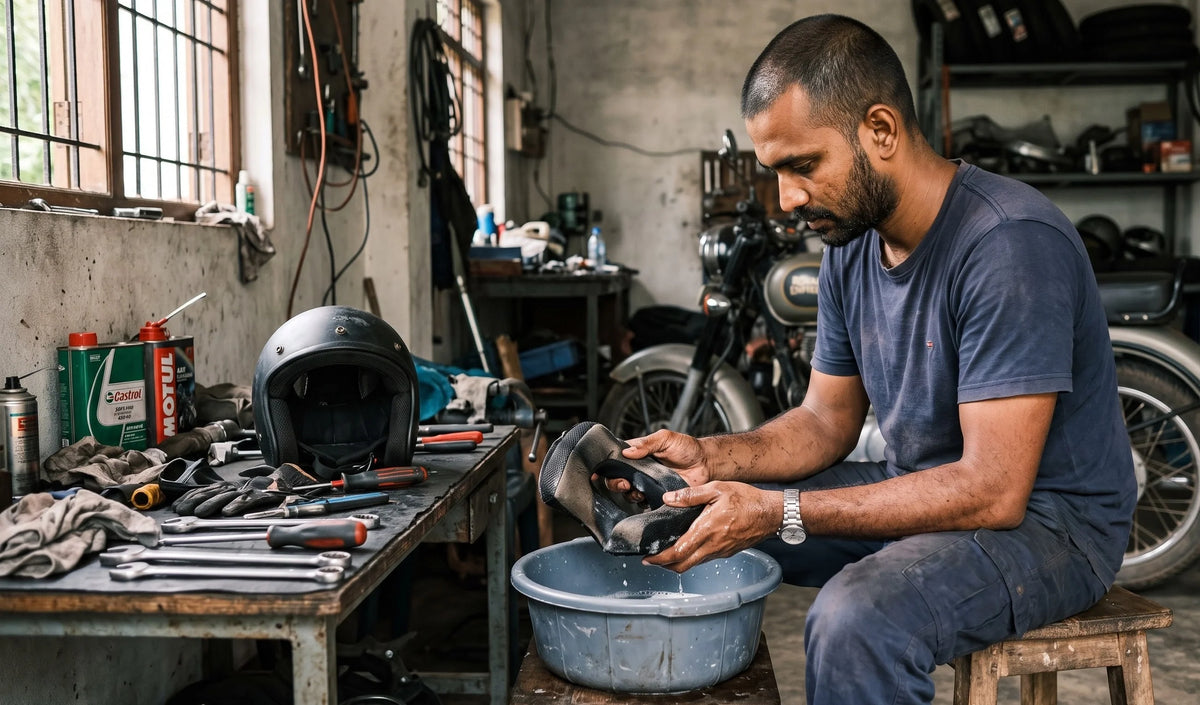
Your helmet padding absorbs every sweaty commute, weekend ride, and long tour.
Over time, sweat, skin oils, dust, and moisture collect in the liner. That can leave the padding smelling stale and feeling less fresh against your scalp. Cleaning helps remove the buildup that regular airing can't remove.
This guide walks you through helmet padding cleaning without treating your helmet like ordinary laundry. The safest method depends on your helmet's construction. Your owner's manual always comes first.
Rider Takeaways
- Remove only padding your helmet manufacturer says is removable.
- SHOEI allows removable comfort liners to be washed at 30°C with neutral detergent.
- Arai recommends lukewarm water, mild soap, gentle hand washing, and shade drying.
- Never treat the EPS impact liner like removable comfort padding.
What do you need for helmet padding cleaning?
For most removable helmet padding, you need lukewarm water, mild neutral detergent, and a clean towel. You also need a clean, ventilated place for slow air drying.
SHOEI's helmet-care guidance says removable comfort-liner parts can be hand washed or machine washed at 30°C. It also specifies a washing bag and neutral cleaning agent. Source: SHOEI Helmet Care & Maintenance.
SHOEI recommends washing removable comfort-liner parts by hand or at 30°C with a washing bag and neutral cleaning agent. Fixed padding should be wiped with a damp cloth instead. Source: SHOEI Helmet Care & Maintenance.
Keep harsh solvents, petrol, thinner, benzene, and aggressive cleaners away from helmet padding. Arai's manual specifically warns against solvents and recommends lukewarm water with mild soap for fabric coverings.
You'll also want a phone nearby. Take photos before removing pads if you're unsure where each snap or tab belongs. That small step can save you from a frustrating reassembly session.
Helmet padding cleaning should start with the manufacturer's instructions. SHOEI permits washing removable comfort-liner parts at 30°C with neutral detergent. Arai recommends lukewarm water and mild soap for fabric coverings. Both approaches prioritize gentle cleaning and complete drying.
Internal link: Why helmet hygiene matters.
How do you remove helmet padding safely?
Start with the cheek pads and center pad only if your helmet is designed for removal. Don't pull hard when a pad resists. A hidden snap or tab may still be attached.
SHOEI describes removable and washable interior systems on its helmets. Its care guidance also says removable interior parts should be removed before cleaning. Source: SHOEI Helmet Care & Maintenance.
SHOEI says removable interior comfort-liner parts should be removed for washing, while fixed padding should be cleaned with a damp cloth. This distinction matters because motorcycle helmets use different interior constructions across models. Source: SHOEI Helmet Care & Maintenance.
- Read the owner's manual before touching the liner.
- Photograph the pad layout before removal.
- Release the cheek pads using their designed snaps or fasteners.
- Remove the center pad if the design allows it.
- Keep left and right cheek pads separated.
- Inspect each piece for tears, loose foam, or damaged fasteners.
Don't remove the EPS impact liner just because it looks removable. The comfort padding and impact liner have different jobs. Cleaning them the same way can cause damage.
Our finding: The safest cleaning routine starts before water touches the padding. Knowing what you can remove prevents the common mistake of treating every helmet interior part as washable fabric.
Safe helmet padding cleaning begins with correct disassembly. Removable comfort pads can be cleaned according to the helmet maker's instructions. Fixed padding and EPS components need gentler treatment. If a component does not clearly detach, leave it installed and follow the manufacturer's cleaning method.
Internal link: See Hygena Helmet Deodorant Spray.
How should you wash helmet padding?
Use lukewarm water and a mild, neutral cleaning agent. Work the detergent gently through the fabric instead of scrubbing aggressively. The goal is to lift sweat and grime without rough treatment.
Arai's Tour-X5 manual says fabric coverings should be washed in lukewarm water with a small amount of laundry soap or shampoo. It says to wash gently by hand and rinse well with fresh water. Source: Arai Tour-X5 manual.
Arai's Tour-X5 manual recommends gentle hand washing with lukewarm water and a small amount of laundry soap or shampoo. It also says to rinse the fabric covering well before drying it in the shade at ambient temperature. Source: Arai Tour-X5 manual.
- Fill a basin with lukewarm water.
- Add a small amount of mild detergent.
- Submerge the removable padding.
- Gently squeeze and massage the fabric.
- Rinse until the water runs clear and detergent is gone.
- Press the padding between clean towels to remove excess water.
Don't twist the pads hard. Aggressive wringing can deform foam and stress seams. If your manufacturer gives a different method, use that method instead.
For removable helmet padding, manufacturer guidance favors gentle washing. Arai recommends lukewarm water, mild soap, hand washing, thorough rinsing, and shade drying. SHOEI permits removable comfort liners to be washed at 30°C with neutral detergent. Always follow your own helmet model's manual.
Internal link: Learn why helmet hygiene matters.
How should you dry helmet padding?
Drying is part of cleaning, not an optional final step. Reinstalling damp padding traps moisture inside the helmet. That can make the interior feel clammy and leave you back where you started.
Arai instructs users to dry fabric coverings in the shade at ambient temperature. Its guidance also warns against drying near a heat source or in direct sunlight. Source: Arai interior-care guidance.
Arai advises drying cleaned interior parts in the shade at ambient temperature. Its guidance warns against direct sunlight and heat sources. This is especially useful after washing because rushing the drying stage can leave moisture trapped inside the padding. Source: Arai Helmet.
Lay the pads flat or place them where air can move around them. Keep them away from hair dryers, heaters, radiators, and direct midday sun.
Give the padding enough time to dry completely. Don't judge dryness only by the surface. Press the thickest areas gently and check for hidden moisture.
Helmet padding should be completely dry before reinstallation. Arai recommends shade drying at ambient temperature and warns against direct sunlight and heat sources. The practical rule is simple: if the thickest foam still feels damp, the padding isn't ready to go back into the helmet.
Internal link: Keep your helmet hygiene routine simple with Hygena.

Can helmet padding cleaning remove helmet smell?
Yes, washing can remove sweat, oils, and accumulated grime from removable padding. But cleaning and odor prevention are different jobs. Washing removes buildup. Hygiene products can help control the bacteria linked with recurring odor.
Research on other enclosed headgear shows why interior hygiene deserves attention. In a 2022 study of 44 surgical helmets, 73% of 132 helmet samples yielded bacteria on culture. That study involved surgical helmets, not motorcycle helmets, so it can't be treated as a direct motorcycle statistic. Source: Journal of Arthroplasty study, 2022.
Our finding: Padding cleaning should be treated as a reset, not the entire helmet hygiene routine. After a wash, your next priority is keeping the interior dry and controlling recurring odor between washes.
That's where a product like Hygena fits. Hygena is designed for helmet hygiene rather than replacing a proper wash. Use it according to the product directions after the padding is clean and dry.
Make your post-ride routine easier with Hygena Helmet Deodorant Spray.
There's another useful distinction. A 2019 study found bacteria on all tested sterile surgical helmet systems. It reported a mean colony count of 410 CFU/m² in the tested systems. Again, those were surgical helmets, so use the result as context, not a motorcycle-helmet measurement. Source: Journal of Hospital Infection study, 2019.
Washing removable helmet padding can remove accumulated sweat, oils, and grime, but it doesn't replace ongoing helmet hygiene. Studies of surgical headgear have found bacterial contamination, while motorcycle helmet manufacturers provide specific cleaning rules. Use washing for buildup and a suitable hygiene routine for between-wash freshness.
Internal link: Read more about helmet hygiene.
What should you never use on helmet padding?
Avoid solvents, petrol, thinner, benzene, and harsh cleaners unless your helmet maker explicitly approves a product. These chemicals can damage helmet materials or leave residues that don't belong against your skin.
Arai's manual explicitly warns against petrol, thinner, benzene, and other solvents. SHOEI also warns that plastic helmet parts can be damaged by solvents and corrosive cleaners. Source: Arai Tour-X5 manual and SHOEI Helmet Care & Maintenance.
Arai's manual specifically says never to use petrol, thinner, benzene, or other solvents on its fabric coverings. SHOEI also advises against solvent-based and corrosive cleaners for helmet components. Manufacturer guidance should override generic cleaning advice. Sources: Arai; SHOEI.
- Don't use petrol or fuel-based cleaners.
- Don't use thinner or benzene.
- Don't soak the EPS impact liner.
- Don't use high heat to speed drying.
- Don't reinstall padding while it's still damp.
- Don't force pads out when the manual doesn't support removal.
If your liner smells strongly after washing, don't keep adding stronger chemicals. Find the cause first. The padding may need more thorough rinsing, complete drying, or replacement if it's damaged or badly worn.
Helmet padding should be cleaned with materials approved by the helmet manufacturer. Arai warns against petrol, thinner, benzene, and other solvents. SHOEI recommends neutral cleaning agents and warns against solvents and corrosive cleaners. Stronger chemicals aren't a shortcut to better helmet hygiene.
Internal link: See Hygena's helmet hygiene spray.
How often should you clean helmet padding?
There's no single washing interval that fits every rider. Your schedule should reflect how much you sweat, how long you wear the helmet, and how quickly the padding gets dirty or damp.
A daily commuter riding in Indian summer may need more frequent cleaning than a weekend rider. Delivery riders who spend many hours helmet-on should pay closer attention to odor, moisture, and padding condition.
Instead of waiting for a strong smell, check the padding regularly. If it feels greasy, looks visibly soiled, or stays damp after rides, it's time to clean it.
Cleaning frequency depends on use rather than a universal calendar. Daily riders and high-sweat riders should inspect padding more often. Visible grime, persistent dampness, or recurring odor are practical signs that the liner needs attention. Always follow the helmet maker's specific care instructions.
Internal link: Build a better helmet hygiene habit.

Frequently asked questions
Can I machine wash helmet padding?
Some manufacturers allow it. SHOEI permits removable comfort-liner parts to be washed at 30°C with a washing bag and neutral detergent. Other helmet makers may give different instructions. Check your manual before using a washing machine.
Can I dry helmet padding in direct sunlight?
Arai advises drying fabric coverings in the shade at ambient temperature. It also warns against direct sunlight and heat sources. Let the padding dry naturally rather than using a heater or hair dryer.
Can I wash the EPS liner?
Don't treat EPS like removable fabric padding. SHOEI says its EPS liner should be cleaned with a damp cloth and handled carefully. Your helmet manual should decide the exact method for your model.
Why does my helmet still smell after washing?
Washing can remove accumulated sweat and grime, but recurring odor can return between washes. Make sure the padding dries fully after every wash and ride. A helmet hygiene product can also help manage odor between deeper cleaning sessions.
How do I clean helmet padding without damaging it?
Use the helmet maker's method, mild cleaning products, gentle handling, and complete air drying. Arai recommends lukewarm water and mild soap. SHOEI recommends neutral detergent for removable comfort liners.
Helmet padding cleaning should become part of your ride routine
Your helmet padding takes the daily hit from sweat, skin oils, and moisture. Give it the same attention you give the rest of your riding gear.
Remove only what your helmet allows. Wash gently. Rinse thoroughly. Dry completely. Then keep the interior fresh between washes with a rider-specific hygiene routine.
That's the practical approach to helmet padding cleaning. You don't need aggressive chemicals or complicated gear. You need the right method and a routine you can actually stick to.
Keep your helmet hygiene routine easier with Hygena.
For the science behind a cleaner helmet interior, read Why helmet hygiene matters.
Sources
- SHOEI Helmets, "Helmet Care & Maintenance," accessed September 15, 2026. https://shoei-helmets.com/support/helmet-maintenance.html
- Arai Helmet, "Tour-X5 Manual," accessed September 15, 2026. https://www.araihelmet.eu/storage/uploads/blocks/834/block_1/1/tour-x5-manual.pdf
- Arai Helmet, interior-care factsheet, accessed September 15, 2026. Arai interior-care guidance
- Moores et al., Journal of Hospital Infection, 2019. PubMed: 29908253
- Surgical helmet contamination study, Journal of Arthroplasty, 2022. PubMed: 35341923
- Hygena, "Why Helmet Hygiene Matters." Hygena Rider Science
Share:
Helmet Cleaner Patiala: Why the Sports Capital Needs One
Why Does Your Helmet Smell Worse in Bhubaneswar Traffic?