
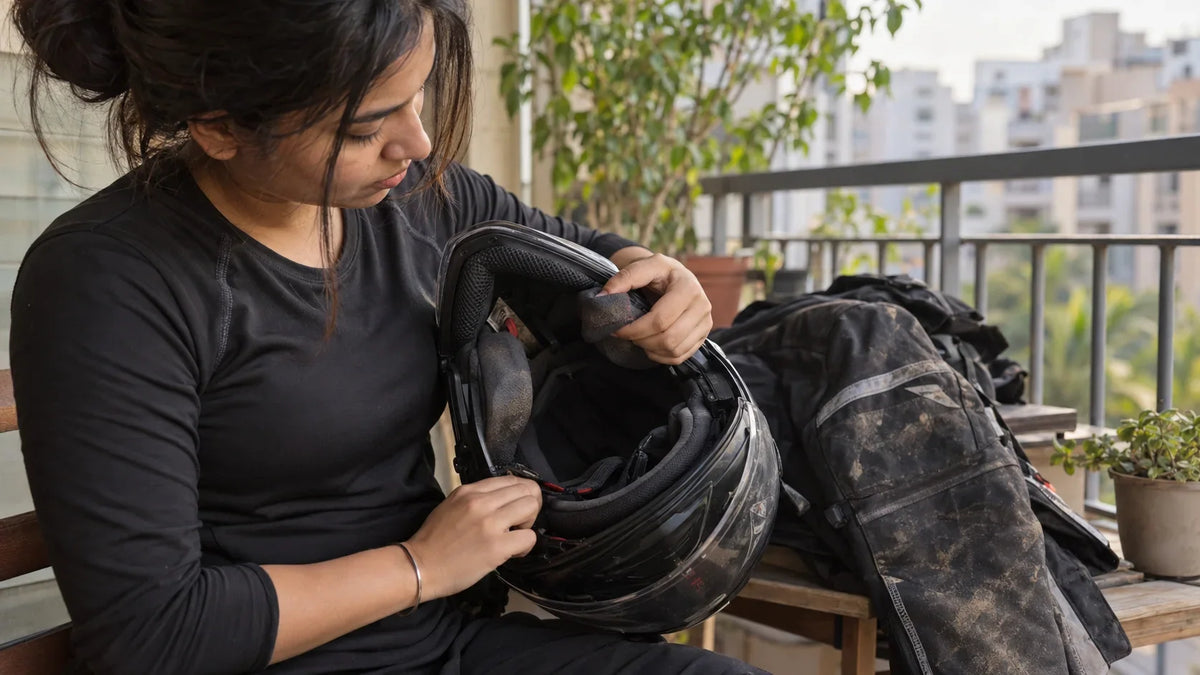
You clean your bike after a long ride. But when did you last check the inside of your helmet?
Your helmet liner sits against your scalp, forehead, and cheeks. Every ride can add sweat, skin oil, dust, and moisture to that padding. Leave the interior damp and neglected, and unpleasant smells can build up. Microbes may also remain on helmet surfaces.
Helmet hygiene means keeping the parts that touch your head clean, dry, and cared for. It combines safe liner cleaning, thorough drying, sensible sharing habits, and regular odor control. You don't need a complicated routine. You do need one you can repeat.
Rider Takeaways
- In a 2020 study, researchers examined 130 motorcycle helmets and recovered 392 bacterial isolates and 346 fungal isolates. These are isolates, not a percentage of helmets proven dangerous.
- Follow your helmet maker's instructions before washing removable liners or applying any spray.
- Dry the liner completely after cleaning, and never put a damp helmet straight back into daily use.
- Cleaning removes accumulated grime; a purpose-made hygiene product may help manage odor between deeper cleans.
What does helmet hygiene actually mean?
Helmet hygiene is the routine care of your helmet's interior, especially the liner, cheek pads, and other surfaces that contact your skin. It includes removing built-up sweat and oils, drying the padding, and managing odor without damaging the helmet's materials.
Your helmet is safety equipment first. Don't soak its impact-absorbing liner, use harsh household chemicals, or pull apart parts the manufacturer doesn't intend you to remove. A clean-smelling helmet is useful, but protecting the helmet's fit and structure matters more.
A practical routine has two parts. First, clean the interior when it needs cleaning, following the manual. Second, maintain it between washes by letting it air out and using only products approved for the helmet's materials.
Helmet hygiene means caring for the liner and other interior contact surfaces, not polishing the shell. In a 2020 study of 130 motorcycle helmets, researchers recovered bacteria and fungi from sampled helmets. The result supports regular care, but it does not mean every detected organism causes illness.
Source: Sapkota et al., 2020.
Helmet hygiene combines safe interior cleaning, complete drying, and odor management. A 2020 study in the International Journal of Microbiology examined 130 motorcycle helmets and recovered 392 bacterial isolates and 346 fungal isolates. The study documented microbial presence; it did not establish that every sampled helmet would cause an infection.
Related reading: How to clean your motorcycle helmet liner
Why can your helmet smell even after a ride?
Helmet odor often develops when sweat, skin oils, and moisture collect in the padding. Microbes can contribute to the breakdown of organic material and to the smell. Airing the helmet out helps it dry, but drying alone doesn't remove every deposit left behind.
A warm ride, a slow traffic crawl, or a long touring day can leave the liner damp. If you close the helmet inside a bag or storage box while it's still wet, moisture may linger. Over time, that can make the padding smell stale.
The science needs a little care. Studies have recovered different bacteria and fungi from sampled motorcycle helmets, but detection doesn't automatically prove a health risk. The 2020 study by Sapkota and colleagues found multiple microbial groups across 130 helmets. It also reported higher microbial growth in helmets that had never been washed or disinfected than in those reported as cleaned. The study was observational, so it doesn't prove that a particular cleaning routine prevents illness.
So what's the useful takeaway? Treat odor as a sign to check your routine. Don't cover a stale smell with perfume and assume the cause has disappeared.
Our finding: Riders often treat helmet odor as a quick-freshening problem. A better routine separates three jobs: remove buildup when needed, dry the liner fully after use, and manage odor between washes. Each step solves a different part of the problem.
A helmet can smell stale because moisture and skin residue remain in its padding. In a 2020 study, researchers recovered 392 bacterial isolates and 346 fungal isolates from 130 motorcycle helmets. These results show microbial presence in the samples, not that every microbe is harmful or that odor alone can identify a specific organism.
Related reading: Why your helmet smells
How should you clean the inside of your helmet?
Start with your helmet's manual. Manufacturers use different liner materials, adhesives, and removable-pad systems, so one cleaning method doesn't suit every helmet. If the liner is removable and washable, follow the exact washing and drying instructions. If it's fixed, use only the method the maker permits.
A sensible process looks like this:
- Check the manual. Confirm which pads can be removed and which cleaning products are allowed.
- Remove only approved parts. Take out removable cheek pads or liners gently. Don't force clips or pull at glued sections.
- Wash as directed. Use the specified water temperature and a mild cleaner if the manufacturer permits one. Avoid bleach, solvents, and aggressive scrubbing.
- Rinse carefully. If the instructions call for rinsing, remove soap residue without stretching or twisting the padding.
- Air-dry completely. Leave the parts in a ventilated place away from direct heat. Don't use a hair dryer, radiator, or clothes dryer unless the manufacturer specifically permits it.
- Reassemble correctly. Make sure every pad and fastener sits in its original position before wearing the helmet.

If your helmet's liner isn't removable, don't improvise by flooding the interior. Use a lightly damp cloth only if the manual permits it, and keep moisture away from areas that shouldn't get wet.
When should you clean it? There isn't one universal interval for every rider. Daily commuters, delivery riders, and summer tourers may build up sweat faster than occasional riders. Check the liner regularly and clean it when it looks soiled, feels grimy, or holds odor after proper drying. Follow any schedule given by the manufacturer.
The safest helmet-cleaning method depends on the model's materials and construction. Before removing pads, washing fabric, or applying a liquid product, consult the helmet maker's care instructions. The 2020 Sapkota study found more microbial growth among helmets reported as never washed or disinfected, but it did not establish one universal cleaning schedule.
To clean a motorcycle helmet safely, follow the manufacturer's care instructions, remove only parts designed to come out, and use permitted cleaning methods. Let washed padding air-dry fully before reassembly. Avoid soaking fixed liners or using harsh chemicals unless the manufacturer explicitly approves them for that helmet model.
Related reading: Step-by-step helmet liner cleaning
Is airing out your helmet enough?
Airing out your helmet is a good habit, but it isn't a complete cleaning routine. It helps moisture escape and can reduce the damp conditions that make a liner unpleasant. It won't reliably remove dried sweat, skin oils, dust, or residue already trapped in the padding.
After every ride, open the visor and place the helmet in a clean, ventilated spot. If the liner is wet, let it dry before storing the helmet in a bag or enclosed compartment. Don't leave it in direct sunlight or next to a heater for long periods; excess heat may damage some materials.
Pay attention to the storage area, too. A helmet put away in a damp cupboard may not dry properly. If you ride again before the liner has dried, the cycle starts over.
A useful habit is to inspect the padding while the helmet airs out. Look for visible grime, lingering odor, damaged seams, or pads that no longer fit securely. Drying helps between rides. Cleaning is still needed when residue builds up.
Our finding: Make drying a fixed part of your post-ride routine, not a rescue step when the helmet starts smelling. A ventilated storage spot and a quick liner check can help you notice dampness or buildup before the next ride.
Airing a motorcycle helmet helps moisture evaporate, but it doesn't remove all sweat residue or grime from the liner. After riding, open the helmet in a ventilated area and let damp padding dry fully before storage. Clean the interior when residue or odor persists, using only methods approved for your helmet.
Related reading: How to stop helmet sweat smell
Should you use a helmet hygiene spray?
A helmet hygiene spray may help manage odor between deeper cleans, but the product must be suitable for your helmet's materials. Check the label and your helmet manual before use. Don't assume a general room spray, perfume, or fabric freshener is safe for padding or adhesives.
There's an important distinction between cleaning and hygiene. Cleaning removes sweat, oils, and visible buildup. A hygiene product may be designed to help control odor-associated microbes or keep odor from returning as quickly. Those are different claims, and they should be supported by product-specific evidence.
Hygena is made for helmet hygiene. Use it according to its directions, and don't treat it as a substitute for washing a visibly dirty liner or drying a wet helmet. Avoid making assumptions about performance from fragrance alone. A strong scent doesn't prove that a product has addressed the source of the odor.

If you have sensitive skin, stop using any product that causes irritation and follow the label's safety directions. Never spray into your eyes or inhale a mist deliberately. If a helmet's material compatibility is unclear, check with the manufacturer before applying anything.
Keep the routine simple: clean when the liner needs it, dry it fully, and use a purpose-made product only as directed. That's a more reliable approach than spraying perfume into a damp helmet.
A helmet spray should be judged by its intended use, instructions, and evidence, not by fragrance alone. Cleaning removes accumulated soil; odor-control products have a different role. Check that any spray is appropriate for your helmet's liner and follow both the product label and the helmet manufacturer's guidance.
Choose a helmet hygiene spray only when its instructions and your helmet's care guidance are compatible. Cleaning removes residue; a hygiene product may help manage odor between washes. Neither fragrance nor a product's name proves effectiveness. Follow the label, avoid oversaturating padding, and keep the helmet out of use until dry as directed.
Related reading: Helmet deodorant vs. helmet cleaning
What changes if you share a helmet or ride every day?
Shared helmets need extra care because several people bring their own sweat, skin oils, and scalp residue into the same liner. In the 2020 study of 130 helmets, researchers reported microbial growth in 79.2% of shared helmets, compared with 61.8% of helmets that weren't shared. These figures describe that sample, not every helmet or every rider.
If you lend your helmet, make sure the interior is dry and clean before another person uses it. Don't share a helmet with visibly dirty or damp padding. If shared helmets are part of your work, follow a repeatable cleaning process between users and use products approved for the equipment.
Daily riders should build hygiene into the same routine as charging a phone or checking fuel. After the ride, open the visor, let the liner air out, and check whether it needs cleaning. Keep a note of the last wash if you ride many hours each day. Delivery riders may need to inspect their liners more often because of extended helmet-on time.
A persistent smell, visible residue, damaged padding, or irritation is a reason to review your routine. If you develop ongoing scalp symptoms, don't assume the helmet is the only cause. Consider advice from a qualified healthcare professional, especially if symptoms persist or worsen.
In a 2020 study of 130 motorcycle helmets, researchers detected bacterial growth in 79.2% of shared helmets and 61.8% of non-shared helmets. The result supports extra care around shared equipment, but it is an observational finding from one sample. Clean and dry shared helmets between users according to manufacturer guidance.
Related reading: Helmet padding bacteria and scalp comfort
Frequently asked questions
How often should I clean my helmet interior?
There's no single schedule that fits every helmet and riding pattern. Follow your helmet manufacturer's instructions, then inspect the liner regularly. Clean it when it becomes soiled, feels grimy, or holds odor after drying. In a 2020 study, helmets reported as never washed or disinfected had more microbial growth than cleaned helmets.
Does airing out a helmet kill bacteria?
Airing helps moisture escape, but it shouldn't be treated as disinfection. It also doesn't remove all skin oil or sweat residue. Let the helmet dry in a ventilated area after every ride, then clean the liner as needed using the method approved by its manufacturer.
Can I spray perfume inside my helmet?
Avoid using perfume or general room sprays unless the helmet maker explicitly permits them. Fragrance can mask odor without addressing the buildup behind it, and some products may not suit the liner materials. Choose a purpose-made helmet hygiene product only when its instructions are compatible with your helmet.
Is helmet bacteria always dangerous?
No. Detecting bacteria doesn't automatically mean a helmet will cause illness. The 2020 study by Sapkota and colleagues recovered several microbial groups from helmet samples, but the findings don't prove that every organism was harmful to each wearer. Regular care is a sensible hygiene habit, not a reason to panic.
What if my helmet still smells after cleaning?
Check whether the liner dried fully and whether the cleaning method matched the manufacturer's instructions. Persistent odor may mean residue remains, or the padding needs further care. Don't soak fixed liners or add stronger chemicals. If padding is damaged or the smell persists, ask the helmet manufacturer or an authorized service provider for advice.
Make helmet hygiene part of every ride
Your helmet protects you on the road, and its interior deserves regular care. A practical helmet hygiene routine doesn't need to be complicated. Inspect the liner, clean it when needed, let it dry completely, and be more careful when sharing helmets.
Remember the distinction: airing helps drying, cleaning removes buildup, and a suitable hygiene product may help manage odor between washes. One step doesn't replace the others. Follow the instructions for your specific helmet, especially before washing pads or applying a spray.
Hygena is designed for helmet hygiene between deeper cleans. Use it as directed and keep your helmet's material guidance in mind. Make the check part of your post-ride habit. Helmet fresh rakhna starts with a routine you can repeat.
Explore more rider advice in our guides to cleaning your motorcycle helmet liner and understanding helmet odor. When you're ready to build a helmet hygiene habit, visit Hygena.
Sources
- Sapkota, S. et al. (2020). "Microbial Diversity and Antibiotic Susceptibility Pattern of Bacteria Associated with Motorcycle Helmets." International Journal of Microbiology. Read the study. Accessed 17 October 2026.
- Adamu, L. et al. (2012). "Microorganisms Associated with Commercial Motorcycle Helmets in Lagos Metropolis." Journal of Microbiology, Biotechnology and Food Sciences. Read the article. Accessed 17 October 2026.
- Shahina, S. J. et al. (2022). "Motorcycle Helmets as Potential Fomites in Transmission of Pathogenic Micro-organisms and Antibacterial Activity of Helmet Disinfectant Spray." Asian Journal of Biological and Life Sciences. Read the article. Accessed 17 October 2026.
Suggested structured data
Use Article and BreadcrumbList schema when publishing. Add FAQ structured data only if it matches the visible FAQ content and current search-engine guidelines. Ensure internal links point to live, verified URLs before publication.
Share:
How to Prevent Sunburn While Riding a Motorcycle
Dehydration While Riding: Signs and Prevention