
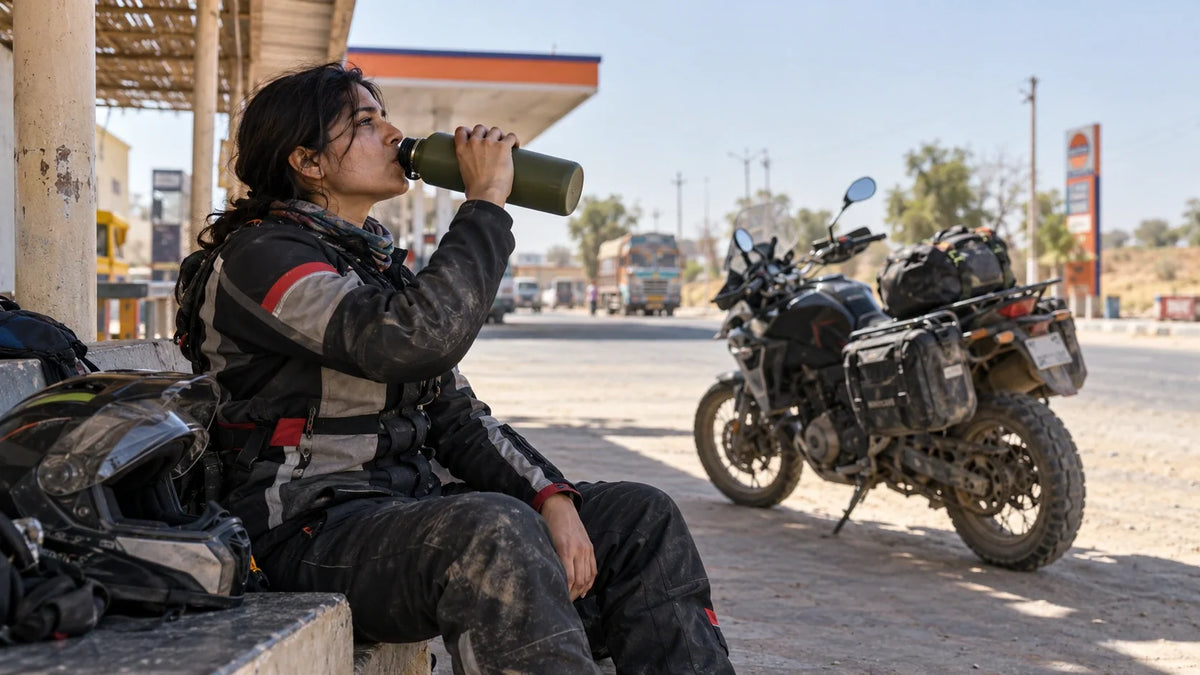
You’re stuck at a long signal, the sun is cooking your jacket, and your water bottle is still in your bag. You tell yourself you’ll drink at the next stop. Then the next stop becomes another 40 kilometres.
Dehydration while riding can creep up during hot commutes and long touring days. Heat, sweat, traffic and limited chances to stop can make it easy to miss the early signs. Headache, dizziness, weakness and nausea deserve attention, especially when you’re controlling a motorcycle.
This guide covers practical hydration habits, warning signs and what to do if you feel unwell. It isn’t a substitute for medical advice, and severe heat illness needs urgent help.
- The CDC lists headache, dizziness, weakness, nausea and heavy sweating among possible signs of heat-related illness. Source: CDC, 2026.
- Drink regularly and plan safe stops instead of waiting until you feel unwell.
- If you feel faint, weak or confused, stop riding safely and get help. Never try to push through symptoms.
Why can dehydration happen during a motorcycle ride?
Dehydration happens when your body loses more fluid than it takes in. Sweating helps you cool down, but it also removes water and salts. In hot weather, a long ride can combine heat exposure with limited opportunities to drink.
The CDC’s Yellow Book explains that dehydration can increase internal heat load and reduce exercise performance. It also notes that sweat loss can be substantial in hot conditions. These findings describe heat and exertion generally, not a measured dehydration rate for motorcyclists. Your needs depend on the weather, riding duration, clothing, health and how much you sweat. CDC Yellow Book: Heat and Cold Illness in Travelers
On a motorcycle, you may not notice thirst while concentrating on traffic. A full-face helmet and protective gear also make quick cooling breaks less convenient. That doesn’t mean you should remove protective gear while moving. Instead, plan breaks where you can safely park, take off extra layers and cool down.
Dehydration can make it harder for the body to manage heat. The CDC’s Yellow Book identifies dehydration as an important risk factor for heat-related illness. It explains that fluid loss can raise internal heat load, so riders should take heat, sweating and missed drink breaks seriously. Source: CDC, Yellow Book (accessed October 2026).
What are the early signs of dehydration or heat illness?
Don’t rely on one symptom alone. Thirst and a dry mouth can be reminders to drink, but heat illness may also involve headache, dizziness, weakness, nausea, muscle cramps or unusually heavy sweating. The CDC’s heat-health guidance lists several of these symptoms and advises people who feel faint or weak to stop activity and move somewhere cool. CDC: About Heat and Your Health
Pay attention to how you feel, not just how far you’ve travelled. If you’re getting a headache, struggling to focus, feeling light-headed or unusually weak, don’t continue riding to “get it over with.” Signal and pull over somewhere safe. Park away from moving traffic before taking off your helmet or gear.
Confusion, collapse, seizures or loss of consciousness can signal a medical emergency. Heatstroke can be life-threatening. Call your local emergency number and follow the dispatcher’s instructions. Start cooling the person while help is coming, if you can do so safely. Don’t force drinks into someone who is confused, unconscious or unable to swallow.
The CDC lists muscle cramps, heavy sweating, dizziness, headache, weakness and nausea among possible heat-related illness symptoms. These signs can overlap, so don’t try to diagnose yourself on the roadside. Stop riding, cool down and seek medical advice if symptoms are concerning or don’t improve. Source: CDC, About Heat and Your Health (2026).
How should you hydrate before and during a ride?
Start hydrated, but don’t force yourself to drink excessive amounts. Have water with your usual pre-ride meal and take a bottle you can reach safely while parked. During the ride, sip at planned stops and adjust your routine to the heat, duration and your own sweat loss.
There isn’t one exact water target that suits every rider. The CDC recommends drinking more water than usual in hot conditions and not waiting until thirst becomes intense. For long periods of exertion in heat, fluid and salt losses may matter; food and suitable electrolyte drinks can help replace losses. Individual needs vary, particularly if you have a medical condition or take medicines affecting fluid balance. CDC: Heat and Athletes · CDC Yellow Book
A practical routine:
- Before departure: Check the forecast and start with water available.
- Plan breaks: Pick safe fuel stations or rest stops before the ride, not while you’re already feeling unwell.
- Drink while parked: Never try to open a bottle or drink while the bike is moving.
- Replace long-session losses sensibly: For prolonged hot-weather riding, consider fluids and normal meals or snacks. Ask a clinician for advice if you have kidney, heart or other conditions that affect fluid or salt intake.
- Avoid overdoing it: Don’t force large volumes of plain water. Excessive intake can also be dangerous.

Our riding habit: Treat hydration like a route-planning task. Mark two or three safe places to stop before leaving. That makes drinking part of the ride plan instead of a decision you have to remember in traffic.
What should you do if you feel dehydrated on the road?
Your first task is to stop riding safely. Pull into a safe parking area, switch off the bike and move to shade or a cool indoor place. Loosen or remove extra gear once you’re away from traffic. If you’re alert, able to swallow and symptoms are mild, drink water slowly. A snack or electrolyte drink may help after heavy sweating.
Don’t treat a cold drink as permission to get straight back on the bike. Give yourself time to cool down and assess how you feel. If symptoms are worsening, significant or not improving, seek medical care. If you have confusion, fainting, collapse or other signs of severe heat illness, call emergency services immediately.
The CDC’s travel guidance explains that heat exhaustion needs cooling, rest and rehydration. It also warns that heatstroke is a medical emergency. If another rider is affected, stay with them and get help rather than leaving them alone. CDC: Heat Illnesses for Travelers
For suspected heat exhaustion, the CDC advises getting out of the heat, cooling down and drinking cool non-alcoholic fluids when the person can safely drink. Heatstroke needs emergency medical treatment. Don’t give fluids to someone who is confused or unconscious. Source: CDC, Heat Illnesses (reviewed 2024).
How can you prepare for hot-weather rides in India?
Indian riding conditions can change quickly between a cool early start, a hot afternoon and a slow-moving traffic queue. Build your plan around the day’s forecast and route. When possible, leave earlier, avoid unnecessary midday exposure and schedule a proper break before the hottest stretch.
Carry water in a secure bag or luggage compartment, not somewhere that tempts you to reach for it while moving. Choose breathable base layers that work with your protective equipment. At stops, find shade or an air-conditioned place when available. Don’t remove essential protective gear while riding to feel cooler.
Delivery riders and daily commuters may have less control over their schedules. If that’s you, keep water accessible during breaks, take symptoms seriously and speak to your supervisor about heat breaks when needed. Riders with medical conditions or medicines that affect sweating, blood pressure or fluid balance should ask a healthcare professional for a personal plan.

Make the stop non-negotiable: Add hydration breaks to the same route plan where you check fuel and rest stops. If the ride changes or the heat rises, revise the plan instead of trying to keep the original pace.
Frequently asked questions
Can you get dehydrated while riding a bike?
Yes. Sweating, hot weather and missed drink breaks can contribute to fluid loss. Your risk depends on ride duration, conditions, clothing and individual needs. Plan stops, carry water and stop riding if you develop dizziness, weakness or other concerning symptoms. Source: CDC, Yellow Book.
Is thirst the only sign of dehydration?
No. Heat-related illness can also involve headache, dizziness, weakness, nausea, muscle cramps and heavy sweating. Symptoms can overlap, so don’t use a single sign to diagnose yourself. Stop in a safe place if you feel unwell. Source: CDC, About Heat and Your Health (2026).
Should riders use electrolyte drinks?
Not every ride requires them. For ordinary, shorter rides, water and normal meals may be enough. During prolonged exertion in heat, replacing salt as well as fluid may be useful. Ask a healthcare professional if you have a condition that affects fluid or salt intake. Source: CDC, Yellow Book.
What if I feel dizzy while riding?
Don’t continue riding. Pull over safely, move somewhere cool and ask for help if needed. If dizziness is severe, symptoms worsen, or confusion or collapse occurs, seek urgent medical assistance. Never drink while riding or force fluids on someone who can’t swallow safely. Source: CDC heat-illness guidance.
Conclusion: plan water breaks before the engine starts
Dehydration while riding can affect your comfort, focus and ability to cope with heat. You can reduce avoidable risk by checking conditions, carrying water, planning safe stops and responding early to symptoms. There’s no single fluid target that fits every rider, so adjust to your route and personal needs.
If you feel weak, faint, dizzy or confused, don’t push on to the next town. Stop safely and get help. A ride plan should always leave room for your body’s warning signs.
For more practical rider-care advice, read our guides to staying clean on a long motorcycle ride and motorcycle camping hygiene. Build your hydration stops into the route, just like fuel and rest.
Sources
- Centers for Disease Control and Prevention (CDC). “Heat and Athletes.” Published 2024. https://www.cdc.gov/heat-health/risk-factors/heat-and-athletes.html
- CDC. “About Heat and Your Health.” Updated 2026. https://www.cdc.gov/extreme-heat/signs-symptoms/index.html
- CDC Yellow Book. “Heat and Cold Illness in Travelers.” https://www.cdc.gov/yellow-book/hcp/environmental-hazards-risks/heat-and-cold-illness-in-travelers.html
- CDC Travelers’ Health. “Heat Illnesses.” Reviewed 2024. https://wwwnc.cdc.gov/travel/page/travel-to-hot-climates
- CDC / NIOSH. “Heat Stress: First Aid for Heat Illness.” Publication 2024-100, 2024. https://cdc.gov/niosh/publications/numbered/2024-100.html
Share:
Helmet Hygiene: Why it is Important
The Complete Biker Grooming Routine: Helmet to Boots