
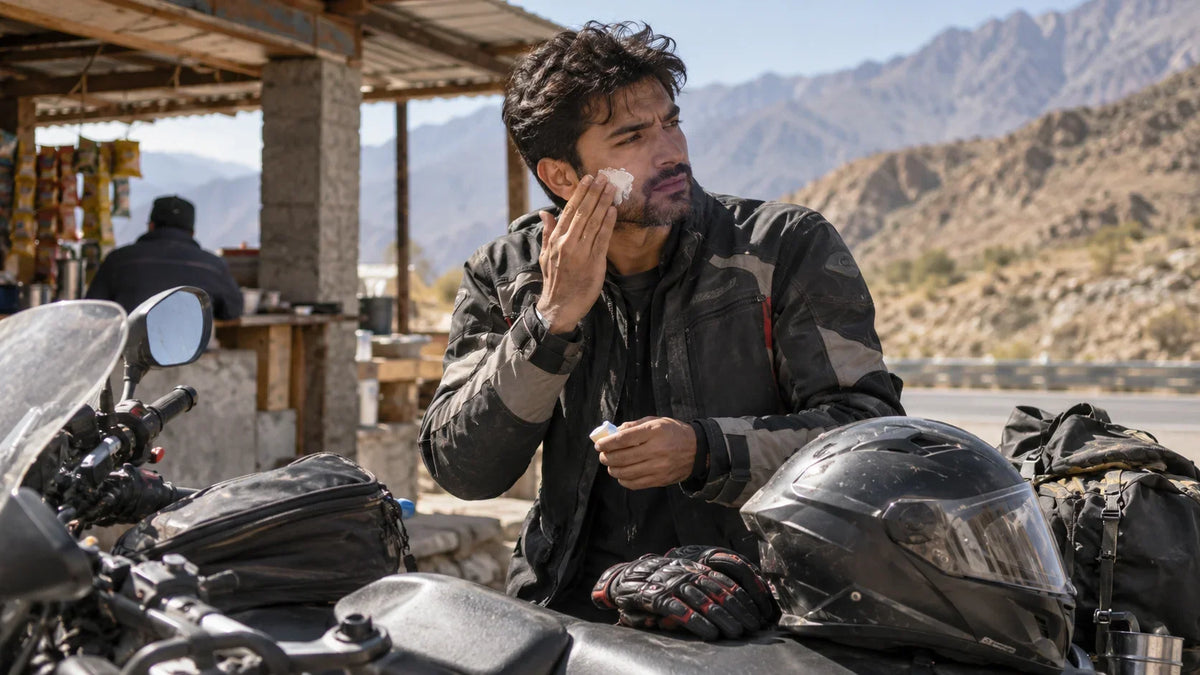
You can finish a ride without a scratch on your bike and still come home with a burning neck. It happens on highway tours, daily commutes, and quick afternoon rides. Your helmet covers part of your face, but it doesn't protect every exposed patch of skin. Your neck, wrists, fingers, and the gap around your visor can still take direct sunlight.
Learning how to prevent sunburn while riding a motorcycle comes down to a repeatable routine. Use sunscreen properly, cover exposed skin with suitable riding gear, and plan breaks around the sun where practical. The American Academy of Dermatology (AAD) recommends broad-spectrum, water-resistant sunscreen with SPF 30 or higher. It also advises reapplying every two hours outdoors, and after sweating or swimming.
Rider Takeaways
- Choose broad-spectrum, water-resistant SPF 30 or higher for exposed skin, as recommended by the AAD.
- Apply sunscreen about 15 minutes before heading outside, and reapply every two hours or sooner after heavy sweating.
- Cover your neck, wrists, and hands with riding gear designed for the conditions.
- A helmet and visor aren't a complete sun-protection plan. Check the skin they leave exposed.
Why can motorcycle riders get sunburn even with a helmet?
A helmet protects the areas it covers, but exposed skin can still receive ultraviolet (UV) radiation. The lower face, ears, neck, hands, and wrists are easy to miss when you're gearing up in a hurry. Sunburn risk also depends on the time of day, season, altitude, and your surroundings.
The US Centers for Disease Control and Prevention (CDC) explains that UV rays can reach you on cloudy and cool days. It recommends sun protection when the UV Index reaches 3 or higher. Sunburn can affect people of every skin tone, so don't use visible redness as your only warning sign. Source: CDC, Preventing Sunburn.
For riders, the practical issue is exposure time. A short ride can become a longer one after traffic, fuel stops, or an unexpected detour. If you're touring, repeated hours outdoors can add up even when the weather feels mild.

What sunscreen should you use for motorcycle riding?
Choose a broad-spectrum, water-resistant sunscreen with SPF 30 or higher. Broad-spectrum means it protects against both UVA and UVB rays. SPF mainly indicates protection against UVB, the rays most associated with sunburn. No sunscreen blocks every UV ray, so pair it with clothing and shade whenever possible.
SPF 30 filters about 97% of UVB rays under test conditions, according to the AAD. That doesn't mean you can stay in the sun indefinitely. The number doesn't remove the need to apply enough product or reapply it on schedule. Source: AAD, How to Decode a Sunscreen Label.
Look for a formula that suits your skin and feels comfortable beneath your riding gear. If you sweat heavily, choose a water-resistant product and follow the label's reapplication instructions. Water-resistant isn't the same as waterproof or sweatproof.
SPF 30 offers strong UVB protection when applied correctly, but it isn't a substitute for other sun-safe habits. Source: AAD.
How should you apply sunscreen before a ride?
Apply sunscreen to clean, dry skin around 15 minutes before going outdoors. The AAD advises using enough to cover every exposed area. For the face, its guidance suggests at least one teaspoon, then rubbing it in thoroughly. Use the product label for full-body amounts and directions. Source: AAD, How to Apply Sunscreen.
Don't stop at your cheeks and forehead. Cover the ears, nose, exposed neck, backs of the hands, and any skin visible between gloves and sleeves. Use an SPF 30 or higher lip balm on your lips. If you have thinning hair or an exposed scalp, protect that area too.
Give sunscreen time to settle before putting on your helmet or gloves. Avoid getting it into your eyes, and wash your hands if they feel slippery before handling controls. If a product irritates your skin, stop using it and choose another formula.
How often should you reapply sunscreen on a long ride?
Reapply sunscreen at least every two hours while you're outdoors, and sooner after heavy sweating. The AAD also advises reapplication after swimming. Follow the directions on your specific product, especially if you're riding in hot weather or taking repeated breaks. Source: AAD, How to Apply Sunscreen.
Build reapplication into planned stops rather than relying on memory. Keep sunscreen in a bag you can reach safely when parked. Never try to apply it while riding or while balancing your bike in traffic. After a sweaty section, dry your skin gently and follow the label before reapplying.
Cloud cover isn't a reason to skip your routine. The AAD notes that up to 80% of harmful UV rays can penetrate clouds. That's why a cloudy day can still call for protection. Source: AAD sunscreen FAQs.
Which riding gear helps prevent sunburn?
Use your riding gear as the second layer of your sun-protection routine. Choose a jacket and gloves that cover exposed skin while remaining suitable for the weather and riding conditions. For long rides, consider full-finger gloves and sleeves that don't ride up when you reach for the handlebars.
A neck gaiter or balaclava can cover the neck and lower face if it's compatible with your helmet and doesn't interfere with fit, vision, breathing, or protective equipment. Don't modify your helmet or compromise its fit to cover a patch of skin. If your visor leaves parts of your face exposed, apply sunscreen to those areas before the ride.

The CDC recommends covering arms and legs, using sunglasses that block UVA and UVB rays, and combining sunscreen with clothing and shade. For motorcyclists, use eye protection that is suitable for riding and doesn't obstruct vision. Sources: CDC, Preventing Sunburn and CDC, Sun Safety Facts.
What should you do if you get sunburned during a ride?
If you notice sunburn, get out of direct sunlight and protect the affected skin while it heals. The CDC says sunburn can worsen over 24 to 36 hours and often heals within 3 to 5 days. Avoid further sun exposure until the skin has healed. Source: CDC, Preventing Sunburn.
For mild sunburn, the CDC suggests a cool bath or cool, wet cloth and moisturizing cream or aloe. Drink plenty of water. Don't pop blisters. Seek medical care for severe pain, dehydration, fever, extensive blistering, or signs of infection.
Don't push through a ride if you're feeling unwell. Head to a safe place, stop riding, and get help if symptoms are severe. A sunburn is a warning that your skin has been damaged, not a sign that you just need a stronger tan.
Frequently asked questions
Can you get sunburn through a motorcycle visor?
A visor's UV protection depends on its material and specifications, so don't assume every visor blocks all UV radiation. Apply sunscreen to exposed skin and follow your visor manufacturer's guidance. Use suitable eye protection, and never use a tinted visor that reduces visibility beyond safe limits.
Is SPF 50 better than SPF 30 for riding?
SPF 50 filters a little more UVB than SPF 30, but neither blocks every ray. The AAD recommends broad-spectrum, water-resistant SPF 30 or higher. Correct application and reapplication matter as much as choosing a high number. Source: AAD sunscreen label guidance.
Should I wear sunscreen on cloudy riding days?
Yes. The AAD says up to 80% of harmful UV rays can penetrate clouds. Check the UV Index and use protection when recommended, even if the sky looks overcast. Source: AAD sunscreen FAQs.
How do I protect my neck and hands on a bike?
Wear gear that covers your skin without restricting movement or compromising protection. Apply sunscreen to exposed areas, including the neck, ears, and backs of your hands. Reapply during stops, especially after heavy sweating. Source: CDC sunburn prevention guidance.
Make sun protection part of your pre-ride check
Preventing sunburn while riding a motorcycle is easier when you make it part of gearing up. Choose broad-spectrum, water-resistant SPF 30 or higher, apply it before heading out, and set a reminder to reapply during longer rides. Cover the skin your helmet and riding gear leave exposed.
Keep sunscreen and SPF lip balm with your touring essentials. Check your cuffs and neck coverage before starting the engine, then take breaks in shade when practical. If you get sunburned, stay out of the sun until your skin heals.
Your pre-ride routine already includes your helmet, gloves, and other protective gear. Add sun protection to that same checklist. For more rider-focused care habits, explore Hygena's guides to skincare for motorcycle riders and helmet hygiene.
Build a sun-protection check into every ride: apply, cover, reapply.
Explore next: Skincare for motorcycle riders and helmet hygiene.
Sources
- American Academy of Dermatology. “How to Apply Sunscreen.” Accessed October 30, 2026. https://www.aad.org/public/everyday-care/sun-protection/shade-clothing-sunscreen/how-to-apply-sunscreen
- American Academy of Dermatology. “How to Decode a Sunscreen Label.” Accessed October 30, 2026. https://www.aad.org/public/everyday-care/sun-protection/shade-clothing-sunscreen/understand-sunscreen-labels
- American Academy of Dermatology. “Sunscreen FAQs.” Accessed October 30, 2026. https://www.aad.org/media/stats-sunscreen
- Centers for Disease Control and Prevention. “Preventing Sunburn.” Accessed October 30, 2026. https://www.cdc.gov/skin-cancer/prevention/sunburn.html
- Centers for Disease Control and Prevention. “Sun Safety Facts.” Accessed October 30, 2026. https://www.cdc.gov/skin-cancer/sun-safety/
- US Food and Drug Administration. “Sunscreen: How to Help Protect Your Skin from the Sun.” Accessed October 30, 2026. https://www.fda.gov/drugs/understanding-over-counter-medicines/sunscreen-how-help-protect-your-skin-sun
Share:
Bike Helmet Cleaner: What Actually Works Inside?
Helmet Hygiene: Why it is Important