
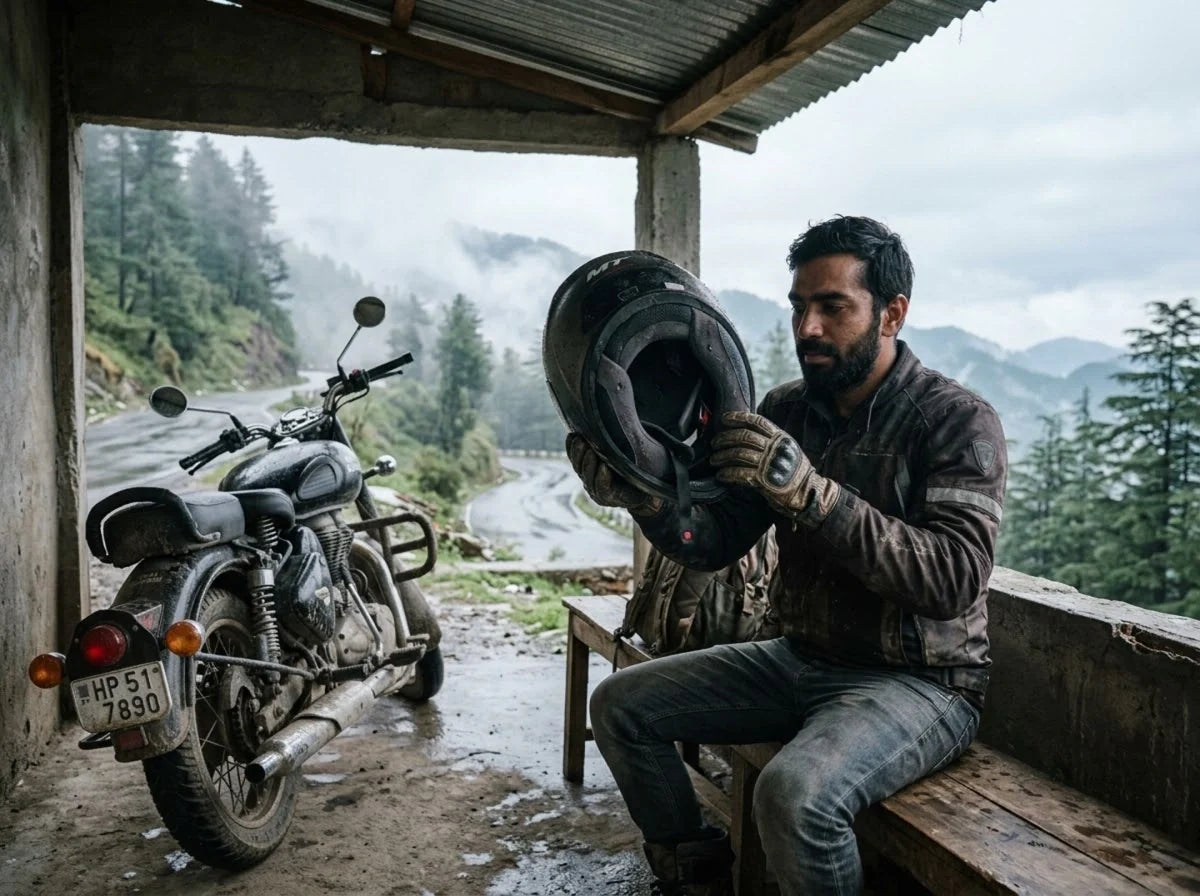
You finish a ride in Shimla, park the bike, and take off your helmet.
The outside looks fine. The inside can tell a different story.
Shimla's weather, winding roads, tourist traffic, and repeated short rides create a different helmet-care routine. In June 2025, Shimla recorded 270.8 mm of rainfall at its meteorological station. That matters when your liner stays damp after a ride. IMD Shimla, 2025.
If you're searching for a helmet cleaner Shimla riders can use between rides, start by separating cleaning from hygiene. Cleaning removes dirt and residue. Hygiene focuses on controlling the microbes and odor that build up inside the liner.
- Shimla recorded 270.8 mm of rain in June 2025, so damp liners deserve attention. Source: IMD Shimla.
- A 2025 study found 392 bacterial and 346 fungal isolates across 130 motorcycle helmets.
- Helmet cleaning and helmet hygiene solve different parts of the same problem.
- Use a rider-specific hygiene routine after sweaty, wet, or long rides.
Why Shimla weather can make helmet care harder
Shimla's cool climate doesn't mean your helmet interior stays dry. Rain and moisture can remain trapped around padding and fabric after a ride. The IMD reports that Shimla receives substantial monsoon-season rainfall, with June 2025 reaching 270.8 mm.
In June 2025, Shimla recorded 270.8 mm of total rainfall, according to the India Meteorological Department. Wet riding gear needs enough drying time before storage. A damp helmet liner can also hold sweat, skin oils, and residue from repeated rides. Source: India Meteorological Department.
Rain isn't the only issue. Your head still produces sweat during active riding, even when the air feels cool. A helmet also creates a small enclosed space around your scalp.
That combination can leave the liner carrying moisture from more than one source. If you put the helmet away before it dries, the next ride starts with that residue already inside.
Our finding: In Shimla, drying should be treated as part of helmet hygiene. Rainy rides change the routine because moisture can arrive from outside, not just from sweat.
Don't seal a wet helmet inside a bag or closed cupboard. Let the liner breathe in a clean, dry place first. That simple habit reduces the moisture load carried into your next ride.
Learn why bacteria drive helmet odor before choosing your next cleaning routine.
Shimla recorded 270.8 mm of rainfall in June 2025, according to the India Meteorological Department. For riders, that means helmet care can't focus on sweat alone. Wet liners should dry fully before storage, especially after monsoon rides or repeated trips through damp weather.
What does Shimla traffic do to your helmet routine?
Shimla's traffic can turn a short route into a long helmet-on session. A 2025 traffic study found more than 50 vehicles per minute at Victory Tunnel. Its stated capacity was about 20 vehicles. Peak congestion can therefore extend riding time.
A 2025 study reported more than 50 vehicles per minute at Victory Tunnel. The stated capacity was about 20 vehicles. The same research identified severe congestion around Victory Tunnel, Sanjauli Chowk, and Shoghi. Source: Discover Sustainability, 2025.
Stop-and-go riding changes how your helmet feels. You're wearing it continuously while your bike moves slowly, stops, and starts again.
That can mean more time with sweat and skin oils against the liner. A rider may also remove the helmet briefly, put it back on, and repeat the cycle several times.
The result is easy to miss. Your helmet doesn't need to look dirty to develop an odor problem.
For daily Shimla riding, build a quick after-ride habit. Open the helmet, loosen removable padding when the manufacturer allows it, and let the interior dry. Then use a purpose-built helmet hygiene product when the liner needs bacteria and odor control.
See Hygena Helmet Deodorant for a rider-focused way to control helmet odor between deeper cleaning sessions.
Shimla's narrow road network can create long stop-and-go periods for riders. A 2025 study reported a peak of 79 vehicles per minute at Victory Tunnel. Its design capacity was 20 vehicles per minute. Longer helmet-on periods make consistent drying and hygiene habits more useful.
What's actually inside a motorcycle helmet?
Your helmet liner can carry more microbial life than you expect. In 2020, researchers examined 130 motorcycle helmets and recovered 392 bacterial and 346 fungal isolates. Staphylococcus aureus was the most common bacterial isolate in that study.
A 2020 study examined 130 motorcycle helmets and recovered 392 bacterial and 346 fungal isolates. The researchers identified Staphylococcus aureus as the most common bacterial isolate, followed by Staphylococcus epidermidis. Source: International Journal of Microbiology, 2020.
The study also found higher bacterial and fungal growth in helmets that had never been washed or disinfected. Shared helmets also showed higher microbial growth than unshared helmets.
That doesn't mean every dirty helmet will make you sick. It does show why the inside of your helmet deserves regular hygiene attention.
Odor is the rider-facing warning sign. Sweat, skin oils, moisture, and microbes can build up together. Perfume can change the smell for a while, but it doesn't address the source.
That's why "helmet cleaner" can mean different things. A cleaner removes dirt and residue. A hygiene product targets the microbial and odor-control side of the problem.
Our finding: The most useful helmet-care routine isn't one big cleaning day. It's a small cycle of drying, hygiene control, and periodic liner care.
A 2020 microbiology study tested 130 motorcycle helmets and recovered 392 bacterial and 346 fungal isolates. It also found higher microbial growth in helmets that were never washed or disinfected. The findings support regular helmet hygiene rather than waiting for visible dirt or strong odor.
How should you use helmet cleaner Shimla after a ride?
Shimla's riding culture includes local commuting and longer mountain routes. Current vehicle-registration data recorded 1,281 new two-wheelers in Shimla from January through September 2026. That points to an active two-wheeler market, alongside the city's established touring culture.
Shimla recorded 1,281 two-wheeler registrations from January through September 2026 in data sourced from VAHAN reporting. TVS accounted for 499 registrations, while Royal Enfield recorded 203. Source: VAHAN-based Shimla registration data.
Local rider discussions also show Shimla as a gateway for mountain trips. Team-BHP ride reports describe routes around Narkanda, Kufri, and wider Himachal circuits. Weather and road conditions shape these rides.
That matters for helmet hygiene. A weekend ride can involve sweat, rain, dust, and hours of helmet use before you reach your stop.
If you're riding around Shimla regularly, don't wait for a bad smell before acting. Make helmet care part of the post-ride routine.
For a cleaner, use the product according to its instructions and your helmet manufacturer's care guidance. For hygiene, choose a product designed for helmet interiors rather than treating the liner like ordinary household fabric.
A Team-BHP motorcycle trip report also documents riders dealing with rain, traffic jams, and long Himalayan riding days around Shimla.
Shimla recorded 1,281 two-wheeler registrations from January through September 2026. Local riding discussions also document Shimla as a base for longer Himalayan routes. For riders doing both daily commuting and touring, helmet hygiene needs to work between rides, not only after major cleaning.

Is helmet cleaner Shimla enough for recurring odor?
It depends on what you mean by "cleaner." Cleaning removes visible dirt, sweat residue, or grime. If the liner smells despite looking clean, you need to think about hygiene and odor control too.
The 2020 motorcycle-helmet study found higher microbial growth in helmets that had never been washed or disinfected. Cleaning and disinfection are related but different actions. Your routine should address visible residue, drying, and microbial control without ignoring the helmet manufacturer's care instructions. Source: International Journal of Microbiology, 2020.
For Shimla, that distinction becomes useful after wet rides. A damp liner may need drying before you do anything else.
Then consider the odor source. If the helmet smells again soon after washing, repeated microbial activity may be part of the problem.
Hygena is built for this hygiene step. Its bacteriostatic helmet deodorant is designed for helmet interiors and focuses on odor-causing bacteria rather than perfume alone.
Make helmet hygiene part of your Shimla ride routine with Hygena.
Helmet cleaning removes physical residue, while helmet hygiene focuses on microbial and odor control. Shimla riders should dry wet liners first, follow helmet-care instructions, and use a helmet-specific hygiene product when recurring odor remains.
How should you maintain your helmet after a Shimla ride?
Start with drying, then hygiene, then deeper cleaning when needed. This order keeps a wet or sweaty liner from becoming the default starting point for your next ride.
Shimla has substantial rainfall and cold winters. Its roads can also create long traffic delays during peak periods. Those conditions make a repeatable post-ride routine more practical than relying on occasional deep cleaning. Sources: IMD Shimla and 2025 Shimla traffic research.
- Let the helmet breathe. Open the visor and store the helmet somewhere dry and ventilated after a wet or sweaty ride.
- Check the liner. Look for damp patches, visible residue, or a smell that returns quickly.
- Use helmet-specific hygiene care. Apply your chosen product according to its label and your helmet manufacturer's guidance.
- Wash removable padding when required. Follow the helmet maker's instructions for removal, washing, drying, and reinstallation.
- Repeat after demanding rides. Pay extra attention after rain, long traffic crawls, or multi-hour mountain trips.
The goal isn't to turn helmet care into another chore. It's to stop the same smell cycle from returning every few days.
Explore more Rider Science articles for practical helmet hygiene habits.
A practical Shimla helmet routine starts with ventilation and drying. Add helmet-specific hygiene care when odor persists, then wash removable padding according to the helmet maker's instructions. Repeating this cycle after wet, sweaty, or long rides is easier than waiting for a strong smell to return.

Frequently asked questions
Does Shimla rain make helmet smell worse?
Rain can add moisture to the helmet environment. Shimla recorded 270.8 mm of rainfall in June 2025, according to IMD. Dry your helmet fully after wet rides. If odor keeps returning, add a helmet-specific hygiene step.
Where can I get helmet cleaner in Shimla?
You can look for helmet-care products through online motorcycle and rider-hygiene stores. For odor control, choose a product designed for helmet interiors. Hygena's helmet deodorant is available online for riders who want a dedicated hygiene step.
Is helmet cleaner the same as helmet deodorizer?
No. A cleaner focuses on removing physical residue. A deodorizer focuses on odor control. A 2020 helmet study found substantial bacterial and fungal contamination, so recurring odor deserves more than fragrance alone.
How often should Shimla riders clean a helmet?
It depends on use. Daily riders should inspect the liner often and clean removable padding according to the helmet maker's instructions. After wet or sweaty rides, dry the helmet promptly and use a hygiene product when odor starts returning.
Can I use perfume inside my motorcycle helmet?
Perfume can change the smell without addressing its source. A 2020 study recovered 392 bacterial and 346 fungal isolates from 130 motorcycle helmets. Use products intended for helmet interiors and follow the helmet manufacturer's care guidance.
Conclusion: make helmet hygiene part of your Shimla ride
A Shimla ride can mean rain, sweat, slow traffic, and long mountain routes in the same week.
Your helmet interior gets exposed to all of it.
That doesn't mean you need a complicated cleaning ritual. Let the liner dry, clean it as directed, and control recurring odor at the hygiene level.
If you're searching for a helmet cleaner Shimla riders can use as part of a better routine, remember the distinction. Cleaning handles residue. Helmet hygiene handles the odor problem that can return after the surface looks clean.
Keep your helmet fresher between Shimla rides with Hygena.
For the science behind helmet odor, read The Bacteria Behind Helmet Odor.
Sources
- India Meteorological Department, Shimla. June climate records, including 2025 rainfall. Retrieved September 18, 2026. IMD Shimla.
- Chandel, A. S. et al. "Geostatistical analysis of traffic congestion and adaptive smart urban mobility solutions in Shimla a Himalayan mountain city." Discover Sustainability, published December 2025. Retrieved September 18, 2026. Springer Nature.
- Sapkota, S. et al. "Microbial Diversity and Antibiotic Susceptibility Pattern of Bacteria Associated with Motorcycle Helmets." International Journal of Microbiology, 2020. Retrieved September 18, 2026. PMC.
- VAHAN-based Shimla two-wheeler registration data, January-September 2026. Retrieved September 18, 2026. Shimla two-wheeler registrations.
- Team-BHP motorcycle travel discussion covering Shimla and Himalayan routes. Retrieved September 18, 2026. Team-BHP.
Share:
Helmet Cleaner Bhilai: What Riders Should Actually Use
Helmet Cleaner Guwahati: What Riders Should Know