
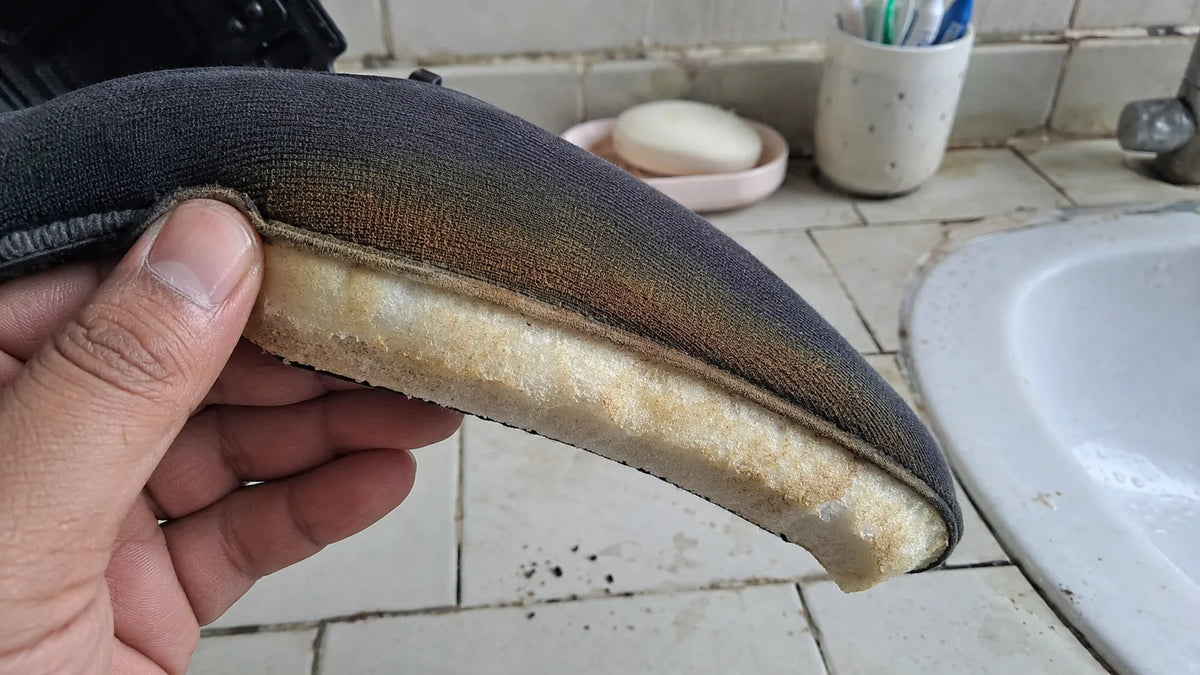
Your helmet doesn't send a text when it's overdue for a clean. It sends signals, and most riders ignore every one of them until the smell walks into the room before they do.
A 2020 study tested 130 motorcycle helmets and recovered 392 bacterial isolates, with Staphylococcus aureus making up 22.7% of them. That bacteria was already there before the smell showed up. The signs below are your helmet telling you it's time, not a fixed calendar date.
Rider Takeaways
- A 2020 study of 130 helmets found 392 bacteria, led by Staph aureus at 22.7%. Visible signs usually show up after the bacteria settles in, not before.
- Smell, sticky padding, and a chin strap that stays damp are more reliable triggers than "clean every 3 months."
- 33.7% of the Staph aureus isolated in that study was MRSA, a drug-resistant strain. Ignoring the signs isn't a small risk.
- Most "helmet cleaning near me" searches end with a 10-minute DIY fix, not a service booking.
Why Do These Signs Matter More Than a Fixed Cleaning Schedule?
A calendar says clean every eight weeks. Your helmet doesn't run on a calendar. Heat, sweat volume, and how often you ride change how fast bacteria build up, so two riders on the same schedule can end up with very different helmets.
Delhi summer commutes push more sweat into a liner in a week than a cool-weather weekend ride does in a month. That's why signal-based cleaning beats a fixed date. If your helmet shows any of the seven signs below, the schedule doesn't matter anymore.
The same 2020 study found bacterial growth in 86.7% of helmets that were never washed or disinfected, compared to just 20% in helmets that were regularly disinfected. Cleaning on a signal, not a guess, is what closes that gap.
Quick Fact:
In 2020, a study published in the International Journal of Microbiology tested 130 motorcycle helmets and isolated 392 bacteria, with Staphylococcus aureus as the most common strain at 22.7%. Source: Sapkota et al., 2020
In 2020, a study published in the International Journal of Microbiology tested 130 motorcycle helmets and isolated 392 bacteria, with Staphylococcus aureus as the most common strain at 22.7%. Source: Sapkota et al., 2020
The 7 Signs Your Helmet Needs Cleaning Right Now
These are the signals riders actually notice, ranked from the ones you smell first to the ones you only find if you look.
1. The Smell Comes Back Within Hours of Wearing It
A helmet that smells musty the moment you put it on, even right after a wash, means bacteria are still active in the foam, not just on the surface. Air-drying alone doesn't reach that layer.
2. The Padding Feels Damp Even After a Full Day Off the Bike
Foam that stays tacky or damp 24 hours after your last ride has stopped drying properly. That trapped moisture is exactly what bacteria and mold need to keep multiplying.
3. You See Yellow or Brown Staining on the Brow Pad
This is sweat, skin oil, and bacterial residue baked into the foam over weeks. Once staining shows on the surface, the padding underneath has usually absorbed a lot more than you can see.
4. The Chin Strap Smells Worse Than the Rest of the Helmet
The strap sits against your jaw and neck, where sweat and sunscreen collect and rarely get wiped down. It's often the last part riders think to clean, and the first place odor lingers after everything else is fresh.
Unique Insight
Our finding: Riders in humid coastal cities and during monsoon months report signs 2 and 4 showing up in half the time compared to dry-climate riders. Heat alone slows drying. Heat plus humidity stops it almost completely.

5. You Notice Small Bumps or Itching Along the Forehead
In 2024, a dermatology review named the helmet chin strap directly as a trigger for acne mechanica, a breakout pattern caused by friction, heat, and trapped sweat at contact points (Medical News Today, 2024). If bumps show up in the exact spot where the pad sits, that's not a coincidence.
6. There's Visible Mold, Discoloration, or a Musty Smell Even After Airing Out
Fungal growth looks different from bacterial residue: small dark or fuzzy spots, usually in liner seams or foam edges. If you see visible mold, cracks, or degrading foam, the helmet needs attention immediately, not just a spray.
7. The Padding Feels Stiff, Gummy, or Compressed No Matter How Long It Dries
Foam that's absorbed months of sweat loses its structure. It stops springing back, feels crunchy or gummy in patches, and no amount of drying time fixes it. That's a sign the padding itself, not just the smell, needs replacing.
Is There a "Helmet Cleaning Near Me" Service in India?
Barely. Dedicated helmet-interior cleaning services are rare outside a few metro workshops, and most only handle exterior polish, not the liner. For interior hygiene, DIY at home is usually faster than finding, booking, and dropping off at a service.
Removable liners take about 10 minutes with mild shampoo, cool water, and full air-drying. That's less time than most riders spend searching for a shop that does it.
Unique Insight
Our finding: Most riders searching "helmet cleaning near me" don't actually need a service. They need a repeatable 10-minute routine. A helmet-specific cleaning shop isn't a real category in most Indian cities yet, so the search rarely ends in a booking.
What Happens If You Ignore These Signs?
Ignored signs don't stay small. A helmet with 33.7% MRSA-positive Staph aureus isolates in the source study isn't a hypothetical risk. It's what researchers actually found on real, in-use helmets.
Left unaddressed, the smell gets worse, the padding degrades faster, and skin irritation along contact points tends to escalate from itching to small breakouts. None of that reverses itself by waiting.
What's the Fix That Keeps These Signs From Coming Back?
Washing the liner solves the visible problem. It doesn't stop bacteria from rebuilding between washes, which is why the same signs tend to return in a few weeks even for riders who clean regularly.
That gap is where Hygena fits. It's a bacteriostatic spray you use between washes, not instead of them, so it keeps the bacterial count down while your liner dries and rebuilds naturally between rides. Wash when signs appear. Spray after every ride to slow how fast they come back.
Frequently Asked Questions
How often should I actually check for these signs?
Check the padding and chin strap weekly if you ride daily, or after every long trip. A 2020 study found bacteria in the majority of tested helmets, so waiting for a schedule often means waiting too long.
Can I clean my helmet without removing the liner?
Some liners are non-removable. In that case, use a damp cloth with mild soap on accessible padding and let it air-dry fully before your next ride, ideally in shade, not direct sun.
Does a helmet deodorant spray replace washing?
No. A deodorant spray like Hygena works between washes to slow bacterial buildup, but it isn't a substitute for actually washing the liner when the signs above show up.
Is a smelly helmet actually unsafe, or just unpleasant?
Both. Beyond discomfort, 33.7% of the Staph aureus found in the 2020 helmet study was MRSA, a drug-resistant strain linked to skin infections in prolonged contact scenarios.
What's the fastest fix if I'm short on time before a ride?
Wipe the chin strap and brow pad with a damp cloth, let it air-dry for 10 minutes if you can, and spray a bacteriostatic deodorant before you put it on. It's not a full wash, but it's better than ignoring the signs.
Conclusion
A fixed cleaning schedule is a decent baseline, but your helmet is more honest than a calendar. Smell, staining, a damp chin strap, and stiff padding are all it has to tell you something's wrong, and by the time you notice one, bacteria have usually had weeks to settle in.
Wash when you see the signs, not just when the date comes around. Between washes, a bacteriostatic spray like Hygena keeps the bacterial count from climbing back to where it started.
Sources
1. "Microbial Diversity and Antibiotic Susceptibility Pattern of Bacteria Associated with Motorcycle Helmets," Sapkota et al., International Journal of Microbiology, 2020. Retrieved 2026-07-29.
2. "What to Know About Acne Mechanica," Medical News Today, 2024. Retrieved 2026-07-29.
Share:
Why Your Motorcycle Helmet Smells and How to Fix It For Good
Helmet Cleaner Nagpur: What Actually Keeps It Fresh