
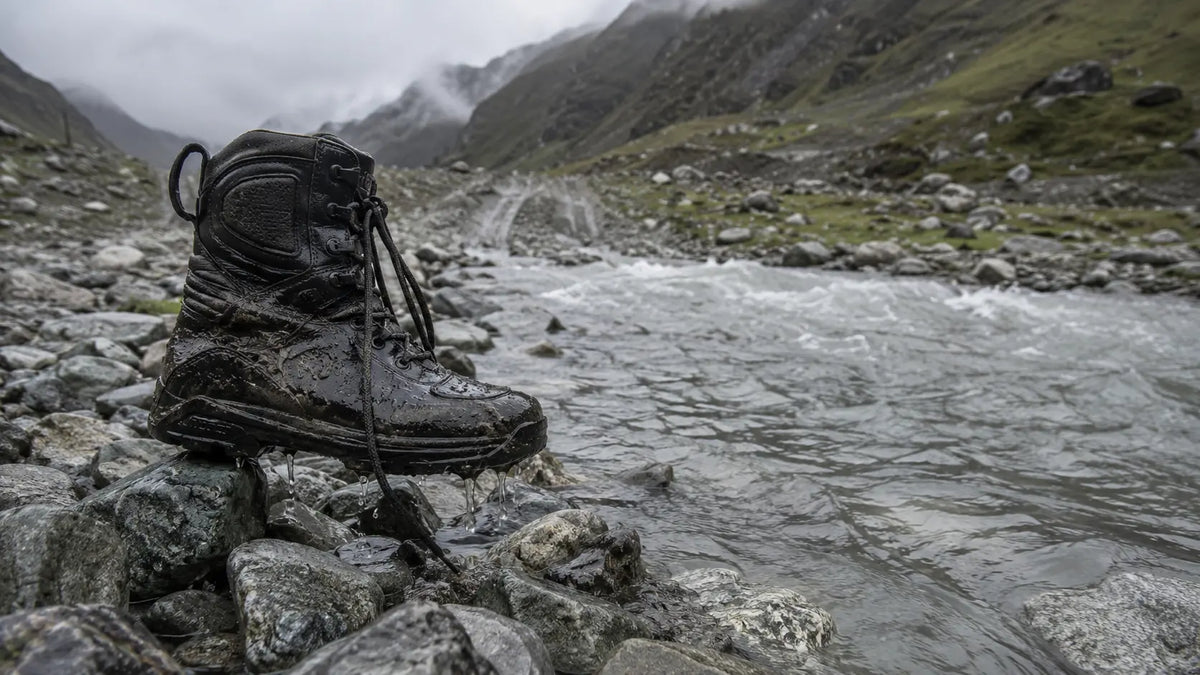
Your boots are soaked through, and the next nallah crossing is still an hour away.
Anyone who's ridden through Spiti, Ladakh, or a Western Ghats monsoon route knows this feeling. You squelch through the rest of the day. Your socks stay damp overnight. By the time you're home, your feet itch in a way they never did before.
That itch isn't random. Wet boots after a water crossing create exactly the setup a fungal infection needs. This guide covers how to dry your boots fast, and how to keep your feet from paying the price.
Rider Takeaways
- Fungal foot infections showed up in 49% of people whose footwear stayed hot and damp. That's per a 2019 Journal of Dermatology study.
- Dermatophyte fungus can get into your skin within a day once boot humidity passes 90%. A water crossing gets you there fast.
- Newspaper stuffing dries boots in about 4-6 hours. Rice or silica gel takes 12-24 hours.
- Drying your feet matters as much as drying your boots. Most infections start between the toes.
Why Wet Boots Are a Bigger Fungal Risk Than You Think
Tinea pedis, the fungal infection riders know as athlete's foot, affects about 10% of the general population. That's per a 2023 NCBI StatPearls clinical review. Wet boots push that risk much higher. Moisture, heat, and hours of skin contact create exactly what dermatophyte fungus needs to take hold.
A water crossing does in one afternoon what months of sweaty commuting usually takes to build up. Your boots trap water against your skin. Your feet stay damp for hours, sometimes into the next day.
Fungus doesn't need much time to settle in. It needs warmth, darkness, and moisture, and a soaked riding boot delivers all three at once. Add the friction of walking or shifting gears, and small skin breaks let the fungus in even faster.
Trichophyton rubrum causes about 70% of tinea pedis cases, per the same StatPearls review. It's the same organism behind most cases of ringworm and jock itch, just relocated to your feet.
Quick Fact:
Tinea pedis affects roughly 10% of people worldwide. Trichophyton rubrum causes about 70% of cases, per a StatPearls clinical review updated October 2023. The fungus thrives in warm, damp, occlusive conditions, exactly what a wet motorcycle boot provides for hours after a crossing. Source: NCBI StatPearls
Tinea pedis affects roughly 10% of people worldwide. Trichophyton rubrum causes about 70% of cases, per a StatPearls clinical review updated October 2023. The fungus thrives in warm, damp, occlusive conditions, exactly what a wet motorcycle boot provides for hours after a crossing. Source: NCBI StatPearls
How Fast Does a Water Crossing Turn Into a Fungal Infection?
In a 2019 Journal of Dermatology study of 420 people, 49.2% had an active fungal foot infection. Their footwear ran hot and humid inside. Dermatophyte fungus can get through skin within a day once internal humidity passes 90%. It moves even faster if the skin's already broken.
Below 85% internal humidity, the same study found the fungus couldn't get a foothold at all. Above that line, the odds change fast. A separate 2017 study of skin-clinic patients in Tunisia found tinea pedis confirmed in 22.5% of cases. Damp, occlusive footwear was one of the strongest risk factors.
So what does that mean on an actual ride? Cross a stream at 8 AM, then keep riding in wet boots till evening. You've just given fungus a full day inside the exact humidity range it needs.
Riders crossing water in Ladakh and Spiti already know timing matters for the crossing itself. Cross early, before snowmelt raises the water level, advises one Ladakh water-crossing guide. The same morning window that keeps your crossing safer also buys you more daylight to dry out afterward.
Quick Fact:
India's ICMR set up MycoNet in 2020 to track fungal infections nationwide through eight diagnostic centers. A March 2025 government update found resistance to common antifungal treatments still stays low. Catching a foot infection early is still the easiest fix. Source: PIB, Ministry of Health and Family Welfare
India's ICMR set up MycoNet in 2020 to track fungal infections nationwide through eight diagnostic centers. A March 2025 government update found resistance to common antifungal treatments still stays low. Catching a foot infection early is still the easiest fix. Source: PIB, Ministry of Health and Family Welfare
Unique Insight
Our reading of the data: Line up the studies side by side, and a pattern shows up. About 10% of the general population develops tinea pedis. Among people whose footwear traps heat and moisture, that number climbs to nearly half. A wet motorcycle boot after a crossing sits at the extreme end of that scale. It stays hot and sealed for hours before you get a chance to change.
The Fastest Way to Dry Wet Riding Boots After a Crossing
Newspaper stuffed inside your boots, changed every few hours, dries them fast. It beats almost any other method riders actually carry on tour. And it pulls moisture out steadily, without the heat damage a hairdryer or a bonfire can cause.
Pull the insoles out first. Moisture gets trapped underneath them, and that's exactly where fungus likes to hide. Crumple dry newspaper and pack it loosely into the boot, including the toe box. Swap it out every 2-3 hours.
A fan sped things up further if you have access to one at a guesthouse or campsite. Point it into the open boot with the newspaper still inside. Never point a room heater, bonfire, or hot exhaust pipe at wet leather. Direct heat shrinks material, cracks leather, and melts the glue holding your boot together.
Rice and silica gel work too, but slower. Bury the boot in either one, and give it 12 to 24 hours. That's how long it actually takes to pull the water out. It's fine overnight at home, but not when you need to ride at dawn.

How Do You Dry Your Feet, Not Just Your Boots?
Damp, occlusive footwear was a statistically significant risk factor for tinea pedis in that 2017 Tunisia study. 13.2% of infected patients wore it (p = 0.008). Your feet need the same attention your boots just got.
Dry your feet fully before anything else goes back on, especially between your toes. That's where most interdigital infections start, in the warm, airless gap most riders never think to towel off.
Carry one spare pair of dry socks in a ziplock or dry bag. Do this on any ride with a water crossing on the route. Change into them the moment you're off the bike, even if your boots are still wet. Damp socks against dry skin still beat wet socks against wet skin.
Skip the dhaba bathroom floor barefoot, and let your feet air out fully at rest stops, socks off, boots open. A little foot powder in the toe box before your next ride helps keep things dry through the day.
Unique Insight
Our take: Every rider we've talked to has a boot-drying routine. Almost none of them have a foot-drying routine. The boot gets the newspaper and the fan. The foot goes straight back into a damp sock because that's what's in the pannier, phir bhi. Given where interdigital infections actually start, that's backward.
What Should You Carry for the Next River Crossing?
A dry-bag with spare socks, a folded newspaper, and a small pack of foot powder. Together, it takes up less space than a phone charger. Pack it once, and every future crossing gets easier.
Cheap rubber boots are worth carrying if you cross water often. Wear them for the crossing itself, then swap back into your riding boots once you're across and dry. Your actual boots never get wet at all.
Once your boots and feet are dry, the next problem is bacteria building back up inside the liner. That's the same problem that causes helmet odor. Hygena's bacteriostatic spray was built for helmet interiors, and the same formula works on boot liners and insoles between rides.
It's not a fungal treatment. Drying properly is what handles that. It's the habit that keeps bacteria from building up once your feet are already dry and clean. The formula is dermatologically tested, and over 10,000 riders already use it on their helmets.

Frequently Asked Questions
How long does it take fungus to grow in wet boots?
Dermatophyte fungus can get through skin within a day once boot humidity passes 90%. That's per a 2019 Journal of Dermatology study. One water crossing followed by hours of riding in wet boots can get you there. Change into dry socks and boots as soon as you reasonably can.
Is rice or newspaper better for drying wet boots?
Newspaper works faster. Rice and silica gel need 12 to 24 hours buried against the boot to pull moisture out. Newspaper stuffed inside and changed every few hours dries boots in about 4 to 6 hours, without damaging the leather.
Can I use a hairdryer to dry motorcycle boots?
Only on the coolest setting, held several inches away and kept moving. Direct heat from a hairdryer, heater, or open flame can shrink leather and crack seams. It can even melt the glue holding your boot together.
How do I stop athlete's foot after a water crossing?
Dry your feet completely, especially between your toes, before putting on dry socks. Damp, occlusive footwear was a significant risk factor for tinea pedis in a 2017 Tunisia study. Drying your feet matters as much as drying your boots.
Should I dry wet boots in direct sunlight?
No. Direct sun and other high-heat sources can shrink boot materials, crack leather, and weaken glued seams. Dry boots in a ventilated spot out of direct sun. Use a fan and newspaper stuffing, changed every few hours, for best results.
Conclusion
Wet boots after a water crossing aren't just uncomfortable. They're a real setup for a fungal infection, especially if you keep riding in them for hours. Dry the boots fast, but dry your feet first.
Newspaper beats rice for speed. Sunlight and heaters do more harm than good. A spare pair of dry socks is worth more than almost anything else in your pannier. Once your feet and boots are dry, keep boot-liner bacteria from building back up before your next ride. A quick spray of Hygena does that in seconds, the same routine you already run on your helmet.
Sources
1. "Tinea Pedis," StatPearls, NCBI Bookshelf, updated October 29, 2023. Link. Retrieved 2026-08-25.
2. "Internal environment of footwear is a risk factor for tinea pedis," Journal of Dermatology, 2019. Link. Retrieved 2026-08-25.
3. "Prevalence, Etiology, and Risk Factors of Tinea Pedis and Tinea Unguium in Tunisia," Canadian Journal of Infectious Diseases & Medical Microbiology, 2017. Link. Retrieved 2026-08-25.
4. "Steps taken to prioritize Research on Fungal Infections," Press Information Bureau, Ministry of Health and Family Welfare, Government of India, March 11, 2025. Link. Retrieved 2026-08-25.
5. "Water Crossing Tips for Ladakh Spiti Bike Ride," Discover With Dheeraj, 2026. Link. Retrieved 2026-08-25.
6. "How To Dry Wet Shoes Without Ruining Them," FootGearLab. Link. Retrieved 2026-08-25.
Share:
The First Aid Kit Every Motorcycle Rider Should Carry
Motorcycle Breakdown in a Remote Area: What to Pack