
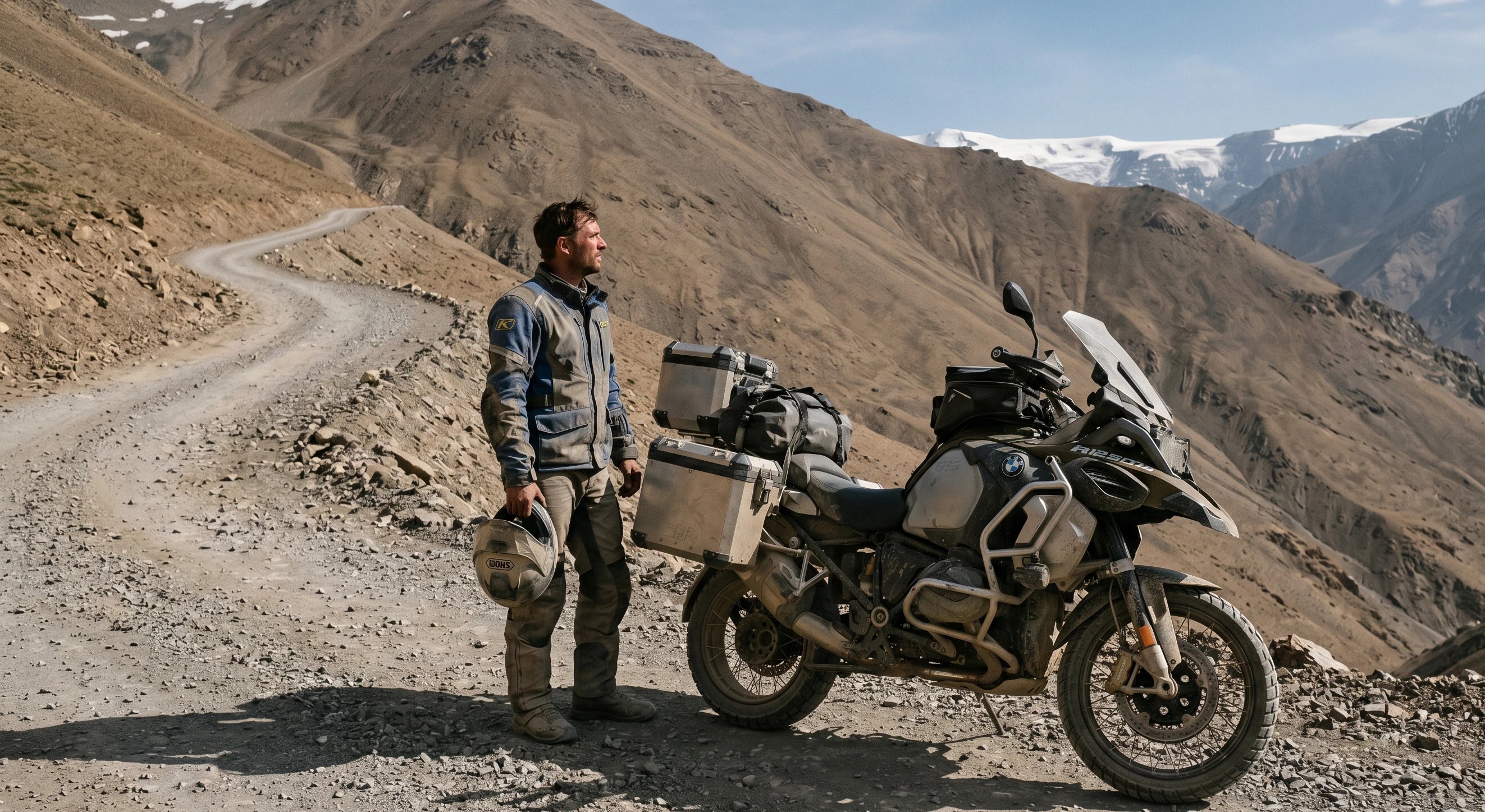
Day four in Kaza. Your helmet smells like a wet gym bag.
You've ridden six hours a day for a week. There's no easy way to wash a helmet liner up here. The cold hides the sweat while you ride, but your nose knows the truth at night. A Spiti Valley bike trip is one of the best rides in India. It's also brutal on your gear.
This guide covers the trip from route to riding clean. We'll break down the best time to go, why altitude wrecks helmet freshness, and the five-second fix that saves your nose.
Rider Takeaways
- Ride Spiti between mid-May and mid-October. September is the sweet spot.
- A 2020 study of 130 helmets found Staphylococcus aureus in 22.7% of them.
- At Kunzum La (4,551m), UV runs roughly 45% stronger than at sea level.
- You'll wear your helmet 6–8 hours daily with no liner wash for days. Plan for it.
When's the Best Time for a Spiti Valley Bike Trip?
Ride Spiti between mid-May and mid-October. That's when Kunzum La (4,551m) and the Manali–Kaza road stay open. September is the rider's sweet spot. You get clear skies, fewer crowds, and daytime temperatures around 12–20°C.
You have two ways in. The Shimla route climbs gently over several days, which helps you acclimatize. The Manali route is shorter but far harder, with the climb hitting fast. Smart riders do Shimla se enter, Manali se exit.
The core loop runs about 900km and takes 7–9 days to ride without rushing. That gives you time for Key, Kibber, Hikkim, Langza, and Chandratal. You can squeeze it into five, but you'll pay for it in fatigue.
Here's the part nobody plans for. Across those days, your helmet stays on your head for six to eight hours at a stretch. That's a lot of sweat with nowhere to go.

What Does High Altitude Do to Your Helmet?
Your helmet is a warm, damp box strapped to your head for hours. In 2020, a study in the International Journal of Microbiology sampled 130 motorcycle helmets. It recovered 392 bacteria across seven different genera. The dominant one was Staphylococcus aureus.
At altitude, the cold plays a trick on you. You don't feel as sweaty, so you assume the liner stays dry. It doesn't. Your body still sweats salt and oil under the helmet, and that moisture feeds bacteria all the same.
Spiti's dry air makes it worse. The thin, arid climate pulls water out of you fast, which is why guides tell riders to drink three to four litres a day. Cold nights mean a damp liner barely dries by morning. So you start each ride on yesterday's bacteria.
Quick Fact:
In a 2020 study of 130 motorcycle helmets, researchers found Staphylococcus aureus in 22.7% of samples, Staphylococcus epidermidis in 19.6%, and E. coli in 13.8%. Of all bacterial isolates, 39% were multidrug-resistant. Source: Sapkota et al., International Journal of Microbiology, 2020.
In a 2020 study of 130 motorcycle helmets, researchers found Staphylococcus aureus in 22.7% of samples, Staphylococcus epidermidis in 19.6%, and E. coli in 13.8%. Of all bacterial isolates, 39% were multidrug-resistant. Source: Sapkota et al., International Journal of Microbiology, 2020.
Why Does Your Helmet Smell Worse on a Long Mountain Ride?
Sweat itself is almost odorless. In 2021, the American Society for Microbiology explained that skin bacteria do the dirty work. Species like Corynebacterium and Staphylococcus epidermidis break sweat down into compounds like isovaleric acid. That's the sharp, cheese-like smell you catch at night.
On a Spiti trip, the problem compounds. You can't strip and wash a liner for seven days straight. Every ride adds a fresh layer of fuel. The bacteria multiply, and the smell climbs with them.
When did you last sniff your helmet before pulling it on? On day one, it's fine. By day four in Kaza, it's a different beast. The cold slows drying, so the moisture just sits there overnight.
Unique Insight
Our finding: Most riders blame the smell on sweat and try to air the helmet on a hotel railing. But in Spiti's cold, low-humidity nights, the liner barely dries. The bacteria keep multiplying. Airing alone doesn't reset the smell, because it never removes what's actually causing it.
Does the Sun at Altitude Hit Harder Than You Think?
Altitude doesn't just thin the air. It strips the atmosphere that normally blocks UV. The World Health Organization notes that UV levels rise about 10% for every 1,000m of altitude. At Kunzum La (4,551m), that's roughly 45% more UV than at sea level.
This matters for more than your face. Sunburn, windburn, and chapped skin all spike on a high mountain ride. And the sweat, sunscreen, and trail dust you collect all afternoon end up inside your helmet.
So the helmet interior turns into a real mess by evening. It's sweat plus oil plus SPF plus fine Spiti dust. That cocktail is exactly what bacteria love. Your skin and your liner take the hit together.
Quick Fact:
According to the World Health Organization, UV radiation increases by roughly 10% for every 1,000 metres of altitude. On reflective mountain terrain, riders can face close to double the UV intensity of sea level. That raises both skin damage risk and the grime load inside your helmet. Source: WHO, Ultraviolet (UV) radiation.
According to the World Health Organization, UV radiation increases by roughly 10% for every 1,000 metres of altitude. On reflective mountain terrain, riders can face close to double the UV intensity of sea level. That raises both skin damage risk and the grime load inside your helmet. Source: WHO, Ultraviolet (UV) radiation.
How Do You Keep Your Helmet Fresh on a Multi-Day Spiti Ride?
You can't deep-clean a liner in Kaza. So switch your thinking from cleaning to prevention. A bacteriostatic helmet deodorant stops bacteria from multiplying between rides. That's what actually controls the smell, instead of masking it for an hour.
This is exactly why we built Hygena. It's India's first helmet deodorant made for riders, not a bathroom shelf. A few sprays inside the liner after each ride keeps your helmet bacteria-free for tomorrow's start. No washing or drying needed.
The routine is simple. Park for the night, spray the liner, leave it open. By morning it's fresh, even when the room is cold. Carry a travel-size in your tank bag so it's always within reach.
The fix is simpler than you think. After a 200km day to Kaza, Hygena takes five seconds. That's the whole job.

What Should Be in Your Spiti Helmet Hygiene Kit?
Pack light, but don't skip hygiene. On a week-long ride at altitude, a small kit saves your skin, scalp, and gear. Most riders carry tools and spares, then forget the stuff that touches their body every day.
Keep it to the essentials that earn their space:
- Helmet deodorant: a travel-size bacteriostatic spray for the liner.
- Microfiber cloth: wipe sweat from the cheek pads each night.
- Dry shampoo: helmet hair and oily scalp build up fast.
- SPF lip balm and high-SPF sunscreen: non-negotiable at 4,500m.
- Body wipes: for evenings when there's no hot water in the homestay.
- A spare balaclava: swap daily so fresh fabric sits against your skin.
Unique Insight
Our finding: Riders who swap a clean balaclava each day and spray the liner at night report the smallest jump in helmet odor across a tour. The fabric layer catches most of the sweat, and the spray handles what slips through. Together they break the daily bacteria cycle.
Frequently Asked Questions
How many days do you need for a Spiti bike trip?
Plan for 7–9 days to ride the core loop without rushing. That covers Manali, Kaza, Chandratal, and the high villages. You can do a tighter five-day version, but you'll trade rest and acclimatization time for it, which raises altitude-sickness risk.
Can I wash my helmet liner during a Spiti trip?
Rarely. Cold nights and dry air mean a washed liner won't fully dry by morning. A damp liner grows more bacteria, not less. Prevention beats washing here. A bacteriostatic spray keeps the smell down without soaking the padding.
Does cold weather stop helmet bacteria?
No. The cold masks how sweaty you feel, but your scalp still sweats under the helmet. That 2020 study found Staphylococcus aureus in 22.7% of helmets across normal use. Moisture plus body heat keeps bacteria active even in cold climates.
How do I stop my helmet smelling on a long ride?
Spray the liner with a helmet deodorant after each ride, then leave the helmet open overnight. Swap a clean balaclava daily so fresh fabric meets your skin. This breaks the bacteria cycle that builds odor across a multi-day tour.
Is altitude bad for my skin while riding?
Yes. UV rises about 10% per 1,000m, per the WHO. At Kunzum La, that's near 45% more UV than sea level. Use high-SPF sunscreen, lip balm, and a buff. Reapply at lunch, because sweat strips it through the day.
Conclusion
A Spiti Valley bike trip tests your gear as hard as it tests you. The altitude that gives you those views also dries you out, drives up UV, and turns your helmet into a bacteria farm you can't easily wash.
The simple fix is prevention, not scrubbing. A few sprays of Hygena at the end of each day keeps your helmet fresh for the next 200km, no washing required. Pack it next to your sunscreen and ride clean all the way to Kaza and back.
Sources
1. "Microbial Diversity and Antibiotic Susceptibility Pattern of Bacteria Associated with Motorcycle Helmets," Sapkota et al., International Journal of Microbiology, 2020. Retrieved 2026-06-18.
2. "Radiation: Ultraviolet (UV) radiation," World Health Organization. Retrieved 2026-06-18.
3. "Microbial Origins of Body Odor," American Society for Microbiology, 2021. Retrieved 2026-06-18.
4. "Spiti Valley Bike Trip: Route, Altitude & Best Time," HimTrek, 2025. Retrieved 2026-06-18.
5. "Beat Altitude Sickness: Your Guide to Acclimatization in Spiti," Muddie Trails. Retrieved 2026-06-18.
Share:
How to Clean Your Motorcycle Helmet Without Damaging It
How to Deodorize Motorcycle Riding Gear That Stinks