
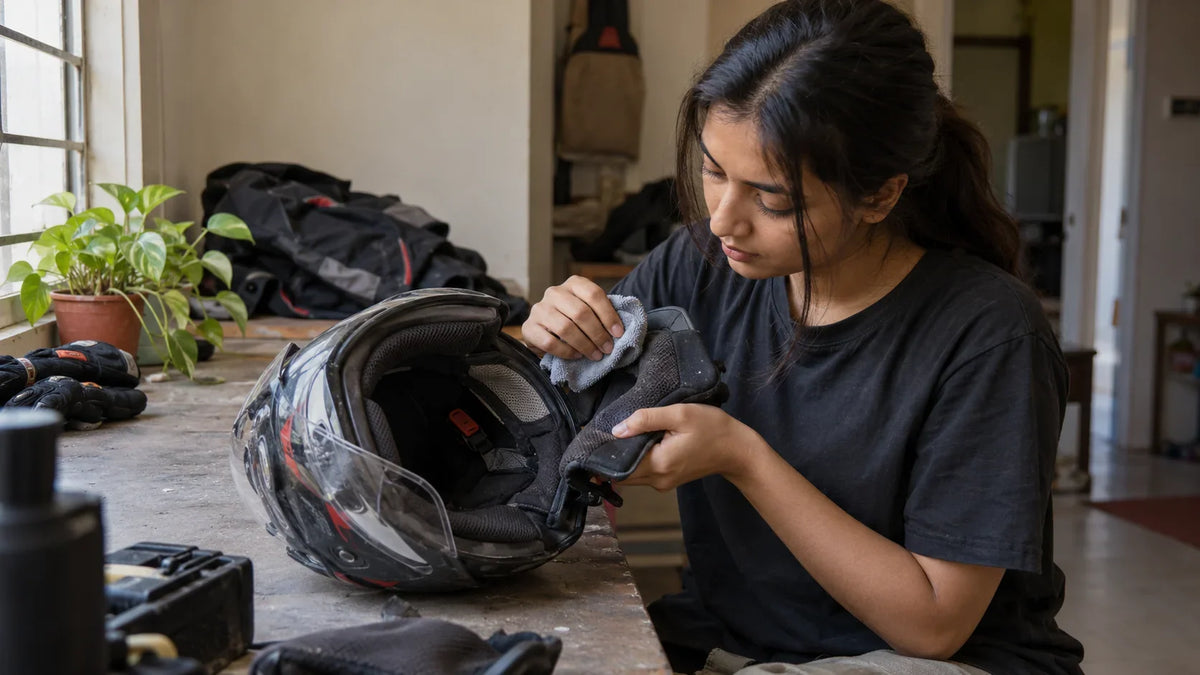
You finish a hot ride, pull off your helmet, and catch that familiar sweaty smell. Maybe the cheek pads feel sticky, too. If you've been putting off cleaning the inside, here's your sign to sort it out.
The right method depends on your helmet's construction. Removable comfort padding can often be washed, while fixed padding needs careful spot-cleaning. The impact-absorbing EPS liner needs gentler treatment than the fabric touching your face. Use the wrong cleaner or too much heat, and you could damage parts designed to protect your head.
This guide shows you how to clean helmet inside safely, dry every part properly, and keep odour from building up between washes.
Rider Takeaways
- A 2020 study sampled 130 motorcycle helmets and recovered 392 bacterial isolates and 346 fungal isolates. Those results describe that study's samples, not every helmet.
- Check your helmet maker's instructions before removing or washing padding.
- Use mild, neutral cleaning products, avoid solvents and heat, and let every part dry fully before riding.
Why should you clean the inside of your helmet?
Helmet interiors collect sweat, skin oils, hair products, dust, and moisture. That residue can make padding smell stale and feel unpleasant against your skin. In a 2020 study published in International Journal of Microbiology, researchers examined 130 motorcycle helmets and recovered bacteria and fungi from the samples. The study supports regular hygiene, but it doesn't mean every helmet carries the same organisms or presents the same risk.
Your helmet is safety equipment first. Its comfort liner, retention system, and impact-absorbing liner have different jobs, so they shouldn't all be treated like ordinary laundry. The safest routine removes grime from the fabric while protecting the materials underneath.
A useful distinction: cleaning removes dirt and residue. Deodorising helps manage unwanted smells. Neither means you should soak the whole helmet or apply a household disinfectant without checking compatibility.
In 2020, researchers studied 130 motorcycle helmets and recovered 392 bacterial isolates and 346 fungal isolates. These are counts of organisms recovered, not the number of contaminated helmets. The findings support regular helmet hygiene, while the study's specific sample limits how broadly its results can be applied. Source: Sapkota et al., International Journal of Microbiology (2020).
What do you need before cleaning the helmet interior?
Keep the kit simple. You'll usually need a soft microfiber cloth, a small bowl of lukewarm water, and a little mild neutral detergent. Use a soft towel for drying and a clean, ventilated spot for air-drying. Your helmet manual takes priority if it specifies a particular cleaner or method.
Avoid strong household cleaners, bleach, petrol, paint thinner, and other solvents. Don't use boiling or very hot water, a hair dryer, a heater, or direct high heat to speed things up. SHOEI warns that its EPS liner is vulnerable to solvents and heat, and recommends gentle wiping with a cloth dampened with neutral detergent solution.
Before you start, check whether your cheek pads and comfort liner are designed to come out. Never force a pad, pull at glued seams, or pry into the EPS liner. If you can't tell which parts are removable, look up the exact helmet model's manual.
Our recommendation: Treat the inside as two cleaning jobs: fabric that touches your face, and the structural liner underneath. The fabric may be washable; the impact liner needs a light touch. That distinction helps you avoid turning a hygiene routine into accidental helmet damage.
How to clean helmet inside step by step
1. Check the manual and remove only approved padding
Start with the manufacturer's instructions for your exact model. If the cheek pads, crown liner, or chin curtain are removable, take them out in the order shown in the manual. Photographing the arrangement first can help you put everything back correctly.
Keep track of snaps, tabs, and left-right pieces. Don't remove glued or fixed components. If the helmet has electronics, speakers, or wiring near the padding, follow the manufacturer's directions before cleaning around them.
2. Wash removable padding gently
If your manual allows washing, use lukewarm water and a small amount of mild neutral detergent. Gently squeeze the padding through the water rather than twisting, scrubbing hard, or wringing it. Rinse until detergent residue is gone.
Some helmet makers allow machine washing inside a laundry bag, while others may give different instructions. SHOEI's guidance permits hand-washing or machine-washing removable interiors in a washing bag. Don't assume that applies to every brand or every liner material.
3. Wipe fixed padding and the EPS liner
If the padding doesn't come out, don't flood the helmet. Dip a soft cloth in a mild neutral-detergent solution, wring it out well, and gently wipe the surface. Use a second cloth lightly dampened with clean water to remove residue.
For the EPS impact liner, use only the gentle method your manufacturer approves. Don't scrape it, press hard, or insert tools between layers. Stop if you notice cracks, dents, loose material, or adhesive failure, and ask the manufacturer or an authorised service centre for advice.
4. Clean the chin strap carefully
Wipe the strap with a barely damp cloth and mild detergent if the manual permits it. Avoid soaking the strap, buckle, or retention hardware unless the manufacturer specifically says that's safe. Don't use bleach or solvents to attack a stubborn mark.
5. Air-dry every part completely
Pat washable padding with a clean towel to remove excess water. Leave it to air-dry in a shaded, well-ventilated place. Keep the helmet away from direct sunlight, radiators, hair dryers, and other heat sources.
Don't reinstall padding while it's damp. Trapped moisture can encourage musty smells, and damp fabric feels uncomfortable against your face. Give thick cheek pads and crown liners extra time, and check seams and folds before reassembly.

What should you never use inside a motorcycle helmet?
Don't use petrol, paint thinner, acetone, bleach, strong degreasers, or unapproved household sprays. Avoid soaking the entire helmet, scrubbing the EPS liner, or applying high heat. These methods can affect materials, adhesives, or components, depending on the helmet's construction.
Perfume and room freshener aren't cleaning methods. They can cover the smell briefly while leaving sweat and residue behind. If you use a dedicated helmet hygiene or deodorising product, check its directions and compatibility with your helmet materials. Never assume that a product safe for a jacket or room is also suitable for helmet padding.
If the helmet has been soaked accidentally, smells mouldy despite thorough drying, or shows damage to its impact liner or straps, contact the manufacturer or an authorised service centre. Don't rely on fragrance to make damaged or persistently damp equipment seem fine.
SHOEI's published maintenance instructions say the EPS liner is vulnerable to solvents and heat. The maker recommends wiping it carefully with a cloth dampened in neutral detergent solution, avoiding scratches and dents. Because helmet materials differ, follow the manual for your own model rather than treating one brand's method as universal. Source: SHOEI Worldwide, How to Maintain Helmet.
How often should you clean the inside of your helmet?
Use the smell, sweat level, riding frequency, and the manufacturer's instructions to set your routine. If you ride daily in hot weather, wipe the interior after rides and inspect the padding regularly. Wash removable liners when they need it and the manual allows it. After a long, sweaty ride, don't leave the helmet sealed inside a bag.
A 2020 study found higher microbial growth among helmets that had never been washed or disinfected than among those cleaned more frequently. That association doesn't establish a universal cleaning schedule, but it supports not ignoring the inside for months at a time.
Once you've cleaned the padding, let the helmet ventilate after every ride. Store it somewhere dry, and avoid putting it away while sweat or rain remains inside. If you share a helmet, clean it between users and make sure the padding is fully dry first.
Can a helmet deodoriser replace cleaning?
No. Cleaning removes sweat residue and grime from the material. A deodorising product can help manage odour between washes, but it shouldn't replace washing removable padding when needed or wiping fixed padding safely.
Hygena is designed for helmet hygiene and odour control between rides. Use it only according to the product label, and don't apply it to a component if the label or helmet manufacturer advises against it. Let the helmet dry as directed before wearing it again.

The practical routine is straightforward: clean the fabric when it needs cleaning, dry the helmet completely, and manage odour between washes. If a smell persists, check for dampness and accumulated residue before adding more fragrance.
Rider habit: Helmet fresh rakhna hai? Don't wait until the smell announces itself. Air out the helmet after rides, keep the liner dry, and schedule a proper clean when the padding starts feeling greasy or stale.
Frequently Asked Questions
Can I wash the whole helmet inside?
Don't submerge the whole helmet unless its manufacturer explicitly allows it. Remove only approved padding, wash it according to the manual, and wipe fixed components with a well-wrung cloth. SHOEI recommends gentle wiping for fixed interiors and careful treatment of the EPS liner.
Can I use shampoo to clean helmet padding?
Some manufacturer guidance permits diluted shampoo or neutral detergent for specific interior parts. Check your model's manual first, use a small amount, rinse residue away, and dry the padding fully. Avoid hair products or strong cleaners that leave residue or aren't approved for helmet materials.
How do I remove a bad smell from helmet padding?
Start by cleaning removable padding as instructed, wiping fixed areas gently, and drying everything completely. If you still notice a smell, check for trapped moisture or residue. A helmet deodoriser may help manage odour between washes, but it doesn't replace cleaning.
Is it safe to use a hair dryer to dry helmet padding?
Avoid high heat and follow your manufacturer's drying guidance. SHOEI warns that the EPS liner is vulnerable to heat and solvents. Air-dry removable padding in a shaded, well-ventilated place, and don't reassemble the helmet until every part is fully dry.
Keep your helmet clean without risking its protective parts
Knowing how to clean helmet inside comes down to three habits: identify which parts can be removed, use mild cleaning methods approved by the manufacturer, and dry everything completely. Don't use harsh solvents or heat to rush the job.
A clean liner feels better on your next commute and makes long rides more comfortable. For odour between washes, a helmet-specific hygiene product can fit into your routine, provided you follow its label and your helmet maker's guidance.
Explore more from Hygena's helmet hygiene advice and build a routine that works with your riding schedule. Your helmet protects your head. Give its interior the same care you give the rest of your riding gear.
Sources
- Sapkota, S. et al. (2020). "Microbial Diversity and Antibiotic Susceptibility Pattern of Bacteria Associated with Motorcycle Helmets." International Journal of Microbiology. Read the study. Accessed October 16, 2026.
- SHOEI Worldwide. "How to Maintain Helmet." Manufacturer care instructions. Accessed October 16, 2026.
- SHOEI Helmets USA. "Helmet Maintenance." Manufacturer care instructions. Accessed October 16, 2026.
- Arai Americas. "Care & Cleaning." Manufacturer care instructions. Accessed October 16, 2026.
Share:
Motorcycle Hygiene Kit Products Every Rider Needs
Best riding gear under 10000 India: A smarter starter kit