
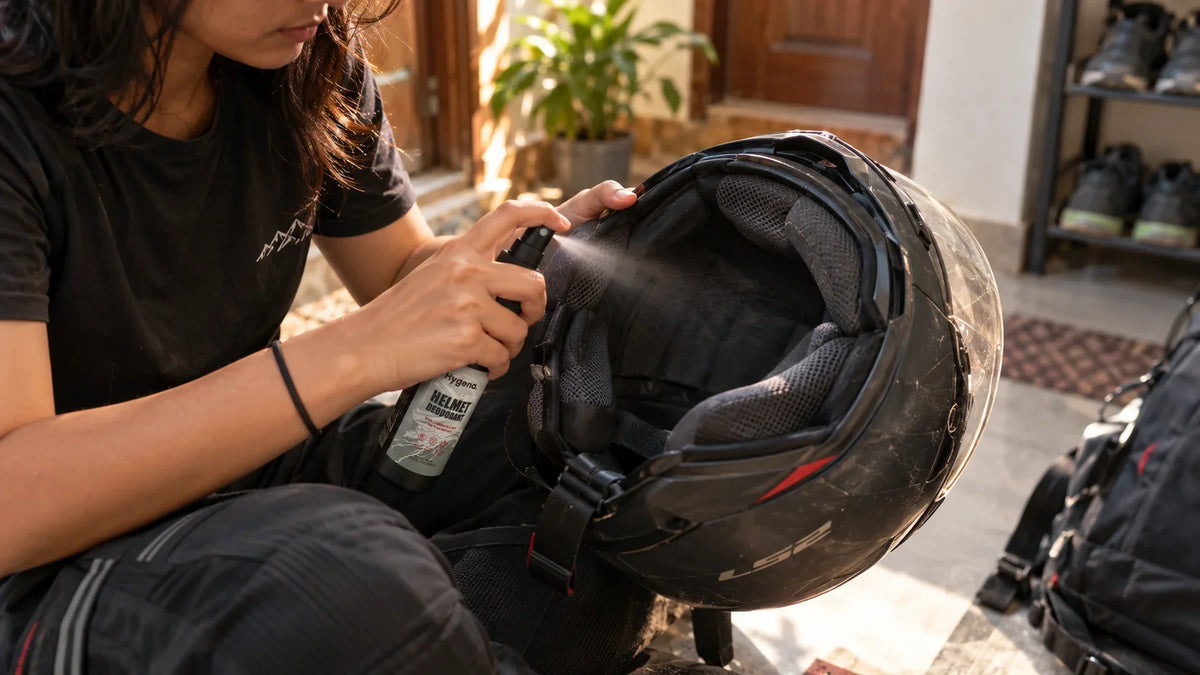
You finish a sweaty ride, remove your helmet, and catch that familiar stale smell. Spraying a random freshener inside might seem like the quickest fix. But the right helmet spray depends on what you want it to do.
Some products clean dirt and residue. Others add fragrance or help control odour-causing microbes. Those jobs aren't interchangeable. Use the wrong product, and you might mask the smell without addressing the buildup behind it.
This guide explains what to look for, how to use a helmet spray safely, and when a spray isn't enough. Your helmet's care label and manufacturer's instructions should always come first.
Rider Takeaways
- A helmet spray may be a cleaner, deodoriser, or hygiene spray. Check its intended use before applying it.
- A 2020 study tested 130 motorcycle helmets and recovered bacteria and fungi from the samples. The findings support regular, suitable helmet hygiene, not panic.
- A spray doesn't replace washing removable liners when the manufacturer allows it.
- Let your helmet dry as directed, and never soak its padding or use an unapproved chemical.
What does a helmet spray actually do?
A helmet spray is a product designed for a specific helmet-care job. Read the label before you buy, because "spray" doesn't tell you whether the formula cleans, deodorises, or controls microbial growth.
A helmet interior cleaner is intended to loosen or remove dirt, sweat residue, and grime. A deodorising spray aims to reduce unpleasant smells. A hygiene spray may be designed to help control microbial activity that contributes to odour. Some products combine functions, but don't assume they do unless the label says so.
In a 2020 study published in the International Journal of Microbiology, researchers examined 130 motorcycle helmets and recovered 392 bacterial isolates and 346 fungal isolates. These are isolates, not a count of how many organisms every helmet contains. The study shows that helmet interiors can carry microbes; it doesn't mean every helmet is dangerous.
A 2020 study of 130 motorcycle helmets recovered bacterial and fungal isolates from sampled helmets. Researchers reported more microbial growth among helmets that had never been washed or disinfected than among those that had been cleaned. This supports regular care using products suitable for the helmet's materials.
Source: Sapkota et al., 2020.
The practical takeaway is simple: choose the spray for the job, and keep following your helmet maker's cleaning guidance.
Which helmet spray should you choose?
Start with the problem you're trying to solve. If the liner is visibly dirty, a deodoriser alone won't remove that dirt. If the liner is clean but develops a stale smell between washes, a purpose-made hygiene or deodorising spray may fit better.
| Your need | Product type to consider | What it doesn't replace |
|---|---|---|
| Visible dirt or sweat residue | Helmet interior cleaner | Proper drying and manufacturer-approved liner washing |
| Stale smell between washes | Helmet deodoriser | Cleaning when residue has built up |
| Routine odour prevention | Helmet hygiene spray designed for liners | Deep cleaning or inspection of damaged padding |
| Strong fragrance only | General air or fabric freshener | A helmet-specific product's material-compatibility guidance |
Avoid using household disinfectants, perfume, or random fabric sprays unless your helmet manufacturer explicitly approves them. Materials, adhesives, foam, coatings, and finishes can vary. A product that works on a sofa may not be suitable for a protective helmet.
Our finding: The label matters more than the word "spray." Look for a clear intended use, application instructions, material compatibility, and drying guidance. If the product doesn't explain whether it's a cleaner or a leave-on hygiene spray, don't guess.
How do you use helmet spray safely?
Always follow the product label and your helmet manufacturer's care instructions. The exact method and drying time vary by formula, so don't treat every helmet spray as interchangeable.
- Check the helmet manual. Confirm which cleaning products are allowed and whether the liner can be removed.
- Inspect the liner. If it has heavy residue, visible mould, damaged foam, or a persistent smell, a spray alone may not be enough.
- Test only as directed. If the product calls for a spot test, use a small hidden area first.
- Apply the stated amount. Don't soak the padding or spray into vents, electronics, or components the label excludes.
- Allow the helmet to dry as directed. Don't seal a damp helmet in a bag or put it straight back on if the instructions require drying.
- Clean removable liners when appropriate. Use the washing method recommended by the helmet maker, then let the parts dry fully before reassembly.

A 2020 helmet study found higher bacterial and fungal growth in helmets that had never been washed or disinfected. That finding doesn't establish a universal cleaning schedule, but it reinforces the value of consistent care.
Can helmet deodoriser replace cleaning?
No. A deodoriser or hygiene spray is best treated as one part of your routine, not a shortcut around cleaning. Dirt and oily residue can remain even when a helmet smells fresher.
If your helmet has removable padding, follow the maker's washing instructions. Don't use hot water, harsh solvents, or aggressive scrubbing unless the manufacturer allows them. If the liner can't be removed, use only a product approved for that type of interior.
Persistent mustiness deserves attention. Check whether the liner is staying damp after rides, whether the helmet is stored in a closed bag, and whether the padding needs cleaning. Visible mould, damaged materials, or an odour that won't go away may call for professional advice or replacement guidance from the helmet maker.
A 2020 study reported that helmets that had never been washed or disinfected showed more bacterial and fungal growth in its sample than helmets that were washed or disinfected. The study was limited to its sample and methods, so don't use its percentages as a prediction for every rider's helmet.
Where does Hygena fit into a helmet spray routine?
Hygena describes its product as a helmet deodorant and hygiene spray designed to help control odour-causing bacterial activity. The brand says its formula is intended for helmet liners and other riding gear, and recommends use before rides. Check the current product label for the exact instructions and compatible materials.
Hygena isn't a substitute for removing dirt or washing a liner when cleaning is needed. Think of it as a between-wash hygiene step, while manufacturer-approved cleaning handles residue and deeper care.

If you're choosing a helmet spray, compare the product's stated purpose, application instructions, material guidance, and drying requirements. Don't rely on bold claims alone. If a product says it is safe for your helmet type, follow its instructions and stop using it if you notice an unexpected reaction or material change.
Want a spray built for helmet hygiene? See the Hygena Helmet Deodorant Spray and review its current instructions before use.
Frequently asked questions
Can I spray perfume inside my helmet?
It's best to avoid perfume unless your helmet manufacturer explicitly approves it. Perfume is designed to add fragrance, not necessarily to clean a liner or control microbial activity. Check your helmet manual and use products specifically labelled as compatible with helmet interiors.
How often should I use helmet spray?
Follow the product's label. Hygena recommends use before every ride on its current product page, but other sprays may have different directions. Spray frequency also doesn't replace cleaning when dirt or residue has accumulated.
Does helmet spray kill all bacteria?
Don't assume that it does. Some products are designed to clean, some to deodorise, and others to help control microbial growth. Look for the exact claim and supporting information on the label. "Hygiene spray" alone doesn't establish that a product sterilises a helmet.
Can helmet spray damage padding?
An unsuitable product or excessive moisture may affect helmet materials. Use only products allowed by the helmet maker, follow the label, and avoid soaking the liner. If you see changes in the padding or shell, stop using the product and contact the manufacturer.
Is helmet spray enough for a smelly helmet?
Sometimes it can help manage odour between washes, but it won't remove heavy dirt or fix every source of persistent mustiness. Check the liner, dry the helmet properly, and clean removable padding according to the manufacturer's instructions.
The bottom line
The best helmet spray is the one suited to your actual need. A cleaner handles residue, while a deodoriser or hygiene spray helps manage smell between cleans. Check the label, protect the materials, and follow your helmet maker's instructions.
Make helmet hygiene part of your riding routine instead of waiting until the smell becomes impossible to ignore. For more practical advice, read Hygena's guide to cleaning a helmet interior and learn how Hygena approaches helmet hygiene.
Sources
- Sapkota, S. et al. (2020). "Microbial Diversity and Antibiotic Susceptibility Pattern of Bacteria Associated with Motorcycle Helmets." International Journal of Microbiology. Read the study (accessed 17 October 2026).
- Hygena. "Helmet Deodorant | 100 ml." Product information and usage FAQs. View product details (accessed 17 October 2026).
- Hygena. "Science Behind Freshness." Product mechanism and ingredient information. Read the science page (accessed 17 October 2026).
- Turtle Wax India. "Helmet Cleaner." Example of a helmet-interior cleaning product and its instructions. View helmet cleaner (accessed 17 October 2026).
Share:
Why Does Motorcycle Gear Smell Worse in Summer?
Sun Damage From Riding: Protect Your Skin