
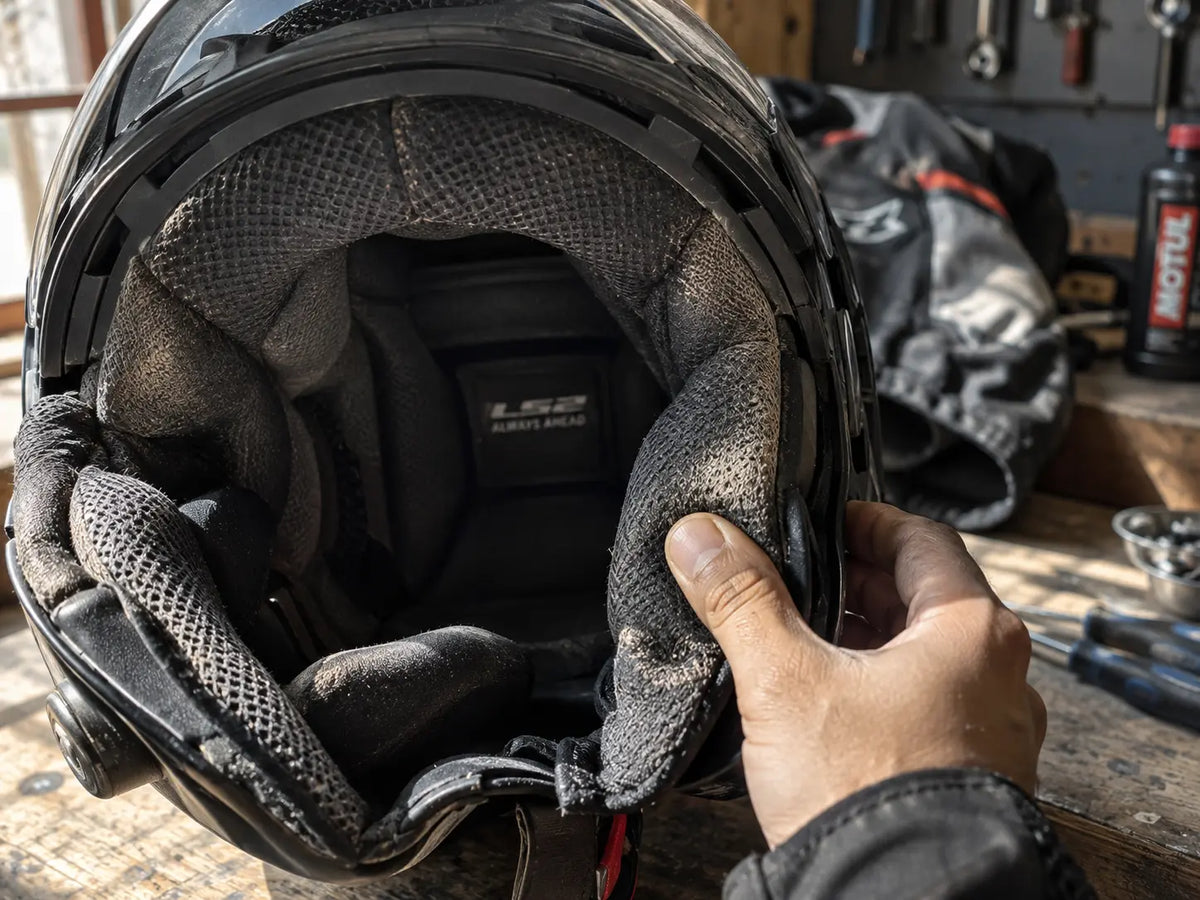
Your helmet liner takes a beating every time you ride. Sweat, heat, skin oils, and dust build up inside it. That creates a space where bacteria can multiply and produce unpleasant odours.
But there's a catch. You can't treat your helmet liner like a pair of jeans. Harsh cleaners, excessive moisture, or the wrong chemicals can affect helmet materials.
So how does an antibacterial helmet spray tackle bacteria without turning helmet care into a risky experiment? Let's break down the science and the right way to use Hygena.
Rider Takeaways
- Helmet odour isn't only about sweat. Bacteria plays a major role.
- Hygena uses a bacteriostatic approach to control bacterial multiplication.
- You don't need to soak or scrub your liner to maintain helmet hygiene.
- Use the spray as part of your regular post-ride hygiene routine.
- Always follow your helmet manufacturer's care instructions.
Why Does Your Helmet Need an Antibacterial Helmet Spray?
Your helmet sits directly against your head for hours during rides. Every ride can add sweat, skin oils, and moisture to the liner. Those conditions can support microbial growth.
The smell you notice isn't simply the smell of sweat. Microorganisms can break down compounds in sweat and skin secretions. That process can create the volatile compounds responsible for body and gear odour.
This is why perfume alone doesn't solve the problem. It can make the helmet smell different for a while. It doesn't necessarily address the microbial activity behind the odour.
Your helmet still needs proper cleaning when the liner requires it. An antibacterial helmet spray works as a hygiene step between deeper cleaning sessions.
What Does Bacteriostatic Actually Mean?
Bacteriostatic doesn't mean sterilising your helmet. It refers to controlling bacterial multiplication rather than claiming complete microbial elimination.
That's an important distinction when you're talking about helmet hygiene. Your goal isn't to turn your helmet into a laboratory-clean environment. Your goal is to keep bacterial growth and related odour under control.
Hygena's science positioning focuses on bacteriostatic action. The formulation is designed to help control bacteria associated with helmet odour.
The approach fits a rider's routine because it doesn't require aggressive scrubbing. You can add hygiene to your post-ride routine without treating your liner like dirty laundry.
Can an Antibacterial Helmet Spray Damage Your Liner?
It depends on the product and how you use it. Helmet liners contain specialised fabrics, foams, adhesives, and comfort materials. That's why random household cleaners aren't a smart shortcut.
Your helmet manufacturer should always have the final word on compatible cleaning products. Check the care instructions before introducing any product to your helmet.
Hygena is designed specifically around helmet hygiene. Its intended use is controlled application inside the helmet rather than soaking the liner.
The key is moderation. You don't need to drench the padding to maintain freshness. Controlled application keeps the routine practical and avoids unnecessary moisture.

How to Use Hygena on Your Helmet Liner
Using an antibacterial helmet spray doesn't need to become another complicated maintenance job. The routine is designed to fit naturally after your ride.
- Remove your helmet after the ride. Give the interior a moment to cool down naturally.
- Apply Hygena to the interior. Target the liner and areas that come into regular contact with your head.
- Allow the helmet to dry as directed. Avoid putting it away while the interior remains unnecessarily damp.
- Store your helmet properly. Keep it somewhere clean and reasonably ventilated between rides.
The routine matters because helmet hygiene works best as a habit. You shouldn't wait until your helmet smells terrible before doing something about it.
Why Spraying Perfume Inside Your Helmet Isn't Enough
Perfume changes the smell. That's not the same as addressing the source of helmet odour.
If bacteria continue multiplying inside a warm, sweaty liner, fragrance only masks the problem temporarily. The original odour can return once the fragrance fades.
This is where an antibacterial helmet spray takes a different approach. Hygena focuses on bacterial control rather than simply covering the smell.
That's especially useful if you're riding daily. A commuter or delivery rider can spend hours with their helmet pressed against sweaty skin. Your hygiene routine needs to account for that repeated exposure.

Does Hygena Replace Washing Your Helmet Liner?
No. Cleaning and hygiene are different jobs. If your liner is visibly dirty, follow the helmet manufacturer's cleaning instructions.
Washing helps remove accumulated dirt, sweat, oils, and other physical buildup. A hygiene spray addresses a different part of the problem.
That's why both can have a place in your helmet-care routine. Think of cleaning as periodic maintenance and hygiene as an ongoing habit.
Your exact cleaning frequency depends on how often you ride and what your helmet manufacturer recommends. Heavy daily riders may need more frequent attention than occasional weekend riders.
Cleaning vs Hygiene
| Cleaning | Helmet Hygiene |
|---|---|
| Removes physical dirt and buildup | Helps control microbial growth |
| Usually done periodically | Can become part of your regular ride routine |
| Must follow helmet manufacturer's instructions | Uses a product designed for helmet interiors |
The Fix Is Simpler Than You Think
If you're already cleaning your helmet but the smell keeps coming back, look beyond visible dirt. Bacterial growth can be part of the problem.
Hygena is a bacteriostatic helmet deodorant designed specifically for riders. It helps control the bacteria linked with helmet odour instead of relying only on fragrance.
Add it to your post-ride helmet hygiene routine. Your next ride starts with a fresher liner.
What Ingredients Help Hygena Control Helmet Bacteria?
Hygena's science-led positioning focuses on antimicrobial and bacteriostatic ingredients. Its science communication highlights botanical ingredients such as neem-derived compounds.
Neem has a long history of use in antimicrobial research. Specific compounds from neem have also been studied for their biological activity.
Hygena's formulation combines this science with a product designed specifically for helmet interiors. The goal is practical bacterial control for everyday riders.
You don't need to understand every chemistry term to use the product correctly. You just need to understand what the product is designed to do.
How Often Should You Use an Antibacterial Helmet Spray?
Your usage should match your riding routine and the product's directions. Daily riders naturally create more repeated sweat and moisture exposure than occasional riders.
If you ride every day, make helmet hygiene part of your post-ride routine. If you ride only on weekends, use the product as part of your regular helmet-care cycle.
Don't wait for a strong smell. Preventive hygiene is easier than trying to recover a badly neglected helmet.
Frequently Asked Questions
Does an antibacterial helmet spray replace helmet cleaning?
No. A hygiene spray and cleaning serve different purposes. Cleaning removes physical buildup, while an antibacterial spray helps control microbial activity. Follow your helmet manufacturer's cleaning instructions for periodic deep cleaning.
Can I spray too much Hygena inside my helmet?
More product isn't automatically better. Use the amount recommended on the product instructions. Avoid soaking the liner, and allow the helmet interior to dry appropriately before wearing it again.
Does helmet smell come only from sweat?
No. Sweat creates moisture and provides compounds that microorganisms can use. Microbial activity can then contribute to the compounds responsible for unpleasant odour. That's why masking smell doesn't always solve the underlying problem.
Is Hygena a helmet cleaner?
No. Hygena is positioned as a helmet hygiene product. It's designed to help control bacteria and helmet odour. It shouldn't replace manufacturer-approved cleaning when your liner needs washing.
Is an antibacterial helmet spray safe for every helmet?
Always check your helmet manufacturer's care instructions first. Different helmets can use different liner materials and construction methods. Follow both the helmet manufacturer's guidance and Hygena's product directions.
Your Helmet Deserves a Hygiene Routine
Your helmet protects your head every time you ride. Keeping its interior hygienic should be part of the same routine.
You don't need aggressive chemicals or endless scrubbing. You need the right approach for the job.
Clean your liner according to the manufacturer's instructions. Then maintain everyday hygiene with a product designed specifically for helmet interiors.
Hygena's bacteriostatic approach focuses on controlling bacterial multiplication and managing helmet odour. That's a different job from simply adding fragrance.
So next time you finish a ride, don't just park the bike. Give your helmet a little attention too.
Share:
Acne Mechanica Motorcycle: What Riders Should Know
Why a Helmet Cleaner Isn't Enough for Cuttack's Riders