
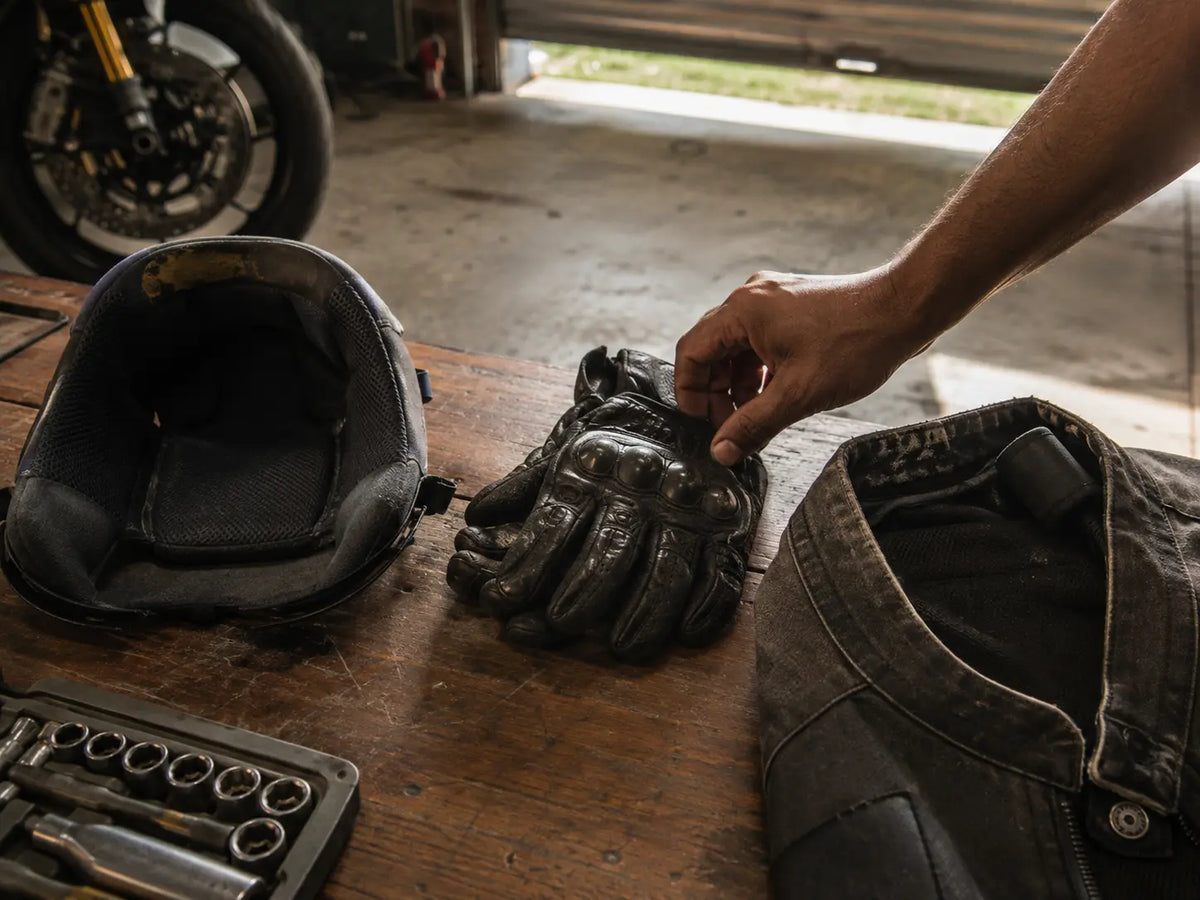
Your helmet isn't the only thing that rides with you every day. Your skin, scalp, hands, and gear take the same beating: heat, sweat, pollution, hours under a visor.
Most riders think "hygiene" means one spray after a long ride. That's where helmet deodorant started. It's not where a real rider personal care routine ends. India added 2.02 crore new two-wheelers in 2025 alone, per Vahan registration data reported by Autocar India. That's a lot of riders spending hours a day in the same gear.
This guide breaks down what belongs in a complete rider personal care routine. It also covers where Hygena fits as the one constant across all of it.
Rider Takeaways
- India registered 2.02 crore new two-wheelers in 2025 (Vahan data via Autocar India). That's more riders spending more hours in gear than ever.
- A 2020 study found 392 bacterial isolates across 130 motorcycle helmets, with Staph aureus the most common species.
- A full rider routine covers gear hygiene, skin, scalp, and body odor, not just the helmet.
- Hygena's bacteriostatic spray already works across helmet, gloves, jacket, and boots, the connective layer riders need.
Why Isn't Helmet Deodorant Enough Anymore?
In 2025, India registered 2.02 crore new two-wheelers, according to Vahan portal data reported by Autocar India. That's a huge number of daily commutes happening in full gear, in Indian heat.
Helmet odor is real, and it's the problem most riders notice first. But it was always a symptom, not the whole story. A rider's hands sweat inside gloves. A rider's jacket collar traps grime by evening. A rider's scalp sits under foam for an hour on a bad traffic day.
Hygena started with the helmet because that was the loudest, most obvious problem nobody had solved. Bhai, ek helmet clean karna hi kaafi nahi hai. Once you fix that, the rest of the routine gets impossible to ignore.
Quick Fact:
India registered 2.02 crore two-wheelers in 2025, per Vahan portal data cited by Autocar India (December 2025). That's millions of riders spending an hour or more daily in helmet, gloves, and jacket. That's enough exposure to make gear hygiene a daily habit, not an occasional fix. Source: Autocar India
India registered 2.02 crore two-wheelers in 2025, per Vahan portal data cited by Autocar India (December 2025). That's millions of riders spending an hour or more daily in helmet, gloves, and jacket. That's enough exposure to make gear hygiene a daily habit, not an occasional fix. Source: Autocar India
What Counts as a Rider Personal Care Routine?
A rider personal care routine covers four areas: gear hygiene, skin protection, scalp and hair care, and body odor management. Most riders only handle one of these, if any.
Gear hygiene means the helmet liner, glove interiors, jacket collar, and boot lining. Anywhere sweat sits against skin for hours counts. Skin protection means UV, wind, and friction from the visor and strap. Scalp care means what happens to your hair and scalp under a sealed foam liner.
Body odor is the bacteria on your skin breaking sweat down into smell. It happens everywhere gear touches you, not just under the helmet. A commuter doing 45 minutes each way deals with this daily. A weekend tourer gets it in one long, concentrated dose.
Treat these as one routine, not four separate problems. They all come from the same root cause: sweat trapped against skin, for hours, in Indian heat.
Unique Insight
Our finding: Most rider hygiene content treats the helmet, gloves, jacket, and boots as separate cleaning problems. They're one problem, sweat-fed bacteria, showing up in four places on the same body, on the same ride.
What's Actually Growing Under Your Gear?
In 2020, a study in the International Journal of Microbiology cultured 130 motorcycle helmets and found 392 bacterial isolates. Staph aureus was the most common species, at 22.7% of isolates.
The same study found 33.7% of those Staph aureus isolates were MRSA, a resistant strain. That's not meant to scare you. It's meant to show what "it just smells a bit" actually undersells.
The mechanism repeats everywhere gear meets skin. Heat raises sweat. Sweat raises moisture and friction. Moisture and friction feed bacteria. A 2023 review of frictional skin disorders in the Indian Journal of Dermatology, Venereology and Leprology confirms it.
Gloves, boots, and jacket collars follow that same pattern. Nobody's culturing your glove lining in a lab. That doesn't mean it's cleaner than your helmet.
Bacteriostatic is the word to know here. It doesn't kill bacteria outright like a bleach-based cleaner would. It stops them from multiplying, which is why a quick daily spray beats an occasional deep scrub. Fewer bacteria multiplying means less odor, and less risk building up between real washes.
Body Odor, Skin, and Scalp: The Parts Riders Skip
Body odor isn't just sweat. It's bacteria breaking sweat down into smell. Corynebacterium and Staph species on your skin turn sweat compounds into that sharp, sour smell. Riders usually blame it on "just being sweaty," per microbiologists at the American Society for Microbiology.
That happens everywhere gear sits close to skin: underarms, back, waistband, not only under the helmet. Wiping down with a tissue doesn't touch the bacteria doing the actual work.
Skin takes a separate hit. Heat, sweat, and friction from a visor strap or jacket seam form one chain. A 2023 dermatology review flagged that exact chain for frictional skin problems. Scalp is no different. An hour under a sealed liner is an hour without airflow.
Kitna time roz helmet ke andar guzarta hai, socho zara. Across Bengaluru, Chennai, Hyderabad, and Pune, the average one-way office commute already runs 49 to 50 minutes. That's per MoveInSync's Pan-India travel time report.
Double that for the round trip. Your gear is on your body for close to two hours before you've even reached home.
Does Every Rider Need the Same Routine?
A daily commuter and a weekend tourer face the same bacteria, on different timelines. Your routine should match your riding pattern, not a generic checklist.
Office commuters get 45 to 60 minutes of gear exposure, twice a day, five or six days a week. The fix is a fast evening habit: gear off, spray, hang to dry, repeat.
Weekend tourers get it differently. Ten hours in the saddle in one stretch, often across heat, dust, and one rushed highway dhaba stop. The routine needs to travel with you. Keep a small spray bottle in the tank bag, not a full kit waiting at home.
Delivery riders sit at the extreme end. Six to ten hours daily in gear, per typical shift patterns, means gear hygiene stops being optional. It becomes a daily non-negotiable, closer to brushing your teeth than a weekend chore.
Building the Routine: A Practical Rider Personal Care Checklist
Before the ride, keep it to three things. Helmet liner sprayed and dry, sunscreen on exposed skin, gloves and jacket collar checked for damp. That's under two minutes.
During longer rides or peak heat, reapply sunscreen at a fuel stop. Swap into a dry pair of gloves if you're carrying spares. Small habit, big difference by hour three.
After the ride is where most routines fall apart. Spray the helmet liner, glove interiors, and jacket collar before storing gear, not just when it starts to smell. Shower and wash your scalp properly, not a quick rinse. Let every piece of gear dry fully before it's sealed away again.
This isn't a strict checklist to follow every single day. It's a rhythm. Miss a day here and there. Just don't let gear go a full week without airing out and a spray.
Once a week, go deeper. Wash glove liners and jacket collars properly, not just a spray-and-forget. Check boots for damp spots that never fully dried. It's a fifteen-minute reset that catches what the daily habit misses.
Quick Fact:
A 2023 review in the Indian Journal of Dermatology, Venereology and Leprology traces frictional skin problems to one chain. Heat raises sweating, sweating raises skin moisture, and moisture raises friction against skin. That's the same mechanism behind gear rash, not just sunburn. Source: IJDVL, 2023
A 2023 review in the Indian Journal of Dermatology, Venereology and Leprology traces frictional skin problems to one chain. Heat raises sweating, sweating raises skin moisture, and moisture raises friction against skin. That's the same mechanism behind gear rash, not just sunburn. Source: IJDVL, 2023
Where Does Hygena Fit in an Expanding Routine?
Hygena's bacteriostatic spray was built to stop bacteria in a helmet liner, not mask the smell after it's already there. Riders started using it on glove interiors, jacket collars, and boot linings on their own. Same bacteria, same fix.
That's the role Hygena plays across a full rider personal care routine. It's not trying to replace sunscreen or a proper shampoo. It's the one product that follows sweat wherever gear traps it, dermatologically tested and backed by over 10,000 riders.
You still need sunscreen for skin, a wash routine for your scalp, and a decent deodorant for body odor. Hygena is the layer connecting all of it, the one habit that covers every piece of gear touching your skin.
Unique Insight
Our finding: Hygena didn't set out to be a routine product. Riders made it one, spraying it on gloves and boots the company never explicitly designed it for. Proof the bacteria problem was always bigger than one helmet.

Ready to build the full routine? Start with the piece that already has the science behind it. Spray your helmet, gloves, and jacket collar tonight, then build outward from there.
Frequently Asked Questions
What is a rider personal care routine?
It's a daily habit covering gear hygiene (helmet, gloves, jacket, boots), skin protection, scalp care, and body odor. It covers everywhere sweat gets trapped against skin during a ride.
Is helmet deodorant enough on its own?
No. A 2020 study found 392 bacterial isolates across 130 helmets. The same bacteria build up in gloves, jacket collars, and boots too, anywhere sweat sits for hours.
Can I use helmet spray on other gear?
Many riders already do, on glove interiors and jacket collars, since it targets the same sweat-fed bacteria. Always spot-test on lining fabric first.
How often should I do the full routine?
Spray gear after most rides, and never let it go longer than a week unaired. Skin and scalp care can follow your regular shower routine.
Does commute length actually matter for hygiene?
Yes. Average one-way commutes run 49 to 60 minutes across major Indian metros, per MoveInSync data. That's close to two hours of gear contact daily, round trip.
Conclusion
Helmet deodorant solved the first problem riders noticed. It was never going to solve all of them. A real rider personal care routine covers gear, skin, scalp, and body odor together. They all come from the same trapped sweat.
Hygena's spray is the constant across that whole routine: helmet, gloves, jacket, boots, one bacteria-fighting habit. Build the rest of the routine around it, and your gear stops being the thing you dread putting back on.
Sources
1. "Two-wheeler sales cross 20 million mark in 2025," Autocar India, December 2025, citing Vahan portal registration data. Retrieved 2026-09-01.
2. Sapkota, R. et al., "Microbial Diversity and Antibiotic Susceptibility Pattern of Bacteria Associated with Motorcycle Helmets," International Journal of Microbiology, 2020. Retrieved 2026-09-01.
3. "Current Understanding of Frictional Dermatoses: A Review," Indian Journal of Dermatology, Venereology and Leprology, 2023. Retrieved 2026-09-01.
4. "Microbial Origins of Body Odor," American Society for Microbiology, December 2021. Retrieved 2026-09-01.
5. "An Office Travel Time Report: Pan-India IT Corridors," MoveInSync, 2019. Retrieved 2026-09-01.
Share:
Helmet Deodorizer Thiruvananthapuram: Why It Never Dries
How to Clean Your Anti-Pollution Riding Mask, Safely