
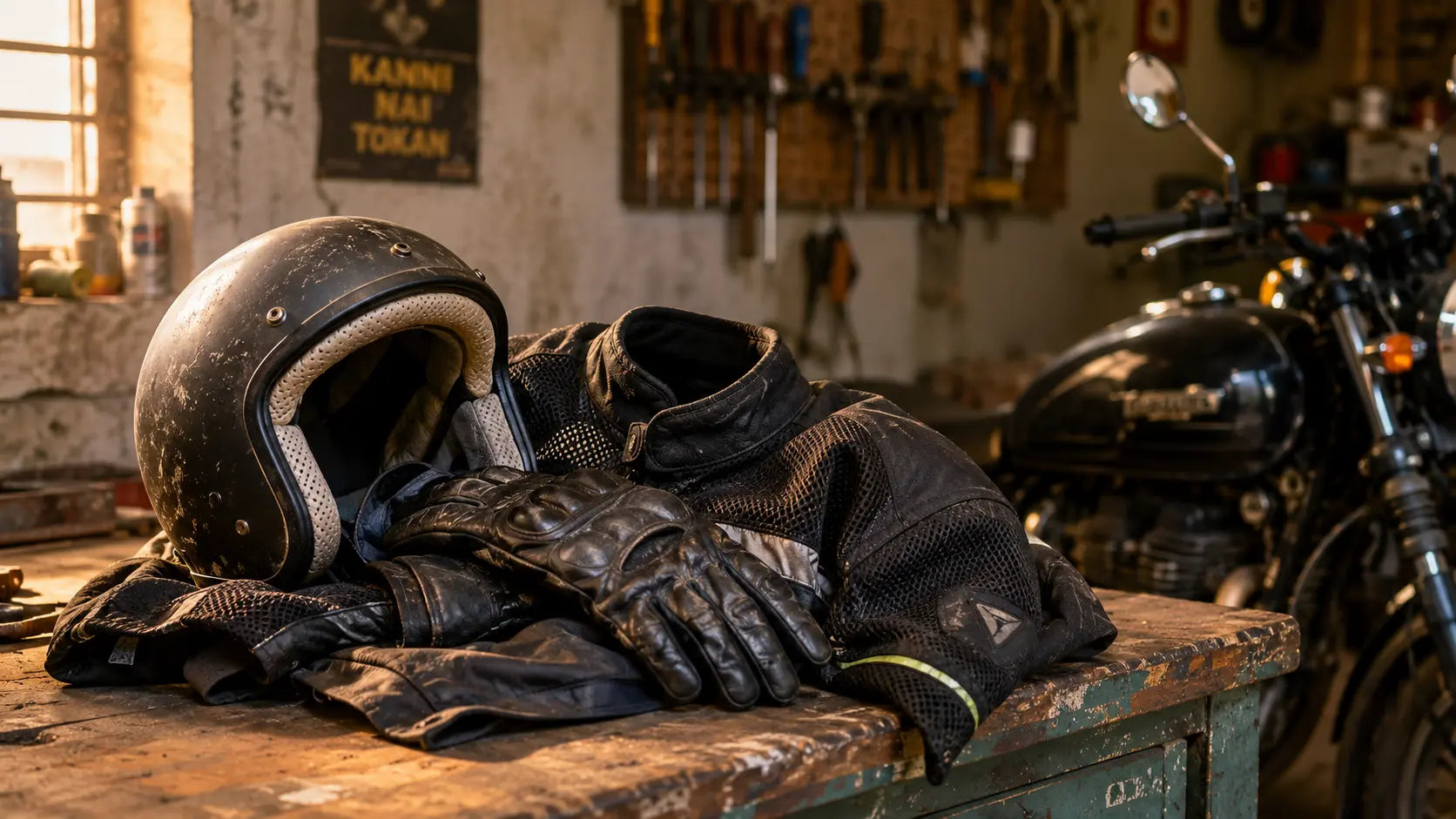
You pull on your jacket for tomorrow's ride and there it is. That smell.
It's not just yesterday's sweat. Your gear soaks up sweat every single ride, and that sweat feeds bacteria deep in the lining. Bacteria is what actually causes the stink, not the sweat itself. Washing once a season doesn't touch it. Spraying perfume just hides it for an hour.
So what actually works? Below are the 5 best products for cleaning motorcycle gear, matched to each piece you own: helmet, jacket, gloves, boots. No fluff, just what keeps gear fresh.
Rider Takeaways
- One 2021 study recovered 392 bacterial isolates from 130 used motorcycle helmets, with Staphylococcus aureus the most common (PMC, 2021).
- Gear smell is a bacteria problem, not a sweat problem, so masking sprays don't fix it.
- Use a bacteriostatic spray between washes and the right cleaner for each material to stop odor at the source.
Why does your riding gear smell in the first place?
Your gear smells because bacteria break down your sweat into stinky compounds. In 2020, a review in the journal Applied Sciences explained that skin bacteria convert sweat into volatile fatty acids and thioalcohols, the molecules behind that sour gear funk (PMC, 2020).
Here's the part most riders miss. Sweat on its own is nearly odorless. The smell only shows up once bacteria start feeding on it inside your warm, damp jacket lining. Add Indian heat and the problem speeds up fast.
In Delhi, Rajasthan, and the Deccan, summer riding means 42°C to 47°C from May to July. That's a perfect incubator. Your mesh jacket traps sweat, the sun keeps it warm, and bacteria multiply between rides. Phir agle din, that smell is waiting for you.
Synthetic gear makes it worse. In 2014, a study in Applied and Environmental Microbiology found polyester clothing smelled significantly more intense and unpleasant than cotton after exercise. Most riding jackets are polyester or nylon. That's not a coincidence. It's chemistry.
Quick Fact:
Riding-gear odor is produced when skin bacteria such as Staphylococcus and Corynebacterium metabolize sweat into short-chain fatty acids and thioalcohols. A 2014 study in Applied and Environmental Microbiology found polyester garments smelled more intense than cotton after a single fitness session, and most motorcycle jackets are synthetic. Source: Callewaert et al., AEM 2014.
Riding-gear odor is produced when skin bacteria such as Staphylococcus and Corynebacterium metabolize sweat into short-chain fatty acids and thioalcohols. A 2014 study in Applied and Environmental Microbiology found polyester garments smelled more intense than cotton after a single fitness session, and most motorcycle jackets are synthetic. Source: Callewaert et al., AEM 2014.
5 best products for cleaning motorcycle gear
The best products for cleaning motorcycle gear aren't one magic bottle. Each material needs a different fix: foam, mesh, leather, sweaty boot lining. In 2021, research in Applied and Environmental Microbiology showed bacterial survival on fabric depends heavily on the fiber type (PMC, 2021). So the right tool matters.
Here are the five we'd actually keep on the shelf, and exactly what each one is for.
1. A bacteriostatic gear deodorant spray (for helmet, gloves, jacket lining)
This is the one product that works between washes. It's the daily fix. A bacteriostatic spray doesn't just cover smell. It stops the bacteria from multiplying inside your liner, which is where the odor actually starts.
This is where Hygena comes in. It's India's first helmet deodorant built for riders, not a bathroom shelf. A few sprays inside your helmet or gloves after a ride, and the bacteria don't get the warm, damp head-start they need overnight. It keeps your gear fresh for tomorrow's ride without soaking or washing anything.
You can't machine-wash a helmet liner every day. That's exactly the gap a bacteriostatic spray fills. It's fast, needs no drying time, and won't damage the EPS foam.
Unique Insight
Our finding: Most riders treat gear odor as a once-a-month laundry job. But bacteria double in hours, not weeks, so a 5-second spray after each ride does more for daily freshness than one deep wash a season. Cleaning frequency beats cleaning intensity.
2. A technical gear wash (for mesh and textile jackets and pants)
Your textile jacket needs a pH-neutral technical wash, not regular detergent. Ordinary detergent leaves a residue that clogs the breathable membrane and traps odor deeper in the fabric.
A dedicated tech wash cleans sweat and bacteria out of mesh and Cordura without stripping the water-repellent coating. Use it every few weeks in summer, or whenever the jacket starts smelling on its own. Always check the care label first. Some textile jackets are machine-safe on a gentle cycle, others aren't.
Skip fabric softener completely. It coats fibers and kills the jacket's breathability, which makes you sweat more on the next ride.

3. A leather cleaner and conditioner combo (for leather jackets, gloves, boots)
Leather gear needs two steps: a gentle cleaner to lift sweat and grime, then a conditioner to stop the leather drying out and cracking. Never throw leather in the washing machine. Water and heat ruin it fast.
Wipe the leather down with the cleaner, let it dry away from direct sun, then work in a thin layer of conditioner. This pulls out trapped sweat that bacteria feed on and keeps the leather supple. For sweaty leather glove and boot interiors, pair this with a deodorizing step. Leather cleaner handles the outside, not the funk inside.
Quick Fact:
Leather riding gear should never be machine-washed. Water strips the natural oils and causes cracking. A 2020 review on textile malodor notes that making surfaces more water- and fat-repellent reduces bacterial buildup, which is why conditioned, sealed leather holds less odor than raw, dried-out leather. Source: Textile Malodour Development, PMC 2020.
Leather riding gear should never be machine-washed. Water strips the natural oils and causes cracking. A 2020 review on textile malodor notes that making surfaces more water- and fat-repellent reduces bacterial buildup, which is why conditioned, sealed leather holds less odor than raw, dried-out leather. Source: Textile Malodour Development, PMC 2020.
4. Activated charcoal deodorizer bags (for boots, gloves, helmet storage)
Activated charcoal is the passive overnight fix for the gear you can't spray or wash. It works by adsorption: odor molecules get trapped in the charcoal's tiny pores and stay there.
Drop a charcoal bag inside each boot, glove, or your helmet bag overnight. It pulls moisture and smell out while you sleep. Best part: leave the bags in the sun for a few hours and they reset, so one pack lasts months. It won't kill bacteria, but it keeps stored gear dry and far less smelly between rides.
This pairs well with a spray. Charcoal handles overnight storage; the spray handles active bacteria.
5. An antibacterial spray for gloves and boots (targeted odor control)
Gloves and boots are the worst offenders. They're tight, sweaty, and hard to wash. A targeted antibacterial spray made for fabric and interiors knocks down the bacteria living in that lining.
Spray the inside after a ride, let it air-dry, and store with a charcoal bag. Look for something bacteriostatic rather than a plain fragrance spray. Masking the smell of a sweaty boot just gives you perfumed funk. The goal is fewer bacteria, not a stronger cover scent.
How do you build a gear-cleaning routine that sticks?
The best routine is the one you'll actually repeat. In 2020, a textile malodor review found odor and bacteria build up on fabric over time, so small, frequent cleaning beats rare deep cleans (PMC, 2020). Consistency wins.
Keep it simple. Spray your helmet and gloves after every ride. That's the 10-second habit. Wash the textile jacket every few weeks in summer. Condition leather monthly. Park charcoal bags in your boots overnight. None of it takes real effort once it's a habit.
Think of it like brushing your teeth. You don't deep-clean once a year and call it done. The same logic keeps your gear healthy. Your scalp, too.

That daily spray step is the easiest to skip and the most valuable to keep. Hygena was built for exactly that moment — a quick fix after you park the bike, so bacteria never get their overnight head-start. Keep one in your gear bag and your helmet stops smelling like last week's ride.
Frequently Asked Questions
What is the best product for cleaning motorcycle gear?
There's no single product. Each material needs its own. A bacteriostatic spray handles helmet and glove interiors daily, a technical wash cleans textile jackets, and a cleaner-conditioner protects leather. Gear odor is bacterial, so a 2014 AEM study confirms masking sprays don't fix synthetic-fabric smell.
Can I machine wash my motorcycle jacket?
Sometimes, but only if the care label says so, and only textile jackets on a gentle cycle. Never machine-wash leather; water strips its oils and causes cracking. Always remove armour first and use a pH-neutral technical wash, not regular detergent, which clogs the breathable membrane.
How do I stop my helmet from smelling between washes?
Spray a bacteriostatic helmet deodorant inside after each ride. A 2021 study recovered 392 bacteria from 130 used helmets, so the smell is living bacteria, not just sweat. A daily spray stops them multiplying overnight without soaking or damaging the EPS foam liner.
Does activated charcoal actually remove gear odor?
Yes, for storage. Activated charcoal traps odor molecules through adsorption and pulls moisture from boots, gloves, and helmet bags overnight. It won't kill bacteria like a spray does, but it keeps stored gear dry and far less smelly. Reactivate the bags in sunlight to reuse them for months.
Conclusion
Gear smell is a bacteria problem, and bacteria need the right tool for each material, not one bottle and a hopeful spritz of perfume.
Build the simple routine: a bacteriostatic spray after every ride, a technical wash for textiles, a cleaner-conditioner for leather, and charcoal bags for storage. The daily spray is the part that matters most, and it's the easiest to keep. That's the gap Hygena fills — a 10-second fix that stops the smell before it starts. Keep one in your gear bag and ride into tomorrow with a helmet that doesn't announce yesterday.
Sources
1. "Microbial Diversity and Antibiotic Susceptibility Pattern of Bacteria Associated with Motorcycle Helmets," PMC / NCBI, 2021. Retrieved 2026-06-27.
2. "Microbial Odor Profile of Polyester and Cotton Clothes after a Fitness Session," Applied and Environmental Microbiology, 2014. Retrieved 2026-06-27.
3. "Biological and Chemical Processes that Lead to Textile Malodour Development," PMC / NCBI, 2020. Retrieved 2026-06-27.
4. "The Bacterial Life Cycle in Textiles is Governed by Fiber Hydrophobicity," PMC / NCBI, 2021. Retrieved 2026-06-27.
5. "Best Motorcycle Gear for Hot Weather Riding in India," PathPavers, 2025. Retrieved 2026-06-27.
Share:
Riding to Work Every Day? How to Keep Your Gear Fresh
Can a Dirty Helmet Cause Skin Infections?