
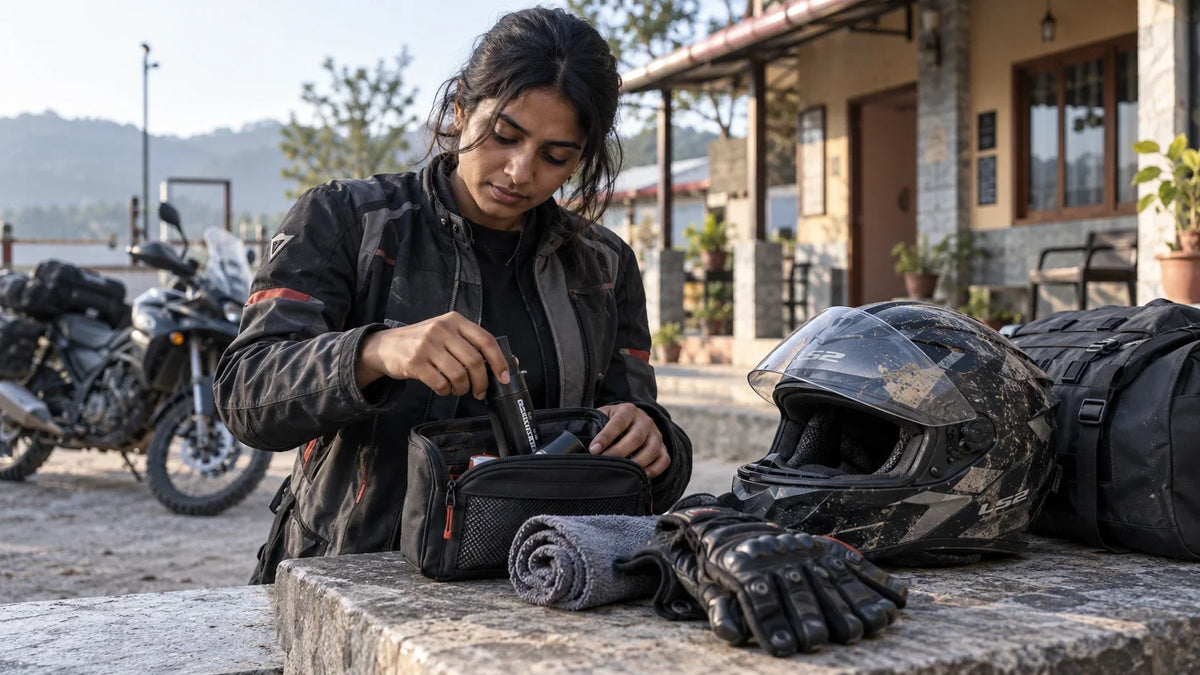
You can pack tools for every roadside problem and still forget the basics that keep you feeling human. After hours in the saddle, sweat, road dust, damp clothes and a stale helmet can make a great ride uncomfortable. A small, well-planned hygiene kit helps you reset at fuel stops, dhabas, campsites and budget stays.
These hygiene essentials for long-distance motorcycle tourers aren't about carrying your bathroom cabinet. They're about choosing compact items you'll actually use, keeping clean things separate from used gear, and knowing when a quick freshen-up isn't enough. Pack for your route, weather and access to water. Then make room for the essentials that protect comfort as well as freshness.
Rider Takeaways
- Carry soap, a hand sanitizer with at least 60% alcohol, and a quick-dry towel. The CDC recommends washing with soap and water whenever possible.
- Pack clean underwear and socks for each planned change, plus a separate bag for damp or used items.
- Treat helmet hygiene as a routine: dry the liner after rides and use only products suitable for your helmet and its materials.
1. Hand soap and alcohol-based sanitizer
Your hands touch fuel pumps, cash, roadside counters, phone screens and food. Clean them before eating and after using the toilet. Soap and clean running water are the first choice. The US Centers for Disease Control and Prevention (CDC) recommends scrubbing with soap for at least 20 seconds. If water isn't available, choose a hand sanitizer containing at least 60% alcohol.
Sanitizer is a backup, not a magic fix. It may work less well when your hands are visibly greasy or dirty. Stop at a washbasin after handling a chain, oily parts or dusty luggage. Keep a small bottle somewhere reachable without unpacking your whole bag.
The CDC's handwashing guidance says to scrub with soap for at least 20 seconds. When soap and clean running water aren't available, it recommends hand sanitizer containing at least 60% alcohol. These are general hand-hygiene recommendations, not motorcycle-specific testing. Source: CDC, About Handwashing (2024).
2. Body wipes for no-shower stops
A pack of body wipes can help you freshen up when you're camping or checking into a room without a convenient shower. Use them on areas that need a quick clean, then let your skin dry before putting on fresh clothes. Choose skin-friendly wipes and stop using them if they cause irritation.
Wipes are useful between proper washes, but they don't replace bathing indefinitely. Don't flush them unless the packaging explicitly says they're suitable for that system. Pack used wipes into a small sealable waste bag and dispose of them in a bin. Leave campsites and roadside stops cleaner than you found them.
3. Quick-dry towel and a small washcloth
A compact quick-dry towel takes up less space than a thick bath towel and is easier to air out. A separate washcloth can help with a basic sink wash when a shower isn't available. Keep the towel outside your sealed clothing pouch until it's fully dry.
A damp towel packed beside clean clothes can leave everything musty. Hang it somewhere ventilated during breaks or at your accommodation. If you ride through monsoon weather, carry a waterproof pouch for dry items and keep wet textiles separate.
4. Clean underwear, socks and a spare base layer
Fresh clothes often make the biggest difference after a long day riding. Pack underwear and socks according to your access to laundry, not just the number of days on the road. Moisture-wicking or quick-drying fabrics can be useful, but fit and comfort matter more than marketing claims.
Change out of sweat-soaked clothing when you can. Dry your skin before putting on a fresh layer, especially where fabric rubs. If you have a multi-day route, plan a laundry stop rather than carrying every possible outfit. A lightweight laundry bag keeps worn items away from clean clothes.
Our recommendation: Build your kit around a clean-to-used system. Keep fresh clothes in one waterproof pouch and worn or damp items in another. This simple separation is more useful than adding several duplicate grooming products.
5. Sunscreen and SPF lip balm
Long rides can mean hours outdoors, including during breaks and sightseeing. Pack broad-spectrum sunscreen and follow its label for application and reapplication. The CDC's general travel guidance recommends sunscreen of SPF 15 or higher; many riders may prefer a higher SPF depending on exposure and skin needs.

Don't forget your lips. An SPF lip balm is easy to carry in a jacket pocket and helps you avoid relying on ordinary balm for sun protection. Reapply according to the product instructions, especially after wiping your face or sweating heavily. Sunscreen doesn't replace protective riding gear.
6. Deodorant and a small freshen-up kit
A travel-size deodorant can help manage body odor between washes. Pick a format that fits your bag and doesn't leak. If you have sensitive skin, test a new product before leaving rather than discovering irritation halfway through a tour.
Keep this kit separate from the items you use for your helmet. Body deodorant is formulated for personal use; don't spray it inside helmet padding unless the product label specifically allows that use. Strong fragrance can cover an odor temporarily without addressing the source.
7. Helmet hygiene essentials
Your helmet sits against your scalp and absorbs sweat during repeated rides. Add helmet hygiene to your post-ride routine: remove the helmet safely, open it up as its manufacturer allows, and let the interior dry in a ventilated place. Follow the helmet manual for liner removal and washing. Don't use harsh cleaners or soak components unless the manufacturer permits it.
For between-ride freshness, use only a product designed for helmet interiors and compatible with your helmet materials. Hygena is a rider-focused helmet deodorant brand; check its product directions and your helmet manufacturer's guidance before use. A spray doesn't replace washing a removable liner when it needs cleaning.
CTA: Make helmet hygiene part of your packing routine. Explore the helmet-care options at Hygena and follow the instructions for your specific helmet.
8. Anti-chafe care and blister dressings
Hours in riding clothes can create friction around seams, waistbands and other pressure points. If you know you're prone to chafing, pack a skin-safe anti-chafe product you've already tried. Apply it as directed and stop if it irritates your skin. Don't apply products to broken skin unless the label says they're suitable.
For foot or hand blisters, carry plasters or padded dressings. The UK's NHS advises keeping blisters clean, covering them with a soft plaster or padded dressing, and not bursting them yourself. If a blister becomes increasingly red, hot, swollen or painful, seek medical advice rather than pushing through the ride.
The NHS recommends protecting blisters with a soft plaster or padded dressing and advises against bursting them yourself. This is general first-aid guidance that can help touring riders manage friction injuries; it doesn't replace medical care when a wound looks infected or symptoms worsen. Source: NHS, Blisters.
9. Toothbrush, toothpaste and floss picks
A compact toothbrush and travel-size toothpaste take little room and make an overnight stop feel more comfortable. Add floss picks if you already use them. Keep oral-care items in a washable pouch, and let your toothbrush dry before closing it away.
Don't leave the kit buried at the bottom of a fully loaded pannier. Store it with your other end-of-day essentials so you can reach it quickly after checking in. If you're camping, keep toiletries protected from dirt and animals.
10. A small waste bag, laundry bag and refillable water bottle
The least glamorous items can make your kit work better. A sealable bag holds used wipes, while a laundry bag separates worn clothes. A refillable bottle helps you carry water, but refill it from a safe source and clean it regularly.
Keep waste contained until you find an appropriate bin. Don't leave wipes, packaging or hygiene products at roadside stops. Before each leg, check that clean clothes are dry, the towel is aired out, and your helmet isn't being sealed away while damp.
How do you pack a motorcycle hygiene kit?
Use three small pouches: daily essentials, overnight wash items, and first-aid or skin-care supplies. Keep sanitizer, tissues and lip balm accessible. Store liquids in sealed bags, and check airline or accommodation rules if your route includes other forms of transport.

Before departure, test every product at home. A new wipe, deodorant or anti-chafe cream can irritate skin, and a leaking bottle can soak your spare clothes. Refill consumables at planned stops instead of carrying full-size containers for the entire trip.
Frequently asked questions
What hygiene items matter most on a long tour?
Start with hand soap or sanitizer, body wipes, a quick-dry towel, spare underwear and socks, sunscreen, oral-care items and helmet-care basics. Add blister dressings and any personal items you need. Adjust the kit to the weather, length of the route and access to showers or laundry.
Can body wipes replace a shower?
No. Wipes are a short-term option when a shower isn't available. Use them to freshen up, then bathe when you can. Choose products suitable for skin and stop if you notice irritation. Don't use surface-disinfecting wipes on your body.
Is hand sanitizer enough after handling greasy parts?
Not always. The CDC says sanitizer may be less effective when hands are visibly dirty or greasy. Wash with soap and clean running water when possible, especially before eating.
How should I keep my helmet fresh during a tour?
After each ride, let the helmet interior air out in a ventilated place. Clean removable padding according to the manufacturer's instructions, and use only products compatible with the helmet. Don't seal a damp helmet in a closed bag.
Conclusion: pack for the ride you’re actually doing
The best hygiene kit is compact, easy to reach and built around your route. Carry the basics for clean hands, a quick wash, fresh clothes, sun protection and minor friction problems. Keep wet items separate and give your helmet time to dry after each ride.
Before you leave, review your route and likely overnight stops. Add specialist items only when they'll solve a real problem. For more practical advice, read Hygena's guides to helmet hygiene and rider freshness, then make your own checklist part of your pre-ride routine.
Sources
- US Centers for Disease Control and Prevention (CDC). “About Handwashing.” Updated/reviewed 2024. https://www.cdc.gov/handwashing
- CDC. “During Travel.” Travelers' Health. https://wwwnc.cdc.gov/travel/page/health-during-trip
- CDC. “Survival Guide to Safe and Healthy Travel.” https://wwwnc.cdc.gov/travel/page/survival-guide
- NHS. “Blisters.” https://www.nhs.uk/conditions/blisters/
Share:
Helmet Padding Bacteria: What's Growing Inside?
Helmet Padding: Clean It, Check It, Replace It