
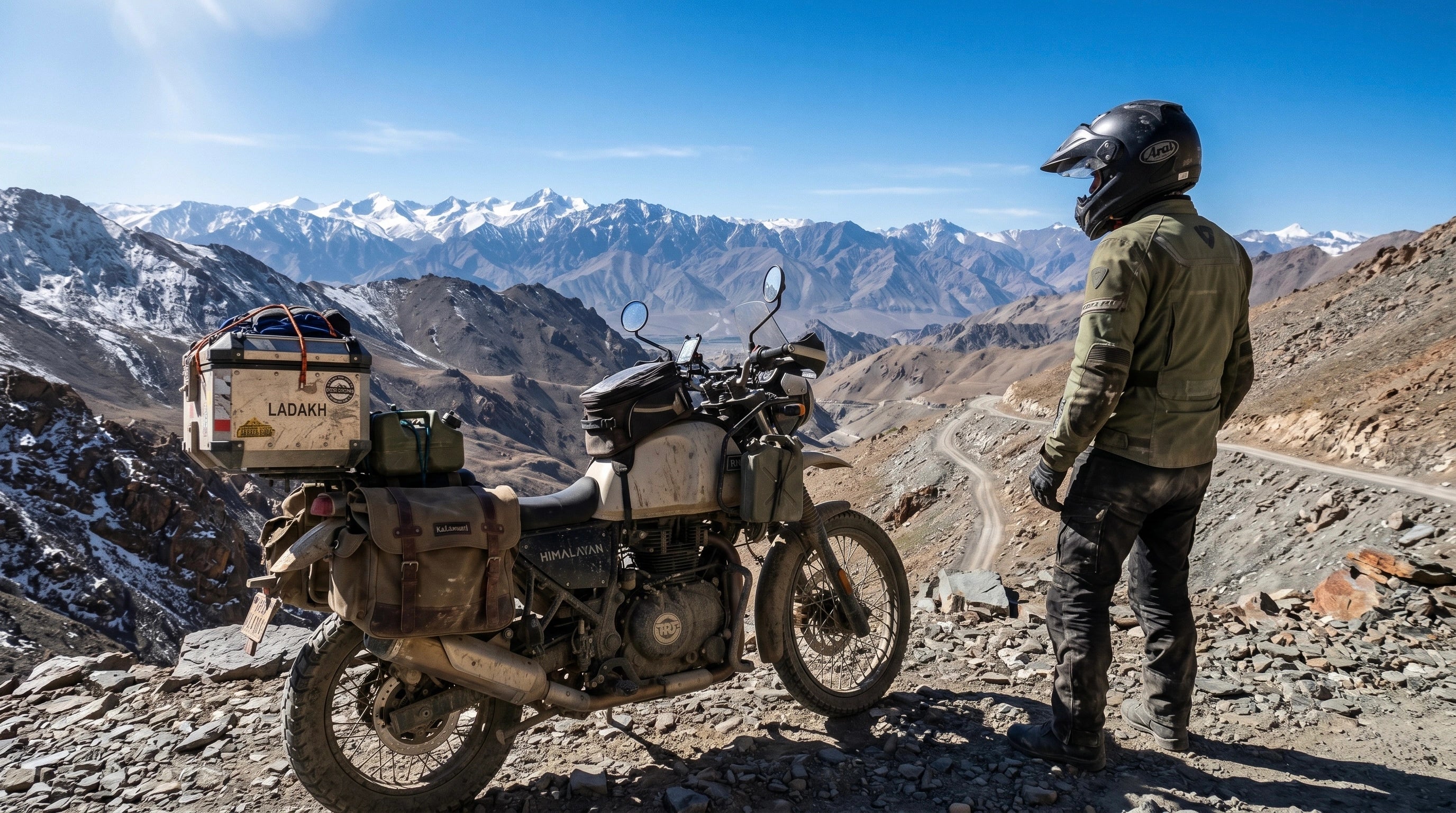
Most riders who head to Ladakh spend weeks planning the route. They research every pass, every fuel stop, every campsite. And then they forget to pack the one thing that makes a 14-day high-altitude tour survivable: the basics.
Ladakh isn't just another long ride. You'll be at altitudes between 3,500m and 5,800m, crossing passes where oxygen is at 50% of sea-level levels, riding through temperature swings of 30°C in a single day. What you carry - and what you don't - directly affects whether this is the trip of a lifetime or a rescue operation.
This is the checklist that covers everything. Not just your riding gear. Hygiene, health, documents, tools, and the gear that other lists skip.
Rider Takeaways
- Ladakh's highest motorable pass, Umling La, sits at 5,798m - where oxygen is 50% of sea level. Preparation isn't optional.
- A 2021 study found 392 bacteria across 130 motorcycle helmets - on a 14-day tour, an uncleaned helmet is a genuine health risk.
- Pack in 3 layers: safety-critical, hygiene-critical, comfort. Miss the first two and the ride suffers. Miss all three and it ends early.
What Makes Ladakh Different From Other Bike Trips?
Ladakh isn't a hill station. It's a high-altitude cold desert that sits mostly above 3,500m - that's higher than the base camp of many Himalayan trekking routes.
The passes you'll cross are relentless. Khardung La sits at 5,359m. Chang La at 5,360m. And if you're riding to Hanle, Umling La hits 5,798m - the highest motorable road on the planet, where atmospheric oxygen is roughly 50% of what you breathe at sea level (Wikipedia, Umling La Pass).
What this means for riders: altitude sickness is a real threat, your bike loses 30–40% engine power, weather can change from sunny to sub-zero in hours, and your body works twice as hard just to function. The gear you carry is the difference between managing this environment and being defeated by it.
The Indian government now mandates a minimum 2-day acclimatisation in Leh before crossing high passes (Government of Ladakh, 2022). Build this into your planning.
At Umling La Pass (5,798m), the world's highest motorable road, oxygen saturation drops to approximately 50% of sea-level levels (Wikipedia, Umling La). The Indian government mandates a minimum two-day acclimatisation period in Leh before crossing high passes, introduced in 2022 to reduce altitude-related medical emergencies among visiting riders and tourists.
Riding Gear - Start Here
At Ladakh's altitudes and terrain, this gear keeps you alive. That's not drama. That's the altitude.

Full-face helmet
Mandatory, not just for law but for Ladakh's cold and debris. Your helmet is on your head for 8–10 hours a day. Make sure it fits, the visor is scratch-free, and the padding is clean before you leave.
Riding jacket with CE armor
Minimum CE Level 1 armor at shoulders, elbows, and back. Not a fashion jacket. Look for windproofing and detachable thermal liners.
Riding gloves (2 pairs)
One warm pair for passes and one lighter pair for lower altitudes. Hands go numb fast above 4,000m.
Knee and shin guards
Separate guards or riding pants with built-in protection. Gravel roads and water crossings mean falls happen.
Riding boots (+ gum boots)
Here's what most packing lists miss: pack cheap gum boots (Wellingtons) you can buy in Manali for ₹300–500. You will cross rivers. You will get your good riding boots soaked and they may stay wet for days. Use gum boots for crossings and riding boots for everything else.
Balaclava
Not optional above 4,000m. Covers your face, protects your scalp from the cold, and adds a hygiene layer between your head and the helmet padding.
Bike Prep & Tools
14 days in Ladakh puts more strain on a bike than 6 months of city commuting. Rocky climbs, river crossings, dust, altitude-thinned air on the carburettor — something will need attention. The question is whether you're carrying what you need when it does.
Get the bike serviced within 500km of departure: oil change, air filter, brake pads, chain tension. Not 2,000km before. Within 500km.
Spare Parts to Carry
- Clutch and throttle cable
- 2 spare spark plugs
- Puncture repair kit (tubeless + tube patch)
- Engine oil (1 litre extra)
- Duct tape and wire ties
- Spare brake lever (they snap on falls)
- Zip ties (50+)
Petrol Backup
Carry a 2-3 litre can. Fuel gaps between stations can exceed 150km on certain routes. Don't assume the next station has supply, or is even open.

Many Ladakh routes exceed a single tank's range - plan your fuel before you leave Leh.
Toolkit
The toolkit that came with your bike is decorative. Carry a proper spanner set, flat and Phillips screwdrivers, and pliers at minimum.
Clothing & Layering
25°C at 10am. -5°C at a pass by 2pm. That's not unusual in Ladakh - that's Tuesday in July. You're not packing for a season. You're packing for a 30-degree swing in 4 hours.
The only system that works is layers.
Start with merino wool thermals as your base. Merino insulates even when damp, doesn't hold odor, and dries faster than cotton. Pack 2-3 sets. A lightweight fleece goes over that - thin enough to fit under your riding jacket. Your jacket handles the windproofing while riding, but pack a separate packable windproof shell for evenings at camp when you're not moving.
Socks matter more than most riders think. Cold feet at altitude mean you lose feeling in the brake pedal. Pack 3-4 pairs of wool or thermal socks. A neck gaiter or buff seals the gap between your helmet and jacket collar at passes - a small item that makes a big difference above 5,000m.
Last thing: pack waterproof riding gear or a rain shell. Ladakh storms arrive without much warning.

Hygiene Essentials - The Section Every Other List Skips
Every Ladakh packing guide will tell you about spare cables and Diamox. None of them mention that you'll be in the same riding gear for 14 days, wearing a helmet for 8-10 hours a day, staying in guesthouses where hot water shows up maybe every third night.
Hygiene on a long tour isn't a luxury concern. Skin infections, scalp issues, and helmet bacteria are real problems that end rides early.

Helmet Deodorant Spray
Your helmet interior accumulates bacteria every single ride. A 2021 study published in PMC (National Library of Medicine) analyzed 130 motorcycle helmets and found 392 different bacteria, including Staphylococcus aureus and E. coli.
On a 14-day Ladakh tour with 8-hour daily rides, this is a genuine health risk - not just an odor problem.
In Ladakh, the problem compounds fast. The heat trapped inside your helmet, combined with altitude sweat and fine road dust, creates exactly the warm, moist environment bacteria thrive in. City riders can get away with ignoring this for a while. On a 14-day tour, you can't.
Hygena's Helmet Deodorant Spray uses a bacteriostatic formula designed to help eliminate odor-causing bacteria instead of simply masking smells. Three sprays before or after a ride are enough. The bottle fits easily in a jacket pocket and one bottle typically lasts the entire trip.
A 2021 peer-reviewed study published in PMC identified 392 bacterial strains from 130 motorcycle helmets, with Staphylococcus aureus accounting for 22.7% of samples.
Riders on long tours face compounded risk as helmet padding absorbs cumulative sweat and bacteria over multiple days without cleaning. Maintaining proper helmet hygiene becomes increasingly important during multi-day motorcycle trips.
Other Hygiene Essentials
- Biodegradable soap - Carry a small biodegradable soap bar. Many Ladakh guesthouses and campsites are in protected ecological zones where conventional soaps can impact local water sources.
- Microfibre towel - Dries in 20 minutes, weighs almost nothing, and takes up very little luggage space.
- Antibacterial wet wipes - Useful for pass stops and mornings when running water isn't available. Pack at least 30 for a two-week trip.
- Dry shampoo - Day 8 with no hot water for 36 hours? You'll be glad you packed it.
- Lip balm with SPF 30+ - High-altitude air is extremely dry. Cracked lips by Day 2 are surprisingly common.
- Sunscreen SPF 50+ - UV radiation at 5,000m is significantly stronger than at sea level. Apply to your face, neck, wrists, and any exposed skin.
For a deeper read on why helmet bacteria matter beyond odor - including scalp health and skin infections - see The Complete Guide to Helmet Hygiene for Riders .
Medical Kit & Altitude Medicines
AMS (Acute Mountain Sickness) is not something that happens to other people. It happens to fit, healthy riders who ascend too fast.
Leh sits at 3,500m. Most people flying in from Delhi go from near sea level to that altitude in just 90 minutes. First-time Ladakh riders who fly direct face the highest risk, but even experienced riders can run into problems on passes above 5,000m.
Mandatory Medicines
- Diamox (Acetazolamide) - The standard AMS prevention medication. Consult your doctor before the trip and get a prescription. The standard prophylactic dose is typically 125–250mg twice daily starting 24 hours before ascent.
- Dexamethasone - Emergency AMS treatment. Carry for emergencies only; do not use as a preventive medication.
- Crocin / Paracetamol - Useful for altitude headaches and fever.
- ORS Packets (Oral Rehydration Salts) - Dehydration at altitude is extremely common and can worsen AMS symptoms. Carry at least 10–15 packets.
- Antacids - Helpful for altitude-related digestive discomfort and irregular meal schedules.
- Antibiotic Course - Consult your doctor before the trip for suitable options for remote-area stomach infections.
First Aid Kit
- Adhesive bandages (20+)
- Sterile gauze and medical tape
- Antiseptic cream
- Crepe bandage
- Knee brace (if you have existing joint issues)
- Scissors and tweezers
- Moleskin / blister pads for boot rubs
Oxygen Cylinder (Optional but Recommended)
Portable oxygen cans are available from medical stores in Leh. They are not a replacement for proper acclimatisation, but they can serve as a useful emergency backup, especially for riders planning to visit Umling La.

Spend at least 2 full days in Leh before crossing any pass above 5,000m.
The biggest mistake first-time Ladakh riders make is ascending too quickly. Acclimatisation days aren't optional - they're what allow you to safely enjoy the rest of the trip.
Documents & Permits
One missing document at a checkpost and you're turning around. No exceptions, no sympathy.
Mandatory Documents
- Driving Licence (original)
- Bike RC (Registration Certificate)
- Insurance Certificate (third-party minimum)
- PUC (Pollution Under Control) Certificate
- Government-issued Photo ID (Aadhaar / Passport)
Inner Line Permits (ILP)
Inner Line Permits are required for:
- Nubra Valley
- Pangong Tso
- Tso Moriri
- Routes near the Line of Actual Control (LAC)
Apply online through the official Ladakh Tourism portal or in person at the DC Office in Leh.
Carry physical copies of your permits. Digital copies are not always accepted at checkposts.
Make at least 5 photocopy sets of all your documents before leaving for Ladakh. Most checkposts ask for paper copies rather than originals. Keep your originals in a waterproof document pouch stored safely in your top box or luggage.
Navigation & Electronics
BSNL is the only network with any meaningful coverage in Ladakh, and even that disappears between passes. Once you leave Leh, assume you have no signal. Plan around that, not against it.
Offline Maps
Download Ladakh maps on Maps.me or OsmAnd before leaving Delhi or Manali. These apps continue to work even without mobile network coverage.
GPS Device
A dedicated GPS device such as a Garmin unit is more reliable than phone GPS in extreme cold. Smartphone batteries drain significantly faster below 0°C.
Power Bank (20,000mAh+)
Use a high-capacity power bank to charge your phone, GPS unit, helmet communicator, and any heated riding gear. A solar-compatible option is useful for multi-day camping sections.
USB Charging Port on Bike
Install a USB charging port before your trip. Keeping your navigation device charged while riding is essential on remote routes.
Earpiece / Helmet Communication System
Helmet communication systems such as Cardo or Sena provide navigation prompts, rider-to-rider communication, and music during long riding days.
Waterproof Phone Case
Ladakh's weather is unpredictable. Your phone should remain in a waterproof case even when stored inside a riding jacket pocket.

A reliable navigation and charging setup becomes essential once you leave Leh and enter remote sections of Ladakh.
Do not depend entirely on mobile data. Download offline maps, save accommodation details offline, and keep screenshots of permits, routes, and emergency contacts before leaving Leh.
Food, Water & Fuel
Water
Drink 3–4 litres of water per day at altitude. Dehydration accelerates AMS faster than most riders realize.
A 2L hydration bladder mounted to your back allows you to drink while riding. If you have to stop every time you need water, chances are you won't drink enough during long riding days.
Water Purification Tablets
Ladakh's stream water is generally clean, but purification tablets are worth carrying for camping sections. They take almost no space, cost very little, and can save you from a week of stomach trouble.
Trail Food
Your appetite genuinely drops at altitude. You may not feel hungry on the passes, but your body is working much harder than usual.
Carry energy bars, dry fruits, nuts, and glucose biscuits. Don't assume every route will have an open dhaba or café — some stretches have no food stops for 5–6 hours.
Fuel
Carry a 2–3 litre backup fuel can. Several Ladakh routes have fuel gaps exceeding 200km, and fuel availability can be unpredictable in remote areas.
Dehydration is one of the biggest contributors to altitude sickness. Sip water consistently throughout the day rather than waiting until you feel thirsty.
The Master Packing Checklist
Here's everything in one place:
Riding Gear
- Full-face helmet (clean padding before departure)
- CE-armored riding jacket
- Riding gloves (warm + lighter pair)
- Knee/shin guards
- Riding boots
- Gum boots (buy in Manali)
- Balaclava
Clothing
- Thermal base layers (2–3 sets)
- Fleece mid layer
- Wool/thermal socks (4 pairs)
- Neck gaiter / buff
- Waterproof rain gear
- Packable windproof shell
Hygiene
- Helmet Deodorant Spray (Hygena)
- Biodegradable soap
- Microfibre towel
- Antibacterial wet wipes (30+)
- Dry shampoo
- Lip balm SPF 30+
- Sunscreen SPF 50+
- Toothbrush + paste
- Deodorant
Medical
- Diamox (with doctor prescription)
- ORS packets (15+)
- Paracetamol / Crocin
- Antacids
- Antiseptic cream
- Bandages, gauze & medical tape
- Portable oxygen can (for Umling La route)
Documents
- Driving licence (original)
- RC, Insurance & PUC
- Government ID
- Inner Line Permits (ILP) (downloaded + printed)
- 5 photocopied sets of all documents
- Waterproof document pouch
Bike & Tools
- Spare cables (clutch & throttle)
- 2 spark plugs
- Puncture repair kit
- 1L engine oil
- Duct tape + wire ties
- Multi-tool or spanner set
- 2–3L petrol backup can
- Zip ties (50+)
- Spare brake lever
Electronics
- Phone with offline maps downloaded
- GPS device or handlebar mount
- 20,000mAh power bank
- USB charger for bike
- Helmet communicator
- Waterproof phone case
Food & Water
- 2L hydration bladder
- Water purification tablets
- Energy bars / trail mix / dry fruits
- Electrolyte sachets
Frequently Asked Questions
How many days should I spend in Leh for acclimatisation before riding high passes?
A minimum of 2 full days in Leh (3,500m) is recommended before crossing passes above 5,000m. The acclimatisation period helps your body adjust to the reduced oxygen levels and lowers the risk of altitude-related complications.
If you're flying directly to Leh, consider spending 3 days before attempting high-altitude routes. Avoid alcohol, stay hydrated, and take it easy during the first couple of days.
Should I carry a helmet deodorizer for Ladakh?
Yes - and most riders underestimate how important it becomes on a long tour.
During 8-10 hours of daily riding, helmet padding absorbs sweat, dust, and bacteria continuously. Over a two-week trip, this buildup can lead to unpleasant odors and hygiene issues.
A compact helmet deodorizer spray takes only a few seconds to use and helps keep the helmet interior fresh throughout the trip.
What is the best bike for Ladakh?
Royal Enfield Himalayan, Royal Enfield Classic 350, Royal Enfield Meteor, KTM 390 Adventure, and Honda CB500X are among the most popular choices.
Ground clearance, long-travel suspension, and rider comfort matter far more than outright horsepower. Ensure your motorcycle is fully serviced before departure.
Can I ride Ladakh solo?
Yes - thousands of riders complete solo Ladakh trips every year.
However, always share your route and expected arrival times with someone. Carry an emergency communication device if possible and avoid riding remote routes without informing your accommodation host of your plans.
What's the best time to ride to Ladakh?
Mid-June to mid-September is generally considered the best riding season.
July and August are the busiest months, while September usually offers fewer crowds and stable weather conditions. If your route includes the Srinagar–Leh Highway, keep an eye on weather conditions as landslides can occasionally affect travel.
The most successful Ladakh trips aren't necessarily the fastest ones. Riders who acclimatise properly, stay hydrated, and prepare their gear thoroughly tend to enjoy the journey the most.
Conclusion
The riders who struggle most in Ladakh are usually the ones who skipped something they thought wasn't important.
The permit they planned to arrange later. The acclimatisation day they couldn't spare. The medicines they forgot to carry. Or the basic hygiene essentials that seemed unnecessary before the trip.
None of those things feel optional when you're riding at 5,500m.
Build acclimatisation days into your itinerary - they aren't wasted days. They're the days that make the rest of the journey possible.
Don't gamble on fuel availability, permits, or essential medical supplies. And don't underestimate what 14 days of riding in the same helmet can do to your comfort and hygiene.
Your scalp, your comfort, and your overall riding experience are just as important as carrying spare cables and spark plugs.
The better you prepare before Ladakh, the more you'll enjoy every kilometre once you're there.
Related Reading:
How to Keep Your Helmet Fresh on a Long Tour - a complete guide to maintaining helmet hygiene during multi-day motorcycle rides.
Share:
Why Every Rider Should Do a Solo Trip at Least Once
Why Helmet Hygiene Matters More Than Riders Think