
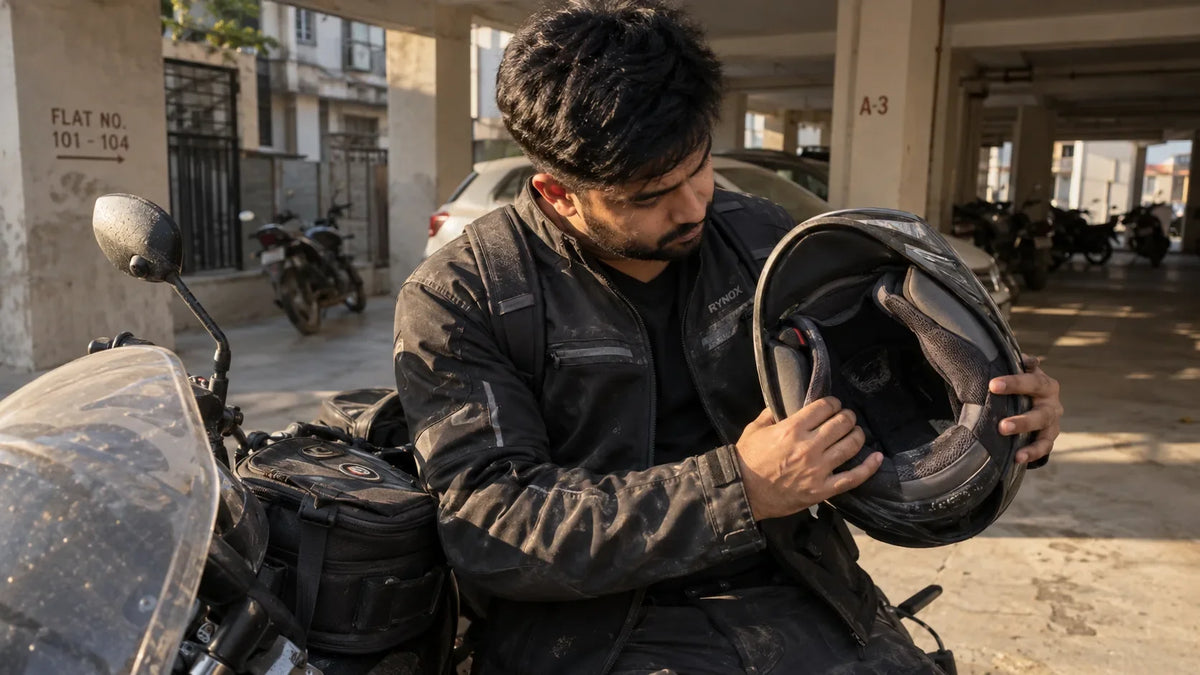
Jammu riders deal with sharp summer heat, winter chill, and sudden monsoon rain. Your helmet feels every change.
A morning ride can start comfortably, then turn sweaty before you reach your destination. That moisture stays close to the liner. Repeated rides also add skin oils, dust, and microbes.
That is where helmet smell starts becoming a hygiene problem. A helmet cleaner search often points toward surface cleaning. But cleaning dirt and controlling odor-causing bacteria are different jobs.
This guide explains what Jammu's riding conditions mean for your helmet. It also shows how to build a practical helmet hygiene routine.
- Jammu's IMD climate table records a 37.5°C mean June maximum.
- July averages 416.9 mm of rain, so wet liners need attention.
- A 2020 helmet study found bacterial growth in 86.7% of never-washed helmets.
- Cleaning removes dirt, while hygiene targets the microbes behind persistent odor.
Why Jammu's climate makes helmet hygiene harder
Jammu's summer heat can turn a normal commute into a sweaty helmet session. IMD's 1981–2010 climate table records a 37.5°C mean maximum for May and 38.6°C for June. That heat can increase sweating while your liner stays close to your skin.
Jammu's IMD climatological table records 416.9 mm of mean rainfall in July. August averages another 353.0 mm. Wet riding conditions can leave helmet interiors damp if they are stored before drying. Source: India Meteorological Department, Jammu climatological table, 1981–2010. IMD Jammu climate data
The same IMD table shows a sharp seasonal shift. July averages 34.6°C for the daily maximum and 25.3°C for the minimum.
Rain changes the problem. A soaked helmet liner can hold moisture against padding and fabric. If you put it away damp, drying takes longer.
Jammu also has a broad temperature swing across the year. IMD records a mean January maximum of 18.6°C and a June maximum of 38.6°C.
That means your helmet hygiene routine cannot depend on one season. Summer calls for sweat control. Monsoon calls for drying discipline.
Jammu's climate creates two recurring helmet-care problems. Summer brings higher heat and sweat, while the monsoon brings repeated wetting. IMD records a 38.6°C mean June maximum and 416.9 mm of mean July rainfall. Riders should therefore pair sweat control with thorough liner drying.
Learn how bacteriostatic helmet hygiene works before choosing a routine.

Our finding: Jammu needs a seasonal helmet routine. The same habit must handle sweat in June and retained moisture in July.
What does Jammu traffic mean for your helmet liner?
More time with your helmet on means more contact with sweat, skin oils, and the liner. Jammu does not have a reliable public congestion figure in the sources reviewed for this post. Local traffic reporting still shows repeated congestion and enforcement activity.
In December 2024, an RTO Jammu enforcement drive checked more than 165 vehicles. Forty vehicles were challaned, and four driving licences were suspended. The drive specifically targeted two-wheeler riders and helmet violations. Source: Morning Kashmir, December 24, 2024. RTO Jammu enforcement report
That enforcement report does not measure average commute time. It does show active two-wheeler enforcement in Jammu.
Local reporting also described traffic jams as a regular feature in August 2025. Waterlogging was reported during monsoon periods as well.
For a rider, the hygiene takeaway is simple. A longer stop-and-go ride can mean longer liner contact with sweat.
That matters when you repeat the same commute every day. The liner gets little time to recover between rides.
Don't wait for a strong smell before cleaning or treating the interior. Odor can become noticeable after repeated microbial activity.
Jammu's available traffic sources don't provide a dependable citywide congestion percentage. A December 2024 RTO drive checked more than 165 vehicles and issued 40 challans. The report also targeted two-wheeler riders. This supports a local rider-care point without inventing a commute-time statistic.
Read why helmet hygiene matters for the wider rider routine.
What is actually growing inside a dirty helmet?
Helmet odor is linked to microbial activity, not sweat alone. A 2020 study tested 130 motorcycle helmets in Nepal and recovered 392 bacterial isolates. It also recovered 346 fungal isolates.
The 2020 study found bacterial growth in 86.7% of helmets that had never been washed or disinfected. Bacterial growth was 57.1% among washed helmets in the same sample. Source: Sapkota et al., 2020, International Journal of Microbiology. Motorcycle helmet microbial study
The study identified Staphylococcus aureus as the most common bacterial isolate. Staphylococcus epidermidis followed it in the sample.
The researchers also found more bacterial growth in helmets used for over three years. Shared helmets showed more bacterial growth than unshared helmets.
These results came from Nepal, not Jammu. You should not treat them as a Jammu prevalence estimate.
They still show why interior hygiene deserves attention. Your liner sits against skin for every ride.
Washing can reduce contamination when done correctly. However, a daily hygiene habit can help manage odor between deeper cleaning sessions.
A 2020 International Journal of Microbiology study examined 130 motorcycle helmets. Researchers recovered 392 bacterial isolates and 346 fungal isolates. Bacterial growth appeared in 86.7% of helmets that had never been washed or disinfected. The study supports regular helmet hygiene, but it does not measure Jammu-specific contamination.
See Hygena Helmet Deodorant if you want an interior hygiene step between deeper washes.
How do Jammu riders handle helmet care today?
Jammu has an active local riding culture, including group rides and longer routes outside the city. A May 2025 Reddit post announced a Sunday morning bike-ride group. A January 2025 thread discussed monthly long rides around Jammu.
A May 2025 Jammu Reddit post announced a Sunday morning bike-ride group. The post received 5 upvotes when indexed. A separate January 2025 thread discussed monthly long rides and attracted 14 upvotes. Source: Reddit community posts, 2025. Jammu Sunday rides discussion
Those posts are community signals, not representative surveys. They still show that local riders organise regular rides.
Longer rides create a different hygiene pattern. Your helmet may stay packed after the ride while the liner is still warm.
That is where a simple habit helps. Let the helmet dry fully before storing it.
Then use an interior hygiene product designed for helmet materials. Avoid treating your helmet like a generic fabric item.
If you share a helmet, hygiene deserves even more attention. The 2020 microbial study found higher bacterial growth in shared helmets.
Jammu's online rider community shows recurring interest in group and long-distance rides. Two 2025 Reddit discussions documented local ride groups and monthly routes. These posts are community signals, not surveys. They support one practical point: riders who spend longer on the road need a repeatable helmet-care routine.
Our finding: For Jammu riders, post-ride drying is as practical as odor control. Heat, rain, and longer rides can all leave the liner needing recovery time.
Helmet cleaner Jammu: is cleaning enough?
Cleaning and hygiene solve different problems. Cleaning removes visible dirt, sweat residue, and grime. Hygiene focuses on reducing microbial contamination that can contribute to odor.
In the 2020 motorcycle helmet study, bacterial growth was 86.7% in helmets that had never been washed or disinfected. The same study reported 57.1% bacterial growth in washed helmets. Source: Sapkota et al., 2020. Study details
That distinction matters when you search for helmet cleaner Jammu. A cleaner may help remove grime. It doesn't automatically make the product a hygiene treatment.
For routine care, follow your helmet manufacturer's liner instructions. Avoid harsh chemicals that can affect materials.
Wash removable liners according to the manufacturer's care guidance. Let every part dry completely before reassembly.
For between-wash hygiene, choose a product made specifically for helmet interiors. That's where Hygena fits the routine.
What should your Jammu helmet hygiene routine look like?
Your routine should match your riding pattern. Daily commuters need a repeatable habit. Weekend riders can focus on post-ride drying and deeper cleaning.
Jammu's IMD data records 1338.6 mm of mean annual rainfall in its 1981–2010 climatological table. July and August account for 769.9 mm combined. Wet-weather riding therefore deserves a specific drying step. Source: India Meteorological Department. IMD Jammu rainfall data
- After riding, open the helmet and let the liner breathe.
- If the liner is wet, dry it fully before storage.
- Wash removable padding as your helmet maker recommends.
- Use an interior hygiene product between deeper cleaning sessions.
- Repeat the routine more often during sweaty summer rides.
Hygena is built for the hygiene step, rather than exterior helmet cleaning. Its bacteriostatic positioning focuses on odor-causing bacterial control.
Make helmet hygiene part of your ride routine. Explore Hygena Helmet Deodorant.
Jammu riders face both heat and heavy monsoon rainfall. IMD records 38.6°C as the mean June maximum and 416.9 mm as mean July rainfall. A practical routine should therefore combine liner drying, manufacturer-approved washing, and regular interior hygiene between deeper cleaning sessions.

Frequently Asked Questions
Does Jammu's heat make helmet smell worse?
Heat can increase sweating inside a helmet. IMD records a 38.6°C mean June maximum in Jammu. Sweat, skin oils, and a warm liner can create conditions where odor becomes more noticeable. Keep the helmet dry and follow a regular interior hygiene routine.
Does Jammu monsoon affect helmet hygiene?
Yes, wet rides can leave the liner damp. IMD records 416.9 mm of mean July rainfall in Jammu. Dry the helmet fully before storage. Avoid sealing a wet liner inside a closed helmet bag.
Is helmet cleaner the same as helmet hygiene?
No. Cleaning focuses on dirt and residue. Hygiene focuses on microbial contamination. A 2020 study found bacterial growth in 86.7% of never-washed or disinfected helmets in its sample. Use manufacturer-approved cleaning methods and a dedicated hygiene routine.
Where can Jammu riders buy helmet hygiene products?
You can buy Hygena's helmet deodorant directly online. The product is designed for helmet interior hygiene. Follow the product directions and your helmet maker's material-care instructions. View Hygena Helmet Deodorant.
How often should I treat my helmet interior?
Your ideal frequency depends on sweat, ride duration, weather, and helmet use. Daily summer commuters may need a more regular routine than occasional riders. There is no Jammu-specific frequency study in the sources reviewed here.
Keep your helmet fresh between Jammu rides
Jammu gives riders very different conditions across the year. Summer heat increases sweat. Monsoon rain adds moisture. Regular rides keep the liner in repeated contact with your skin.
The answer isn't to wait for a strong smell. Build the hygiene habit before odor becomes obvious.
Dry the liner, wash removable parts correctly, and use a helmet-specific hygiene product between deeper cleaning sessions.
Hygena gives you a dedicated interior hygiene step for your riding routine. Try Hygena for your next ride.
For the science behind helmet hygiene, read why helmet hygiene matters. You can also explore how Hygena's bacteriostatic approach works.
Sources
- India Meteorological Department. Jammu climatological data, 1981–2010. Source.
- Sapkota S, et al. 2020. "Microbial Diversity and Antibiotic Susceptibility Pattern of Bacteria Associated with Motorcycle Helmets." International Journal of Microbiology. Source.
- Morning Kashmir. December 24, 2024. "RTO Jammu acts against traffic violators." Source.
- The Tribune. August 21, 2025. "Smart only in name, Jammu suffers from poor civic amenities." Source.
- Reddit r/jammu. May 18, 2025. Sunday bike rides in Jammu. Source.
- Reddit r/jammu. January 7, 2025. Monthly bike long rides in Jammu. Source.
Research checked: September 18, 2026.
Share:
Helmet Cleaner Jamshedpur: What Actually Works?