
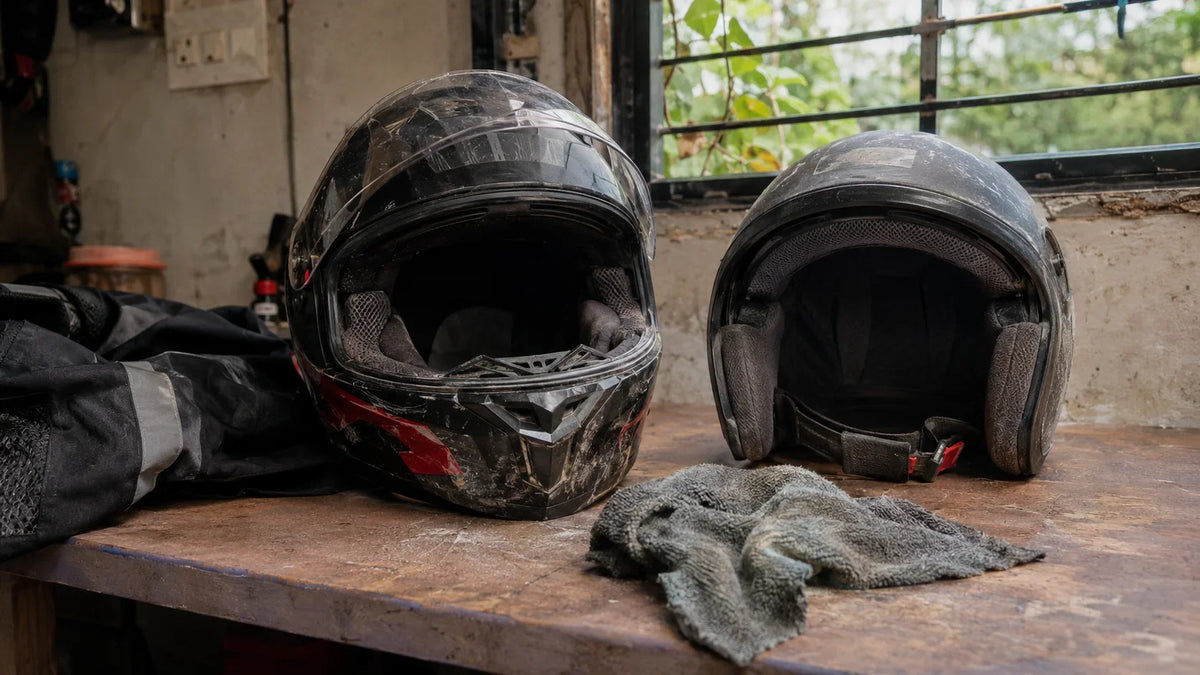
You're leaving for a short ride, the traffic is crawling, and your helmet lining already feels warm. A half-face helmet may feel airy, while a full-face helmet covers more of your face. But your choice affects more than comfort. It also changes how much of your skin sits near the liner, cheek pads, chin area and sweat-trapping fabric.
This guide compares full face vs half face helmet designs through a rider-hygiene lens. We'll cover protection, comfort, liner construction and practical cleaning habits. First, one rule matters more than style: choose a genuine, correctly fitted, certified helmet. Hygiene matters, but it never replaces impact protection.
Rider Takeaways
- A 2020 meta-analysis of six studies involving 6,529 participants found lower odds of head and cervical injuries with full-face helmets than with partial-coverage or open helmets.
- Full-face designs usually have more cheek and chin-area padding to keep clean.
- Half-face designs may feel airier, but sweat and skin oils can still build up wherever the liner touches your head.
- Follow your helmet maker's care instructions before removing pads or applying any product.
What’s the real difference between full-face and half-face helmets?
A full-face helmet covers the head and includes a chin bar, while a half-face helmet leaves more of the face exposed. That difference affects facial coverage and the amount of padding contacting your skin. The Bureau of Indian Standards' IS 4151 standard covers protective helmets with or without a lower-face cover.
A full-face design typically has a comfort liner around the crown, cheeks and chin area. Some models have removable cheek pads and crown liners; others use different retention systems or pad layouts. The exact design varies by model, so check the manual rather than assuming every liner comes out.
A half-face helmet generally leaves the cheeks and chin uncovered. It can feel less enclosed, especially at low speeds, but its interior still absorbs sweat, oil and dust. Areas around the forehead, crown and strap can become dirty even when the helmet looks clean.
Full-face helmets include a chin bar and generally cover more of the face than half-face designs. Their interiors may include cheek pads and chin-area fabric that need regular care. Half-face helmets leave more skin exposed but still collect sweat and oil where the liner touches the forehead and crown. Check the specific model's manual before cleaning.
Related reading: How to wash a motorcycle helmet liner
Which helmet offers more protection on the road?
Full-face helmets generally offer more coverage around the chin and jaw, and research supports considering them when choosing protective gear. In a 2020 meta-analysis published in Preventive Medicine Reports, researchers reviewed six studies with 6,529 participants. Full-face helmets were associated with lower odds of head and cervical injuries than partial-coverage and open helmets.
The study reported odds ratios of 0.356 compared with partial helmets and 0.636 compared with open helmets. These figures describe the studies included in that review; they aren't a promise that a particular helmet prevents every injury. Fit, fastening, certification and correct use remain important.
In India, look for a genuine BIS-certified helmet appropriate for your riding. The Ministry of Consumer Affairs reiterated this guidance in July 2025 and noted that the applicable quality-control order had been in force since 2021. Avoid novelty or uncertified helmets, even for short rides.
A half-face helmet can leave the chin and jaw more exposed. That may matter during a crash, when impact can occur beyond the top of the head. If you ride on highways, tour long distances or regularly encounter unpredictable traffic, broader coverage is a sensible priority.
Unique Insight
Our finding: Don't choose between protection and hygiene as if they're competing goals. Pick a certified helmet that fits securely, then build a liner-care routine around its construction. A clean half-face liner doesn't make up for less facial coverage, and a full-face helmet still needs regular care.

Related reading: How to maintain helmet hygiene
Does helmet type change liner hygiene?
Yes. A full-face helmet can have more padded contact areas, especially around the cheeks and chin, so there may be more fabric to inspect and clean. A half-face helmet has less face coverage, but its forehead pad, crown liner and chin strap still collect sweat and skin oils. Neither design stays fresh without care.
Sweat itself isn't the whole story behind persistent odour. Warm, damp fabric can hold skin oils and residue, creating conditions where odour-causing microbes may contribute to the smell. Airing the helmet after a ride helps moisture escape, but it doesn't replace cleaning when the liner is dirty.
Don't remove padding unless the manufacturer says it's removable. Use the specified method for washing liners, drying them fully before reassembly. Avoid harsh detergents, solvents, high heat or unapproved sprays. These can damage fabric, adhesives, foam or coatings, depending on the helmet.
For both types, pay attention to the areas that touch your skin. Check the forehead, cheek pads if present, chin strap and strap padding. If the liner remains damp or smells after cleaning, inspect the care instructions and consider whether the padding needs replacement.
The rider habit that matters: after each ride, loosen the strap and leave the helmet in a clean, ventilated place to dry. Don't seal a damp helmet inside a closed bag. Make a quick check of the liner part of your parking routine.

Related reading: How to remove sweat smell from a helmet
Which helmet feels cooler and more comfortable?
Half-face helmets often feel less enclosed because they expose more of the face to airflow. A full-face helmet can feel warmer at a traffic signal, especially in hot weather, but ventilation varies considerably by model. Air vents, liner materials, fit and riding conditions all affect comfort.
Don't assume a helmet is safer or more comfortable based only on its shape. A helmet that presses painfully on your forehead or shifts around your head isn't the right fit. Try it on for several minutes, check pressure points and confirm the retention strap fastens correctly.
Ventilation doesn't eliminate liner hygiene. Even if air moves through the helmet, the fabric still touches your skin and can collect sweat. Similarly, a half-face helmet's open design doesn't mean its padding dries instantly or stays clean.
If heat is your main concern, compare well-ventilated certified options within the helmet style you prefer. Try them with the balaclava or glasses you normally wear, if applicable. Then choose the helmet that fits securely and offers the coverage you need.
Unique Insight
Our finding: Ventilation and hygiene solve different problems. Vents can improve airflow, but they don't remove the skin oils and residue already on a liner. Treat comfort as a fit-and-airflow decision, then treat liner care as a separate habit.
Related reading: Helmet hygiene for daily commuters
How should you care for each helmet liner?
Start with the manual. It tells you whether the liner is removable, which cleaning products are permitted and how the components should dry. A helmet's interior is part of protective equipment, so don't experiment with products that the manufacturer hasn't approved.
For a full-face helmet, check the crown liner, both cheek pads, chin curtain if fitted, strap padding and the fabric around the forehead. Remove only parts designed to be removed. Wash them using the recommended method, rinse as directed and let them dry completely before reinstalling.
For a half-face helmet, check the crown and forehead contact areas, plus the strap and its padding. If the liner isn't removable, follow the manufacturer's spot-cleaning instructions. Don't soak the helmet shell or interior unless the maker explicitly permits it.
A hygiene spray may help manage odour between deeper cleans, but only use one if it's compatible with your helmet materials and approved by the helmet maker. Hygena Helmet Deodorant Spray is designed for helmet hygiene, rather than exterior polishing. Check the current product instructions and your helmet manual before use.
A simple after-ride routine
- Open the visor or leave the helmet positioned as the maker recommends.
- Let the interior dry in a ventilated place away from direct high heat.
- Check the liner and strap for sweat, dirt or lingering odour.
- Clean removable pads according to the manual when needed.
- Reassemble only after every part is fully dry.
Related reading: Helmet deodorant vs helmet cleaner
Full face vs half face helmet: how do you decide?
Use your regular riding conditions, fit and coverage needs to make the decision. A full-face helmet is the stronger starting point for riders who want chin and jaw coverage. A half-face helmet leaves more of the face exposed and may feel airier, but that trade-off deserves careful thought.
| What matters to you | Full-face helmet | Half-face helmet |
|---|---|---|
| Face coverage | Includes chin bar and broader facial coverage | More of the face remains exposed |
| Liner contact | Often includes cheek and chin-area padding | Commonly focuses on crown and forehead contact |
| Cleaning checks | Crown, cheek pads, strap and chin-area fabric where fitted | Crown, forehead area and strap |
| Airflow feel | Depends on vents, fit and model | Often feels more open |
| Best next step | Confirm fit, certification and pad-care instructions | Confirm fit, certification and understand the coverage trade-off |
No helmet style excuses a poor fit or a loose strap. In India, choose a genuine BIS-certified helmet and verify the certification where possible. If you're uncertain about fit, ask a reputable helmet retailer for help.
After you've chosen, make liner hygiene routine. Let it dry after rides, clean pads according to the manual and use only compatible products. Hygena can be part of a helmet-hygiene habit when its usage instructions match your helmet maker's care guidance. Explore Hygena Helmet Deodorant.
Related reading: The complete guide to motorcycle helmet hygiene
Frequently asked questions
Is a full-face helmet safer than a half-face helmet?
A 2020 meta-analysis of six studies and 6,529 participants found lower odds of head and cervical injuries with full-face helmets than with partial-coverage or open helmets. Fit, certification and correct fastening still matter. In India, choose a genuine BIS-certified helmet and wear it as directed.
Does a half-face helmet need liner cleaning?
Yes. The crown, forehead area and chin strap can collect sweat and skin oils even when the helmet leaves your cheeks and chin uncovered. Follow the maker's cleaning instructions and allow the interior to dry fully after rides.
Can I wash full-face cheek pads at home?
Only if your helmet's manufacturer says the pads are removable and washable. Follow the exact instructions for detergent, rinsing and drying. Don't use high heat or harsh chemicals unless the manufacturer explicitly permits them.
Can I spray deodorant inside any helmet?
No. Check both the helmet manual and the spray's usage instructions first. Materials and coatings vary between models. Never apply a product if the manufacturer warns against it, and don't treat deodorising as a substitute for cleaning dirty padding.
Which helmet is better for hot Indian commutes?
There isn't one answer for every rider. Half-face designs often feel more open, while full-face ventilation varies by model. Prioritise genuine certification, secure fit and the coverage you need. Then manage sweat through drying and model-approved liner care.
The verdict: choose coverage first, then keep the liner fresh
Full-face and half-face helmets differ in coverage, comfort and the padding you need to maintain. A full-face helmet generally covers more of the face, including the chin and jaw area. A half-face helmet may feel more open, but its liner still needs attention after sweaty rides.
Start with certification and fit. Then check how your helmet's liner comes apart, what cleaning method the manufacturer allows and how long it takes to dry. That's the practical answer to full face vs half face helmet hygiene: choose the protection you need, then care for the interior consistently.
For a simpler between-ride hygiene habit, explore Hygena Helmet Deodorant Spray after confirming compatibility with your helmet's care instructions. Next, read our guide to how to clean your motorcycle helmet liner.
Sources
- Chaichan, S. et al. (2020). “Are full-face helmets the most effective in preventing head and neck injury in motorcycle accidents? A meta-analysis.” Preventive Medicine Reports. Read the study.
- Bureau of Indian Standards. IS 4151:2015, “Helmets for Two Wheeler Riders.” Read the standard.
- Press Information Bureau, Ministry of Consumer Affairs, Food & Public Distribution (12 July 2025). “Helmet - More Than Just a Shell.” Read the announcement.
Share:
Helmet Acne: Why Riders Break Out and How to Prevent It
Motorcycle Gear Hygiene: How to Keep Your Kit Fresh